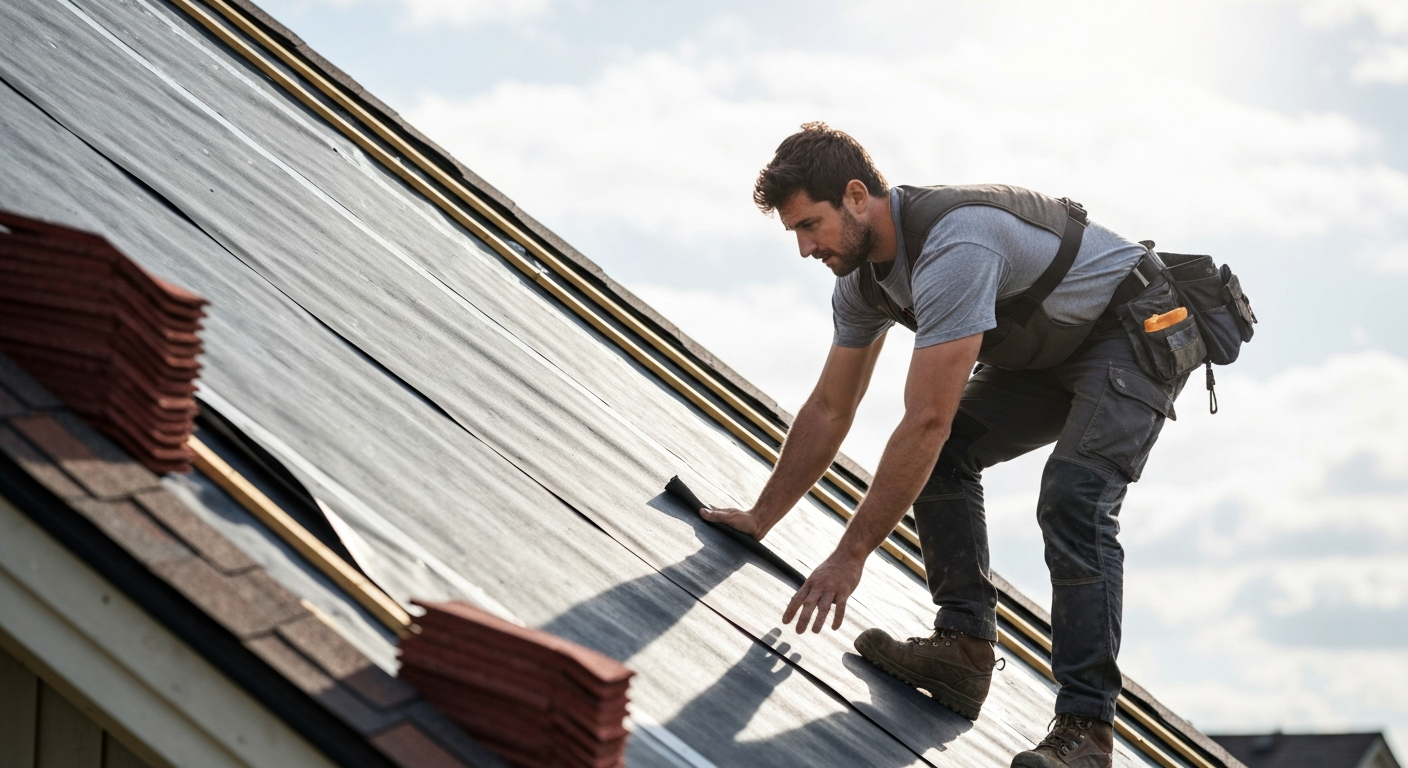
Roofing options and costs in Fort Saskatchewan
Fort Saskatchewan homeowners usually see roofing costs shaped by two things at once: local housing stock and Alberta weather. With 27,088 residents and 7,885 homeowner households, this is a market where many buyers own and maintain their roof long-term, and the local housing mix includes a solid share of single-detached homes at 63.9% of dwellings (Statistics Canada, 2021 Census). Just as important, 31.2% of homes were built before 1981, which means a meaningful portion of roofs are nearing the age where a full tear-off, deck repair, or upgraded ventilation may be needed rather than a simple shingle swap. In neighbourhoods with older detached housing, such as Westpark or Southfort, roofing demand tends to stay steady because older homes are more likely to need flashing repairs, ventilation corrections, and occasional two-layer tear-offs.
Edmonton-area pricing is also affected by climate in a very practical way. Heavy snow load, freeze-thaw swings, hail, and wind all increase the amount of underlayment, ice-dam protection, and labour coordination contractors build into a quote. Crews have shorter working windows in colder months, and that compresses scheduling during the summer, when demand is highest and labour prices often rise. In Alberta hail country, impact-resistant shingles are not just a premium upgrade; they are often a reasonable durability choice and sometimes help with insurance conversations. Metal roofing costs more upfront, but it is often chosen where homeowners want long service life and strong weather resistance. For flat or low-slope roofs, the main cost driver is membrane quality and water management rather than curb appeal. The table below shows the most realistic budgeting ranges for Fort Saskatchewan.
| Type |
Typical Use |
Lifespan |
Best For |
Price Range |
| Full asphalt shingle replacement (tear-off + new install) |
Standard sloped homes needing full renewal |
15–25 years |
Budget-conscious homeowners who want a reliable baseline system |
$9,000 – $24,000 |
| Architectural / laminated shingle (premium asphalt) |
Most detached homes with a steeper, visible roofline |
20–30 years |
Better curb appeal and improved wind performance |
$11,000 – $28,000 |
| Impact-resistant shingle (Class 4 — hail & wind zones) |
Homes in hail-prone areas or where insurance resilience matters |
20–30 years |
Better hail resistance and lower storm-related repair risk |
$13,000 – $32,000 |
| Metal roofing (steel panels or standing seam) |
Long-life sloped roofs, acreage homes, premium upgrades |
40–50+ years |
Maximum weather resistance and long-term value |
$18,000 – $42,000 |
| Flat / low-slope membrane (TPO or EPDM) |
Garages, additions, low-slope sections, commercial-style homes |
20–30 years |
Reliable drainage and watertight detailing |
$10,000 – $25,000 |
| Roof repair + flashing only (no full replacement) |
Localized leak repairs, chimney work, vent and valley fixes |
Varies by roof age |
Small leaks, storm damage, or short-term maintenance |
$500 – $3,500 |
Prices are estimates only and vary by project scope, site access and material selection.
What affects the price of roofing in Fort Saskatchewan
Quotes for what looks like the same roof can easily vary by 30–50% across Edmonton and Alberta because contractors are not pricing only shingles; they are pricing risk, access, labour time, and climate protection. Snow load and freeze-thaw cycles across Ontario and Alberta drive ice-dam protection requirements and heavier underlayment, while Alberta's hail belt pushes demand for impact-rated shingles. Coastal BC rain and wind favour metal and premium synthetic underlayment. Colder regions also have shorter install seasons, so summer demand gets compressed and labour rates rise when crews are trying to fit jobs between weather delays. In Fort Saskatchewan, a straightforward asphalt tear-off on a low-pitch bungalow may sit near the bottom of the $9,000 – $24,000 range, while a steeper two-storey home with multiple valleys, new flashing, and upgraded ice-and-water shield can move quickly into the mid-range. Homes built before 1981 are more likely to need deck repairs, extra vents, or re-sheeting, which can add several hundred to several thousand dollars. For example, replacing damaged sheathing on an older roof may add $800 – $2,500, while a Class 4 shingle upgrade can raise a project by 20–30% but may be justified if hail exposure is a real concern. In practical terms, a roof in Westpark with simple access may come in lower than a similar home in a tighter lot with garages, skylights, or multiple chimneys. The best bids explain exactly why the numbers differ.
| Price Factor |
Why It Matters |
Cost Impact |
| Roof pitch and steepness |
Affects safety equipment, crew speed, and fall protection requirements |
Steeper roofs usually add 10–25% to labour |
| Number of shingle layers to tear off |
2 layers = extra labour + disposal |
Often adds $1,000 – $3,000 |
| Total roof area in squares (1 square = 100 sq ft) |
Larger roofs need more material, time, and disposal capacity |
Can move a job from $9,000 – $24,000 toward the upper end quickly |
| Decking condition |
Rotted OSB or plywood must be replaced before shingles go on |
Typically adds $75 – $150 per sheet installed |
| Chimney, skylight and vent flashing complexity |
More penetrations mean more custom labour and leak risk |
Can add $300 – $1,200 |
| Ice-and-water shield coverage required |
Climate-driven protection at eaves, valleys and trouble spots |
Adds material cost and often 5–10% overall |
| Regional labour rates and length of the install season |
Shorter seasons concentrate demand and raise peak-summer pricing |
Can shift quotes by 10–20% |
| Material quality tier |
Standard vs. impact-rated vs. premium changes both product and install cost |
Impact-rated upgrades often add 20–30% |
Permits & regulations in Alberta
In Alberta, most like-for-like re-roofing does not require a building permit, but there are clear exceptions. If you are replacing an asphalt roof with another asphalt system on the same structure, and you are not changing the roof framing, slope, or use, it typically falls into routine maintenance and often does not need a permit. By contrast, adding a second layer where the code does not allow it, replacing rotten sheathing or structural members, changing from a pitched roof to a flat or low-slope system, or altering drainage details can trigger permit requirements. If the work affects structural capacity, insulation depth, ventilation, or fire separation, it is wise to confirm before starting. Contractors should also carry liability insurance, WCB coverage, and manufacturer certification for warranty-backed installs. Verify all three before signing a contract.
For a homeowner in Fort Saskatchewan, the check is straightforward. First, ask for the contractor’s Alberta business information and look them up through the provincial registry or municipal business listing if applicable. Second, request a current certificate of insurance naming the company and showing active general liability coverage; do not rely on a verbal promise. Third, ask for a current WCB clearance letter, which shows the account is active and in good standing. If the crew is using a subcontractor, ask for the same documents for that company too. Finally, confirm manufacturer certification if they are offering a long product warranty. If a roofer cannot provide these documents quickly, treat that as a warning sign.
Choosing the right roofing material for Fort Saskatchewan's climate
Fort Saskatchewan sits in a climate where freeze-thaw cycles, snow load, hail risk, and wind exposure should drive the material decision more than appearance alone. For many homes, especially the 63.9% that are single-detached dwellings, an architectural asphalt shingle is the practical default: it balances cost, curb appeal, and performance, and it usually makes sense when the homeowner wants a dependable roof without overspending. Impact-rated shingles are worth considering if the home is exposed to hail or if the owner wants better storm resilience; in Alberta, that 20–30% premium can be justified when the base roof is already in the $11,000 – $28,000 range and the upgrade may reduce future repair risk or improve insurance discussions. Metal roofing becomes more appealing when long service life matters most, because a $18,000 – $42,000 roof can outlast two asphalt cycles and handle snow shedding better. Flat or low-slope membrane systems are not about resale flash; they are about watertight detail and drainage control. If a roof has repeated ice-dam issues or a low-slope addition, investing in better membrane and flashing can save far more than repeated patching. For example, spending an extra $4,000 – $7,000 on metal instead of standard asphalt may be worthwhile on a long-term ownership plan, but it is harder to justify if the homeowner expects to move soon. In Alberta, some insurers may offer better terms or discounts for hail- and high-wind-rated materials, so it is worth checking before deciding.
| Material |
Lifespan |
Snow & Ice Performance |
Wind / Hail |
Maintenance |
Price Band |
| Asphalt 3-tab (entry-level) |
12–18 years |
Basic performance; more vulnerable to ice-dam stress |
Lowest resistance; not ideal for hail-prone areas |
Higher replacement frequency, more sealing and tab loss risk |
$9,000 – $18,000 |
| Asphalt architectural / laminated (standard) |
20–30 years |
Good with proper underlayment and ventilation |
Better wind resistance and moderate hail performance |
Moderate maintenance, good value for most homes |
$11,000 – $28,000 |
| Impact-resistant shingle (Class 4) |
20–30 years |
Strong with ice-and-water shield and proper eave detail |
Best asphalt option for hail-prone Alberta markets |
Lower storm-related repair risk, similar upkeep to architectural |
$13,000 – $32,000 |
| Metal — steel panels (exposed fastener) |
30–45 years |
Excellent snow shedding, strong against ice buildup |
Very good wind performance; hail dents are possible |
Periodic fastener and seal checks |
$18,000 – $34,000 |
| Metal — standing seam (concealed fastener) |
40–50+ years |
Excellent snow and ice management |
Top-tier wind resistance; excellent long-term durability |
Lowest routine maintenance of the sloped-roof options |
$24,000 – $42,000 |
| Flat TPO / EPDM membrane (low-slope only) |
20–30 years |
Depends heavily on drainage and flashing detail |
Good when properly installed; seams and terminations matter |
Requires regular inspection of drains, seams and penetrations |
$10,000 – $25,000 |
How to choose a roofing contractor in Fort Saskatchewan
Start by verifying that the contractor is operating legally in Alberta and can back up the job with real paperwork. Ask for the company’s legal business name, then confirm the business registration and any relevant municipal licensing. Next, request a certificate of insurance showing active liability coverage, and ask for a current WCB clearance letter so you know the crew is covered if someone gets hurt. If they are offering a manufacturer-backed warranty, ask whether they are certified by that product line and whether the warranty is valid in Alberta. After that, get 2 or 3 itemised written quotes that separate labour, materials, underlayment, flashing, ventilation, disposal, and any decking repair. A lump-sum quote is harder to compare and easier to pad. Read the scope carefully: does it include permit pulling if required, ice-and-water shield, teardown, cleanup, magnet sweep, and haul-away? Ask for the workmanship warranty length, the product warranty length, and whether either one is transferable to a future buyer. On payment, never hand over more than 10–15% upfront, and keep a holdback until the roof is complete and inspected. Finally, insist on a start date and completion estimate in writing, because weather delays happen in Alberta and you want the contractor’s scheduling commitment documented.
- Confirm the exact legal business name before signing.
- Ask for an active certificate of liability insurance.
- Request a current WCB clearance letter.
- Check manufacturer certification for warranty-backed systems.
- Get 2–3 itemised quotes, not just lump sums.
- Make sure disposal, flashing and ventilation are itemised.
- Ask who pulls permits if the job needs one.
- Read the workmanship warranty length in writing.
- Verify whether the product warranty is transferable.
- Limit deposit to 10–15% and keep a holdback.
- Get a written start date and completion estimate.
- Confirm who is doing the work: employees or subcontractors.
Red flags in Fort Saskatchewan include a contractor who will not show insurance or WCB paperwork, a quote that is far below the $9,000 – $24,000 baseline without a clear reason, refusal to itemise tear-off or flashing, pressure to pay in cash only, and vague promises like “weatherproof for life” without a written warranty.
Frequently asked questions — roofing in Fort Saskatchewan
What time of year is best to replace a roof in Fort Saskatchewan?
Late spring through early fall is usually the best window in Fort Saskatchewan because crews can work more safely and materials seal properly in warmer temperatures. In Alberta, summer and early fall are also the busiest months, so scheduling early helps you avoid delays and peak pricing. If you are replacing an asphalt roof, a normal project often lands somewhere in the $9,000 – $24,000 range, but the same roof can cost more if you wait until the hottest or most compressed part of the season. Emergency repairs happen year-round, of course, but full replacements are best done when the roof deck is dry and daytime temperatures are consistent. On older homes built before 1981, a spring inspection can also catch deck damage before summer storms arrive.
How do I compare roofing quotes fairly?
Compare roofing quotes in Fort Saskatchewan by making sure each contractor is pricing the same scope, not just the same square footage. You want labour, materials, tear-off, underlayment, flashing, ventilation, disposal, and decking repair broken out clearly. If one bid is $12,000 – $14,000 and another is $18,000 – $20,000, the difference may be in shingle quality, ice-and-water shield coverage, or whether two layers are being removed instead of one. Ask whether permit costs, cleanup, and magnet sweep are included. Also check warranty length and whether the product line is certified for warranty support in Alberta. A fair comparison is not about picking the lowest number; it is about confirming what each number actually buys.
Should I repair or replace my roof in Fort Saskatchewan?
It usually makes sense to repair if the damage is small, localised, and the rest of the roof still has service life left. For example, a flashing repair, vent replacement, or a few lifted shingles may fall into the $500 – $3,500 range and buy you a few more years. Replacement is usually the better call if the roof is near end of life, has repeated leaks, multiple soft spots in the deck, or widespread hail damage. In Fort Saskatchewan, older homes are more likely to need full replacement because of age, prior layering, and winter wear. If you are seeing granule loss, curling, or multiple leak points, a patch is often false economy. A good contractor should explain whether the next repair is a stopgap or a sensible bridge to a full reroof.
What is ice and water shield and do I need it in Alberta?
Ice and water shield is a self-adhered waterproof membrane installed in vulnerable areas like eaves, valleys, and roof penetrations. In Fort Saskatchewan and across Alberta, it matters because freeze-thaw cycles can create ice dams that push water back under shingles. Most sloped roofs benefit from it, and in colder or more exposed locations it is one of the most important upgrades you can buy. The added cost is usually modest compared with a roof repair, and it can be part of why one roofing quote sits closer to $11,000 – $28,000 instead of the lower end of the range. It is not a substitute for proper attic ventilation or flashing, but it works with those systems to reduce leak risk. On older homes, it is often money well spent.
How do I spot a low-quality roofing bid in Fort Saskatchewan?
A low-quality bid in Fort Saskatchewan often looks attractive only because it leaves out important work. Watch for missing line items, no mention of tear-off quantity, no detail on flashing, and no explanation of underlayment or ice-and-water shield. If a quote is far below the normal $9,000 – $24,000 asphalt range, ask why. Sometimes the answer is a smaller scope; other times it means shortcuts. Other warning signs include no certificate of insurance, no WCB clearance, pressure for a huge deposit, and refusal to put the timeline in writing. A serious roofer should be comfortable explaining materials, warranty, and cleanup. If the bid sounds too vague to compare, it probably is.
What roofing upgrades add the most resale value in Fort Saskatchewan?
The upgrades that usually add the most resale value in Fort Saskatchewan are visible, durable, and easy for buyers to understand. Architectural shingles are often the best value because they improve curb appeal without pushing the budget too far above the standard asphalt range. If the home is in a hail-exposed area, Class 4 impact-resistant shingles can also be a smart selling point because Alberta buyers know storm damage is a real issue. Metal roofing can add value on the right home, especially if the buyer is looking for long service life and low maintenance, but it makes the most sense when the home is expected to be held long term. A roof in the $13,000 – $32,000 or $18,000 – $42,000 range can be justified if it clearly improves durability, warranty coverage, and overall presentation.