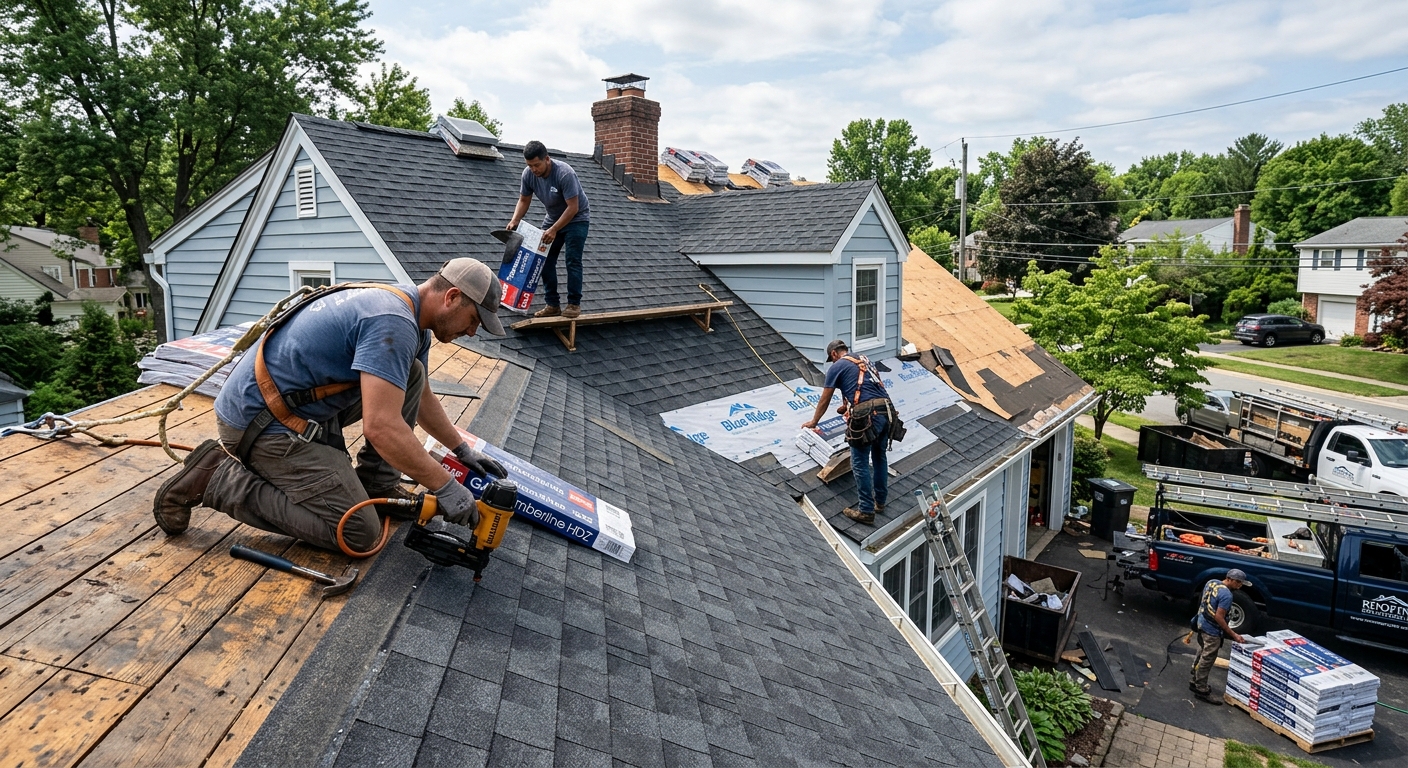
Roofing options and costs in Rocky Mountain House
Rocky Mountain House roofing decisions are shaped by older housing stock, weather, and access as much as by material choice. With 44.5% of homes built before 1981 and 70.7% of households owning their homes (Statistics Canada, 2021 Census), a lot of roofs in town are reaching the stage where repairs stop making sense and a full tear-off becomes the better long-term value. That is especially true in established areas such as Westview and the older central neighbourhoods, where reroofs often uncover worn decking, past repairs, or limited attic ventilation that needs correction during the project. In practical terms, that means more labour, more ice-and-water membrane, and more flashing work than a simple “shingle swap.”
In the Banff–Jasper–Rocky Mountain House corridor, costs are also pushed by heavy snow loads, freeze–thaw cycling, and chinook swings that can stress eaves, valleys, and fasteners. Shorter effective install seasons in colder weather, plus the need for fall protection and occasional snow management, keep labour rates higher than in milder urban markets. In this region, homeowners also lean toward impact-rated architectural shingles or metal because hail and wind can shorten the life of basic materials. For that reason, it is normal to see a wide spread between quotes, especially when one contractor includes upgraded underlayments, ventilation fixes, and disposal while another prices only the visible shingles.
The table below shows the most common roofing options in Rocky Mountain House and the price ranges homeowners usually compare.
| Type |
Typical Use |
Lifespan |
Best For |
Price Range |
| Full asphalt shingle replacement (tear-off + new install) |
Standard detached homes, older roofs with one or two layers |
15–25 years |
Budget-conscious homeowners needing a full reset |
$9,000–$26,000 |
| Architectural / laminated shingle (premium asphalt) |
Most single-family homes |
20–30 years |
Better curb appeal, stronger wind performance |
$11,000–$29,000 |
| Impact-resistant shingle (Class 4 — hail & wind zones) |
Homes exposed to hail or open wind |
25–35 years |
Homeowners wanting better hail resilience |
$13,000–$32,000 |
| Metal roofing (steel panels or standing seam) |
Acreages, steep roofs, long-term ownership |
40–50+ years |
Snow shedding, durability, lower maintenance |
$18,000–$45,000 |
| Flat / low-slope membrane (TPO or EPDM) |
Garages, additions, commercial or low-slope sections |
20–30 years |
Waterproofing on low-slope roofs |
$12,000–$35,000 |
| Roof repair + flashing only (no full replacement) |
Targeted leaks, storm damage, small corrective work |
Varies by existing roof condition |
Buying time before a planned replacement |
$500–$8,000 |
Prices are estimates only and vary by project scope, site access and material selection.
What affects the price of roofing in Rocky Mountain House
Quotes for the same roof in Rocky Mountain House can easily vary by 30–50% because contractors are not always pricing the same scope, risk, or material tier. In the Banff–Jasper–Rocky Mountain House market, snow load and freeze–thaw cycles across Ontario and Alberta mean crews build in more ice-dam protection, more underlayment, and more careful valley detailing than you would see in a mild climate. Alberta’s hail belt also drives demand for impact-rated shingles, while coastal BC rain and wind push builders toward metal and premium synthetic underlayments. In colder regions, the shorter install season concentrates demand into a few peak months, which raises labour rates and can stretch scheduling. For example, a basic asphalt reroof that might sit near the low end of the $9,000–$26,000 range can climb quickly if the roof is steep, the decking is soft, or two old layers must be removed. A small flashing repair may stay near $500–$8,000, but once chimneys, skylights, and ventilation changes enter the scope, the price moves fast. In Rocky Mountain House, older homes can also uncover hidden costs such as rotten OSB, inadequate attic ventilation, or ice-dam damage at the eaves, all of which add labour and materials.
| Price Factor |
Why It Matters |
Cost Impact |
| Roof pitch and steepness |
Affects safety equipment and install speed |
Steeper roofs need more fall protection, slowing production and raising labour by 10–25% |
| Number of shingle layers to tear off |
2 layers = extra labour + disposal |
Adds several hundred to a few thousand dollars depending on roof size |
| Total roof area in squares (1 square = 100 sq ft) |
More surface area means more materials and labour |
A larger roof can move a job from the low end of the $9,000–$26,000 band into the middle or upper end |
| Decking condition |
Rotted OSB or plywood must be replaced |
Can add $75–$150 per sheet plus labour |
| Chimney, skylight and vent flashing complexity |
More penetrations mean more time and leak risk |
Can add $250–$1,500 or more depending on quantity and access |
| Ice-and-water shield coverage required |
Climate-driven protection at eaves, valleys and penetrations |
Higher membrane coverage increases materials and labour, especially on older homes |
| Regional labour rates and length of the install season |
Short seasons concentrate demand and weather delays |
Can push total pricing 40–50% of replacement cost into labour on complex jobs |
| Material quality tier |
Standard vs. impact-rated vs. premium systems |
Can shift a roof from entry-level pricing toward the $18,000–$45,000 metal or upper asphalt bands |
Permits & regulations in Alberta
In Alberta, most like-for-like re-roofing jobs do not require a building permit, so replacing worn shingles with new shingles on the same roof shape is typically straightforward. A permit is more likely when the work goes beyond routine reroofing, such as adding a second layer where the code or manufacturer will not allow it, making structural deck repairs, changing roof framing, or converting a pitched roof to a flat or low-slope system. If a project includes major alterations to ventilation, load paths, or drainage, the municipality may also want drawings or permit review before work starts.
Before signing, ask the contractor for proof of liability insurance, WCB coverage, and any manufacturer certification that supports the warranty. Start by checking the company name in Alberta’s corporate or trade registration records online, then ask for a current certificate of insurance showing limits, dates, and the named insured. For WCB, request a clearance letter or account confirmation dated close to the start of the job. If the contractor claims certification with a shingle or metal manufacturer, ask for the exact program name and check the manufacturer’s website or dealer locator if available. In Rocky Mountain House, the safest approach is to verify all three documents yourself rather than relying on a verbal promise. If anything is missing or expired, do not proceed until it is corrected.
Choosing the right roofing material for Rocky Mountain House's climate
Rocky Mountain House sits in a climate where freeze-thaw severity, snow load, hail risk, and wind exposure all matter more than the brochure makes it sound. Architectural shingles are usually sufficient for many homes here, especially if the roof has good slope, solid ventilation, and proper ice-and-water protection at the eaves and valleys. They tend to balance cost, appearance, and performance well, and they usually fit most detached homes without overbuilding the system. Impact-rated shingles become worth the 20–30% premium when the property is in a hail-prone spot, has a history of storm claims, or the owner wants a better chance of reducing future repair bills. For a roof that would cost $14,000–$18,000 in standard architectural shingles, spending an extra few thousand dollars for Class 4 may make sense if insurance deductibles are high or the home is exposed. Metal roofing starts to make long-term financial sense on acreage homes, steeper roofs, and properties the owner plans to keep for decades, because the upfront cost is higher but the maintenance burden is lower and snow sheds better. Flat or low-slope membrane systems are the right call only where the roof geometry requires them; on additions and garages, the goal is reliable waterproofing rather than curb appeal. Alberta insurers sometimes offer discounts for hail-resistant or high-wind-rated materials, but the savings vary by carrier and policy. In this market, the real test is whether the material matches the roof shape and climate, not just the sticker price.
| Material |
Lifespan |
Snow & Ice Performance |
Wind / Hail |
Maintenance |
Price Band |
| Asphalt 3-tab (entry-level) |
12–18 years |
Basic performance; more vulnerable to ice-dam stress |
Lowest resilience; not ideal for Alberta hail exposure |
Higher risk of curling, cracking and early repairs |
$9,000–$18,000 |
| Asphalt architectural / laminated (standard) |
20–30 years |
Good balance when paired with proper membrane and ventilation |
Better wind performance than 3-tab |
Moderate maintenance |
$11,000–$29,000 |
| Impact-resistant shingle (Class 4) |
25–35 years |
Strong when detailed with eave protection and ventilation |
Excellent hail resistance for Alberta conditions |
Lower storm-related repair risk |
$13,000–$32,000 |
| Metal — steel panels (exposed fastener) |
25–40 years |
Very good snow shedding, but fasteners must be maintained |
Good wind resistance; hail can dent some profiles |
Low to moderate maintenance |
$18,000–$35,000 |
| Metal — standing seam (concealed fastener) |
40–50+ years |
Excellent snow shedding and ice management |
Strong wind resistance; premium hail resilience depends on gauge |
Low maintenance |
$28,000–$45,000 |
| Flat TPO / EPDM membrane (low-slope only) |
20–30 years |
Depends on slope, drainage and detailing at penetrations |
Good when properly secured and flashed |
Regular inspections needed for seams and ponding |
$12,000–$35,000 |
How to choose a roofing contractor in Rocky Mountain House
Start with proof, not promises. In Alberta, a contractor should be able to show business registration, current liability insurance, and WCB coverage before any deposit changes hands. Ask for the legal business name, then check the company online through Alberta’s business registry or related public records. Next, request a certificate of insurance that names the contractor and confirms the policy is active for the project dates. For WCB, ask for a clearance letter or account standing confirmation. If the crew is claiming product certification, verify it with the manufacturer so your warranty is protected. Then collect 2–3 itemised written quotes, each showing labour, materials, underlayment, flashing, ventilation, disposal, and any deck repairs separately. A lump sum is not enough if you are trying to compare value.
Read the scope carefully: does the quote include permit pulling, dumpsters, snow removal, ice and water shield, and final cleanup? Ask for workmanship warranty length, manufacturer warranty terms, and whether the warranty is transferable if you sell the home. Payment should be staged; avoid paying more than 10–15% upfront, and keep a holdback until the job is complete and inspected. Make sure the start date and estimated completion window are in writing, especially in Rocky Mountain House where weather can interrupt work.
- Verify Alberta business registration online.
- Ask for a current liability insurance certificate.
- Request WCB clearance before deposit.
- Get 2–3 itemised quotes, not lump sums.
- Confirm tear-off layers in writing.
- Confirm whether permit pulling is included.
- Ask if disposal and cleanup are included.
- Check ventilation and ice-and-water scope.
- Confirm shingle brand, model and colour.
- Ask for workmanship warranty length.
- Confirm manufacturer warranty and transferability.
- Get start date, completion estimate and payment schedule in writing.
Red flags in Rocky Mountain House include a contractor who wants most of the money up front, refuses to list materials, will not show insurance or WCB proof, will not identify whether two layers are being removed, or tries to dismiss ice-dam protection as unnecessary because “we have done it that way before.”
Frequently asked questions — roofing in Rocky Mountain House
What roofing warranty should I expect?
In Rocky Mountain House, a good roofing warranty usually has two parts: a workmanship warranty from the contractor and a product warranty from the manufacturer. For asphalt reroofs, many homeowners should expect workmanship coverage of 5 to 10 years, with some stronger contractors offering longer terms if the install is straightforward. Manufacturer warranties can run much longer, but they only help if the roof is installed to spec and the registration is completed correctly. On a typical roof in Alberta, that means the contractor should be able to explain how the warranty works on a job in the $9,000–$26,000 range and whether ventilation, underlayment, and flashing details affect coverage. Ask if the warranty is transferable if you sell the house, especially if your home is one of the older Rocky Mountain House properties built before 1981.
Is metal roofing worth the extra cost in Rocky Mountain House?
Metal roofing can be worth it in Rocky Mountain House if you plan to stay long term, have a steep roof, or want better snow shedding and lower maintenance. It usually costs more than asphalt, often starting around $18,000–$45,000, so the payback is not always immediate. But in Alberta’s hail and freeze-thaw conditions, metal can reduce storm-related repairs and may be the better lifecycle value on acreage homes or buildings with hard-to-reach roofs. Standing seam is the premium option, while exposed-fastener panels are cheaper but may need more maintenance over time. If you are comparing a replacement roof that would be $13,000–$32,000 in Class 4 asphalt versus a much higher metal quote, ask how long you plan to own the home and whether your insurer offers any discount for hail-resistant materials.
What time of year is best to replace a roof in Rocky Mountain House?
The best time to replace a roof in Rocky Mountain House is usually late spring through early fall, when temperatures are warm enough for shingles to seal properly and weather delays are less likely. That said, this region can have a short effective install season, so good contractors book quickly. Summer is often the busiest period, which can affect scheduling and price. If you want to avoid the rush, ask for a spring start before peak demand hits. Winter work is possible on some jobs, but it may require more care, slower production, and extra safety measures, which can affect labour. For a full asphalt replacement in the $9,000–$26,000 band, timing matters because the roof needs dry conditions and consistent temperatures for the best result. In Alberta, weather windows can close fast, so get on the schedule early.
How do I compare roofing quotes fairly?
To compare roofing quotes fairly in Rocky Mountain House, make sure every contractor is pricing the same scope. Ask each one to itemise labour, materials, tear-off, underlayment, flashing, ventilation, disposal, deck repairs, and permit handling. A quote that looks cheaper may omit ice-and-water shield or only allow for one layer of tear-off. That matters because the real difference between bids can be 30–50% once scope is equalized. If one contractor quotes $11,000–$29,000 for architectural shingles and another quotes much less, check whether the second bid includes the same manufacturer, same warranty, and same venting. In Alberta, the cheapest bid is often not the best value if it leaves out the details needed for snow load, hail resistance, and proper attic performance.
Should I repair or replace my roof in Rocky Mountain House?
Repair makes sense when the damage is isolated: a few missing shingles, a failed boot, or a flashing leak around one chimney. In Rocky Mountain House, targeted repairs can stay in the $500–$8,000 range depending on access and complexity. Replacement makes more sense when the roof is near the end of its life, has repeated leaks, has two layers already, or shows widespread curling, granule loss, or soft decking. Older homes in town are more likely to uncover hidden issues once the tear-off begins, especially if they were built before 1981. If you are facing recurring repairs on a roof that is already aging, it is usually better to put the money into a full replacement than keep patching. A solid contractor should tell you honestly which option is more cost-effective over the next 5 to 10 years.
What is ice and water shield and do I need it in Alberta?
Ice and water shield is a self-adhered waterproof membrane that helps stop leaks where snow and ice can back up under shingles, especially at eaves, valleys, and roof penetrations. In Alberta, and especially in Rocky Mountain House, it is not optional in spirit even when it is not required everywhere on the roof. Freeze-thaw cycles and snow loads create ice-dam risk, so a contractor should specify membrane at the vulnerable edges and around flashing details. On a reroof in the $11,000–$29,000 or $13,000–$32,000 range, ask exactly how many rows at the eaves are included and whether valleys and chimneys are covered. If the home has older ventilation or a history of winter leaks, upgrading membrane coverage is usually money well spent. It is one of the most important defences in Alberta roofing.