Roofing options and costs in St. Paul
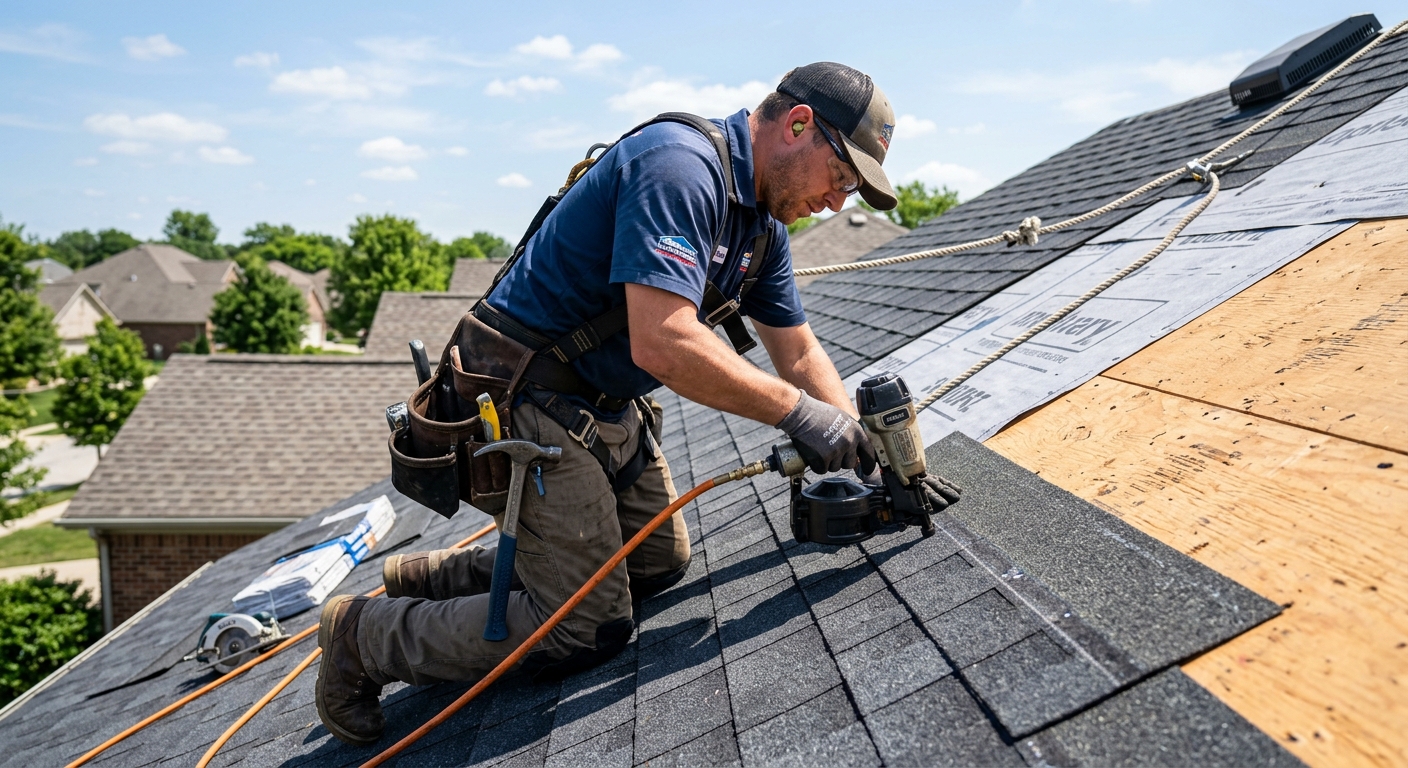
St. Paul homeowners face roofing decisions that are shaped by an older, mostly detached housing stock and a climate that punishes weak assemblies. In the town itself, 56.7% of homes were built before 1981 and 68.3% of households own their dwelling (Statistics Canada, 2021 Census), which means many roofs are reaching the age where a full tear-off, deck repair, or upgraded ventilation becomes more common than a simple patch. That matters in neighbourhoods such as South View, where older bungalows and split-level homes often show ice-dam staining, curling shingles, and flashing wear around chimneys and valleys. The regional market adds another layer: Wood Buffalo–Cold Lake contractors work through shorter install windows, more weather downtime, and higher labour pressure during the peak summer rush, so pricing is typically firmer than in southern Alberta. At the same time, Alberta hail risk pushes demand for impact-rated shingles, while heavy snow and freeze–thaw cycles make quality underlayment and ice-and-water shield standard on most jobs. In practical terms, that means a quote in St. Paul is not just about square footage; it is also about roof pitch, access, layers to remove, ventilation corrections, and whether the system needs to be built for hail, snow load, or both. The comparison below shows the most common options and the price bands homeowners can expect in this market.
| Type |
Typical Use |
Lifespan |
Best For |
Price Range |
| Full asphalt shingle replacement (tear-off + new install) |
Most single-family homes needing a complete refresh |
15–25 years |
Budget-conscious owners with older roofs and straightforward layouts |
$12,000 – $20,000 |
| Architectural / laminated shingle (premium asphalt) |
Higher-end asphalt upgrade for better curb appeal and durability |
20–30 years |
Owners wanting better wind resistance and a longer service life |
$14,500 – $24,000 |
| Impact-resistant shingle (Class 4 — hail & wind zones) |
Homes exposed to hail and storm damage risk |
25–35 years |
Property owners prioritizing resilience and possible insurance savings |
$16,000 – $28,000 |
| Metal roofing (steel panels or standing seam) |
Long-life residential or acreage roofing |
40–50+ years |
Homes facing snow shedding, wind, and long-term value goals |
$18,000 – $38,000 |
| Flat / low-slope membrane (TPO or EPDM) |
Garages, additions, porches, and commercial-style roofs |
20–30 years |
Low-slope surfaces that need watertight detailing |
$14,000 – $32,000 |
| Roof repair + flashing only (no full replacement) |
Leak repairs, chimney work, vent and valley flashing fixes |
2–10 years depending on roof age |
Localized damage where the main roof is still serviceable |
$450 – $4,200 |
Prices are estimates only and vary by project scope, site access and material selection.
What affects the price of roofing in St. Paul
Quotes for the same roof in St. Paul can differ by 30–50% because contractors are not pricing the same risk, labour, or material package. In Wood Buffalo–Cold Lake, snow load and freeze-thaw cycles across Alberta and Ontario drive the need for ice-dam protection, higher-quality underlayment, and careful ventilation details; that can add several hundred dollars on a small roof and well over $1,000 on a larger one. Alberta’s hail belt also pushes demand for impact-rated shingles, so a homeowner comparing a standard asphalt job at $12,000 – $20,000 with a Class 4 option at $16,000 – $28,000 is often seeing a real materials upgrade, not just markup. Coastal BC contractors price differently because persistent rain, wind exposure, and corrosion resistance favour metal and premium synthetic underlayment; in St. Paul, the focus is more on snow shedding, hail resistance, and freeze protection. Shorter install seasons in colder regions also compress demand into a few dry months, which can raise labour rates during peak summer windows. A steep roof in a mature area like Downtown St. Paul may add fall-protection labour and slow production. If a 2,000 sq. ft. roof has two shingle layers to remove, expect extra disposal and labour that can easily add $1,500–$3,500. Deck repairs on older homes built before 1981 can add another few hundred to several thousand dollars if OSB or plywood is soft. Complex flashing around chimneys, skylights, or low-slope tie-ins also moves a quote from the lower end of the range toward the upper end.
| Price Factor |
Why It Matters |
Cost Impact |
| Roof pitch and steepness |
Affects safety equipment and install speed |
Steeper roofs usually add 10–20% to labour |
| Number of shingle layers to tear off |
2 layers = extra labour + disposal |
Often adds $1,500 – $3,500 |
| Total roof area in squares (1 square = 100 sq ft) |
More area means more material and labour |
Each additional square can add $350 – $900 |
| Decking condition |
Rotted OSB or plywood must be replaced |
Typical repairs run $300 – $2,500+ |
| Chimney, skylight and vent flashing complexity |
Custom cutting and sealing take time |
Often adds $250 – $1,200 |
| Ice-and-water shield coverage required (climate-driven) |
Standard in snow and freeze-thaw zones |
Usually adds $200 – $900 |
| Regional labour rates and length of the install season |
Peak demand in short seasons pushes pricing up |
Can raise total quotes 5–15% |
| Material quality tier (standard vs. impact-rated vs. premium) |
Better products cost more but last longer |
Can shift total cost by $2,000 – $8,000 |
Permits & regulations in Alberta
In Alberta, most like-for-like re-roofing does not require a building permit if you are replacing an existing pitched roof with the same general configuration and you are not changing structure. However, a permit is typically required when you add structural deck repairs, alter the roof framing, convert a pitched roof to a flat or low-slope assembly, or change the building in a way that affects loads, drainage, or fire separation. If a contractor is re-sheeting only small areas because the decking is damaged, that may still be part of a permitted structural repair depending on scope. For homeowners in St. Paul, the key is to separate cosmetic replacement from structural work. Before signing, ask for the contractor’s Alberta business registration or local credentials, liability insurance, and WCB coverage. Verify the business online through the appropriate provincial registry or corporate search, then ask for a current certificate of insurance showing policy limits and dates. For WCB, request a clearance letter or account verification that proves the contractor is active and in good standing. If they say the work is “permit-free,” ask them to explain why in writing and who is responsible if the municipality requires one later. Reputable roofers will not hesitate to document this. Manufacturer-certified installers are also worth prioritizing because warranty-backed installs often depend on correct fastening, ventilation, and underlay details, especially in Alberta’s snow and hail conditions.
Choosing the right roofing material for St. Paul's climate
St. Paul sits in a northern continental climate where freeze-thaw severity, snow load, hail risk, and wind exposure all matter when choosing roofing. Standard architectural shingles are usually sufficient for many homes if the roof has a proper attic air seal, strong ventilation, and good ice-and-water shield at eaves and valleys. They are the practical middle ground for a lot of detached homes in town, especially when the existing roof structure is sound and the homeowner wants to stay inside a replacement budget such as $14,500 – $24,000. Impact-rated shingles make sense when the house is in an exposed area, has already suffered hail damage, or the owner wants better storm resilience; in Alberta, the 20–30% premium can be justified if a standard roof would otherwise need earlier replacement after a hail event. For example, spending an extra $3,000 on Class 4 shingles can be easier to defend than replacing a non-rated roof after one hard storm cycle. Metal roofing is the long-game option: steel panels or standing seam can outlast asphalt, shed snow better, and reduce maintenance, but the upfront cost is higher and flashing details must be done well. That can be a smart move on an acreage or a home owner planning to stay 20+ years. Flat or low-slope membranes are the right choice only where the roof geometry demands it, such as additions, garages, or commercial-style buildings. Alberta insurers may offer discounts or preferred treatment for impact-resistant or high-wind-rated products, so it is worth checking before you decide. In resale terms, a clean metal roof or upgraded Class 4 shingle package can be a selling point in the Wood Buffalo–Cold Lake market, where durability is valued alongside curb appeal.
| Material |
Lifespan |
Snow & Ice Performance |
Wind / Hail |
Maintenance |
Price Band |
| Asphalt 3-tab (entry-level) |
12–18 years |
Basic performance; more prone to ice-dam issues if ventilation is weak |
Moderate wind resistance; weakest hail performance |
Higher maintenance, earlier replacement likely |
$12,000 – $18,000 |
| Asphalt architectural / laminated (standard) |
20–30 years |
Good with proper underlayment and ventilation |
Better wind resistance; fair hail performance |
Moderate maintenance |
$14,500 – $24,000 |
| Impact-resistant shingle (Class 4) |
25–35 years |
Strong snow-country option when paired with proper ice protection |
Excellent hail resistance and improved storm durability |
Moderate maintenance, better storm resilience |
$16,000 – $28,000 |
| Metal — steel panels (exposed fastener) |
30–45 years |
Very good snow shedding; watch fastener sealing over time |
Good wind performance; hail visible but often functional |
Low to moderate maintenance |
$18,000 – $30,000 |
| Metal — standing seam (concealed fastener) |
40–60+ years |
Excellent snow management and fewer leak points |
Excellent wind performance; very strong long-term durability |
Low maintenance |
$24,000 – $38,000 |
| Flat TPO / EPDM membrane (low-slope only) |
20–30 years |
Good when drainage is designed correctly |
Depends on edge detailing and fastening; not for steep roofs |
Moderate maintenance, inspection after storms recommended |
$14,000 – $32,000 |
How to choose a roofing contractor in St. Paul
Start by verifying that the contractor is properly registered in Alberta and carries current liability insurance plus WCB coverage. Ask for the certificate of insurance and confirm the policy dates, insurer, and limits; do not accept a verbal promise. For WCB, request a clearance letter or account confirmation, especially if the crew is coming from outside St. Paul. Then get 2 to 3 itemised written quotes that separate labour, materials, underlayment, flashing, ventilation, disposal, and any decking repairs. A lump-sum quote makes it hard to compare apples to apples. Read the scope carefully: does the price include permit pulls if needed, ice-and-water shield at eaves and valleys, ridge vent replacement, magnetic nail sweep, and dump fees? Ask about workmanship warranty length, product warranty terms, and whether either one transfers to the next owner. Payment terms matter too: a reasonable deposit is usually 10–15% maximum, with the balance due only when the work is complete and you have inspected the roof. Get the start date and completion estimate in writing, because weather delays are common in northern Alberta. A professional contractor should also tell you how they will protect siding, landscaping, and driveways during tear-off.
- Verify Alberta business registration before booking.
- Ask for current liability insurance documents.
- Request WCB clearance in writing.
- Get 2 to 3 itemised quotes.
- Compare underlayment and flashing specs, not just price.
- Confirm whether the permit is included if required.
- Check disposal and cleanup are included.
- Ask how many shingle layers will be removed.
- Confirm workmanship warranty length.
- Ask whether product warranties are transferable.
- Require a written start date and completion estimate.
- Keep the deposit to 10–15% and retain final payment until completion.
Red flags in St. Paul include door-to-door storm chasers, quotes that are far below the $12,000 – $28,000 replacement range without a clear explanation, refusal to provide insurance or WCB paperwork, vague “all-in” pricing with no line items, and pressure to pay in full before the job starts. Be cautious if a contractor will not name the shingle brand or membrane system, or if they say ice-and-water shield is optional in Alberta’s climate.
Frequently asked questions — roofing in St. Paul
What roofing warranty should I expect?
In St. Paul, you should expect two warranties: a manufacturer warranty on the roofing product and a workmanship warranty from the installer. For asphalt shingles, product warranties often sound long on paper, but the practical value depends on whether the roof is installed to spec and properly ventilated for Alberta’s freeze-thaw conditions. A workmanship warranty of 5 to 10 years is common for reputable contractors, while premium metal systems may offer longer coverage on both materials and finish. If you are paying in the $14,500 – $24,000 range for a good architectural shingle roof, ask whether the warranty transfers to a future buyer. Also ask what voids it: poor attic ventilation, missing starter strips, or unapproved deck repairs can all become issues later. In Alberta, warranty support matters more than the brochure language, so get it in writing.
Is metal roofing worth the extra cost in St. Paul?
Sometimes, yes. In St. Paul, metal roofing can be worth the extra cost if you plan to stay in the home long-term, want better snow shedding, or have already dealt with hail and repeated shingle repairs. A steel roof in the $18,000 – $38,000 range costs more up front than asphalt, but it can last 40 years or more when installed correctly. That can make sense on older homes in town where the next replacement would otherwise fall on a second homeowner, or on acreages where wind and drifting snow are bigger problems. The key question is whether the premium buys you real value. If you may sell in 5 to 7 years, a quality architectural or Class 4 shingle package may recover more of its cost in the local market than a full standing seam upgrade.
What time of year is best to replace a roof in St. Paul?
The best time is usually late spring through early fall, when temperatures are stable and shingles seal properly. In St. Paul, the install season is shorter than in southern Alberta, so good contractors book up fast once the weather turns. Summer is often ideal for tear-offs and membrane work, but peak demand can push pricing up. If you wait too long into fall, you risk cold-weather sealing problems, shorter daylight hours, and more weather delays. For a project in the $12,000 – $20,000 range, booking early can help you secure a better crew and a better schedule. Emergency leak repairs can happen any time of year, but full replacements are smoother when temperatures allow proper adhesive and shingle bonding. In Alberta, the practical answer is to plan before the first cold snap, not during it.
How do I compare roofing quotes fairly?
Compare the scope, not just the bottom line. In St. Paul, one quote may include full tear-off, two layers of underlayment, ice-and-water shield, new flashing, and disposal, while another may leave those items out. Ask each contractor to list labour, materials, decking repairs, vents, flashing, cleanup, and permit handling separately. That matters because a fair comparison between two replacement quotes in the $12,000 – $28,000 range depends on the same roof structure and material tier being priced. Also check shingle brand, warranty terms, and whether the crew is insured and WCB-covered. If one contractor is using impact-rated shingles and another is quoting standard laminate, the numbers are not equivalent. A fair quote should tell you exactly what you are buying and what will cost extra.
Should I repair or replace my roof in St. Paul?
The answer depends on age, leak pattern, and how much of the roof is failing. If the damage is isolated to one flashing area, a valley, or a handful of missing shingles, a repair in the $450 – $4,200 range may be the sensible choice. But if the roof is older than 20 years, has multiple leaks, curled shingles, soft decking, or repeated ice-dam damage, replacement often costs less over time. That is especially true on homes in St. Paul built before 1981, where the roof system may have been patched several times already. If you are paying for repairs every year, the money may be better put toward a full replacement with proper ventilation and underlayment. A good roofer will show you why the roof can still be repaired or why it has crossed into replacement territory.
What is ice and water shield and do I need it in Alberta?
Ice and water shield is a self-adhering waterproof membrane used at vulnerable areas such as eaves, valleys, chimneys, skylights, and low-slope transitions. In Alberta, and especially in St. Paul, it is a smart protection layer because snow load, freeze-thaw cycles, and ice dams can force water under shingles. On a typical replacement, it is often included in the cost, which can help explain why a quote in the $14,500 – $24,000 range is higher than a bare-bones bid. I would consider it essential on most asphalt roofs here, not optional. It does not replace proper attic ventilation or air sealing, but it adds a critical backup barrier when winter conditions are rough. If a contractor says your roof does not need it in Alberta, ask them how they plan to handle ice damming and wind-driven meltwater.