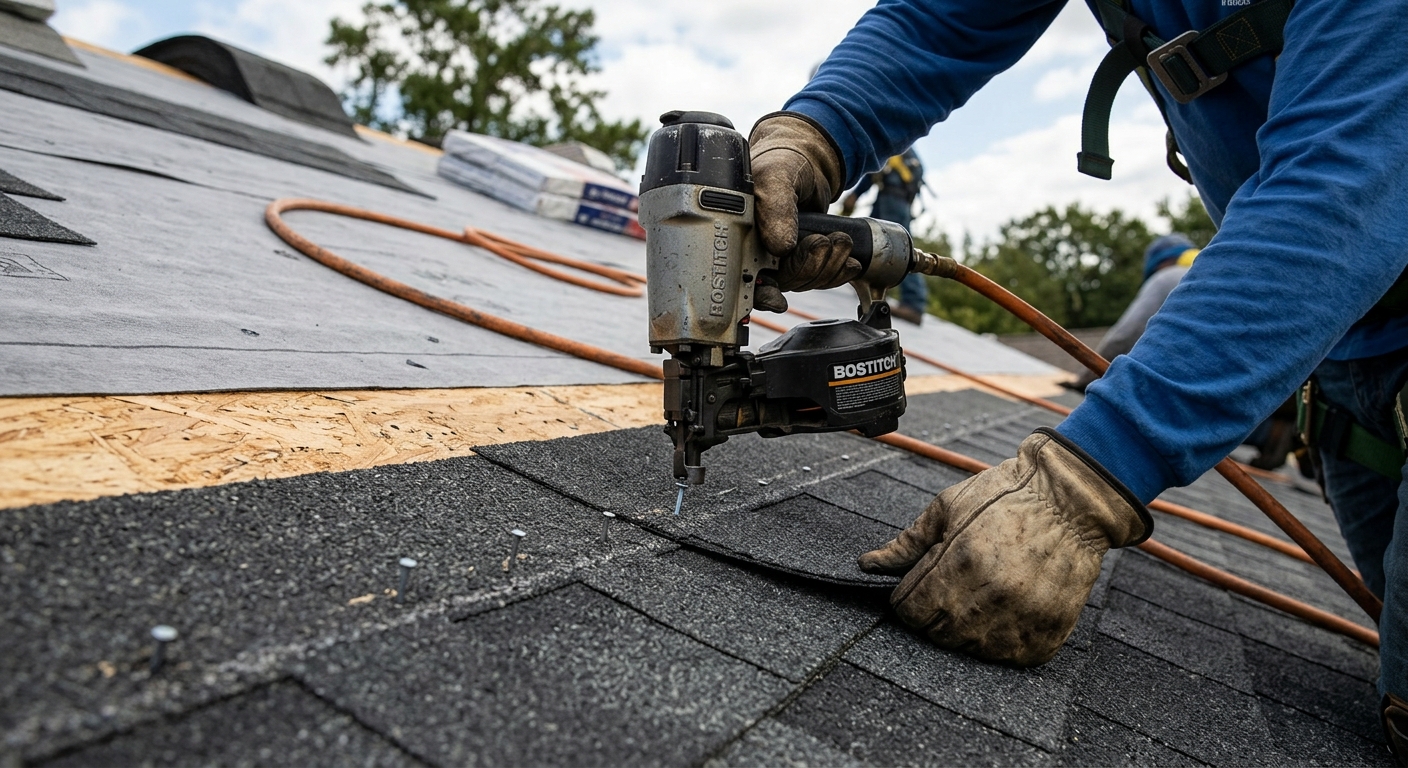
Roofing options and costs in Central Coquitlam
Central Coquitlam homeowners often start shopping for roofing when a small leak becomes a ceiling stain, or when an older home with a tired asphalt roof starts shedding granules after a storm. In a community of 15,480 people (Statistics Canada, 2021 Census), that usually means a mix of established houses, retrofit work, and roofs that are already in the “repair or replace” decision zone. The local market also matters: in the Lower Mainland–Southwest, roofing pricing is shaped less by snow load and more by persistent rain, frequent wind events, and year-round installability. That coastal pattern pushes contractors to spend more on waterproofing details, underlayments, and flashings than they might in drier or colder markets, while strong demand across the Vancouver-to-Abbotsford corridor can tighten scheduling during busy periods.
In practical terms, a roof in Central Coquitlam needs to handle long wet stretches, occasional gusty systems, and runoff that can expose weak flashing fast. Homes around Austin Heights and nearby hillside streets often see more interest in reroofing because access, pitch, and drainage details can complicate labour and staging. On the pricing side, a straightforward asphalt tear-off may fit within the lower end of the local range, while metal and low-slope membrane projects rise quickly once access, flashing complexity, or substrate repair comes into play. The table below gives a realistic comparison so you can line up material choices with budget, lifespan, and maintenance expectations before you start collecting quotes.
| Type |
Typical Use |
Lifespan |
Best For |
Price Range |
| Full asphalt shingle replacement (tear-off + new install) |
Standard pitched homes needing a complete roof reset |
15–25 years |
Most detached homes where budget and solid performance matter |
$8,000 – $18,000 |
| Architectural / laminated shingle (premium asphalt) |
Upgraded pitched roofs with better curb appeal and wind resistance |
20–30 years |
Owners wanting a better look and longer service life |
$9,500 – $20,000 |
| Impact-resistant shingle (Class 4 — hail & wind zones) |
Pitched roofs where extra storm resilience is a priority |
25–35 years |
Homes exposed to heavier wind, falling debris, or insurance incentives |
$11,000 – $24,000 |
| Metal roofing (steel panels or standing seam) |
Long-life residential roofs and high-exposure properties |
40–60 years |
Homeowners prioritizing durability, wind performance, and low maintenance |
$20,000 – $45,000 |
| Flat / low-slope membrane (TPO or EPDM) |
Porches, additions, condos, laneway and low-slope sections |
15–30 years |
Flat roofs that need dependable waterproofing and clean detailing |
$9,000 – $25,000 |
| Roof repair + flashing only (no full replacement) |
Localized leaks, vent collars, chimneys, skylights, edge details |
Varies by issue |
Roofs with otherwise sound shingles or membrane |
$500 – $8,000 |
Prices are estimates only and vary by project scope, site access and material selection.
What affects the price of roofing in Central Coquitlam
Two quotes for what looks like the same roof can still vary by 30%–50% across Lower Mainland–Southwest BC because roofing is never just “shingles and labour.” In Central Coquitlam, the steepness of the roof, the amount of flashing work, access for disposal bins, and how much rain protection the crew has to build in all change the final number. A simple, low-pitch reroof on a straightforward bungalow may land near the bottom of the local asphalt band, while a roof with multiple valleys, skylights, chimneys, and full tear-off can move a job much closer to the top end. If the deck needs repair, the price climbs again, sometimes by several thousand dollars.
The regional climate also influences what contractors include in their bids. In Ontario and Alberta, snow load and freeze-thaw cycles drive extra ice-dam protection and heavier underlayment, while Alberta’s hail belt pushes demand for impact-rated shingles. Coastal BC is different: consistent rain and wind favour robust underlayment, better flashing, and sometimes metal where owners want a longer service life. Shorter install seasons in colder regions concentrate demand and can push labour rates up during peak summer windows, but in Central Coquitlam the bigger issue is often rain days, safe access, and making sure the roof is watertight before the next system arrives. A roof quote that looks low at $8,000 – $18,000 may be missing deck repairs or premium underlayment, while a metal quote in the $20,000 – $45,000 range may reflect extra flashing detail, snow management, or difficult access. Older homes can also need more tear-off labour if there are two shingle layers, which adds disposal fees and time on site.
| Price Factor |
Why It Matters |
Cost Impact |
| Roof pitch and steepness |
Affects safety equipment and install speed |
Steeper roofs usually cost more because fall protection, ladder work and slower production increase labour time. |
| Number of shingle layers to tear off |
2 layers = extra labour + disposal |
Two-layer tear-offs can add several hundred to several thousand dollars, especially if disposal access is tight. |
| Total roof area in squares (1 square = 100 sq ft) |
More material and labour are required as size increases |
Larger roofs move quickly from the low end of the $8,000 – $18,000 band toward the upper end. |
| Decking condition |
Rotted OSB or plywood must be replaced |
Deck repairs often add $80–$150 per sheet installed, depending on access and extent of damage. |
| Chimney, skylight and vent flashing complexity |
More penetrations mean more custom detailing and leak risk |
Each detailed penetration can add meaningful labour and material cost, especially on older homes. |
| Ice-and-water shield coverage required |
Climate-driven waterproofing at eaves, valleys and vulnerable areas |
More coverage increases material cost and labour, but it is often worth it in wet coastal conditions. |
| Regional labour rates and length of the install season |
High construction demand affects crew pricing and availability |
Busy periods can raise labour by 10%–20% and extend lead times. |
| Material quality tier |
Standard vs. impact-rated vs. premium |
Upgrades can add 20%–30% or more, especially for premium asphalt or metal systems. |
Permits & regulations in British Columbia
In British Columbia, most like-for-like re-roofing on a house does not require a building permit, but there are clear exceptions. If you are changing the roof structure, repairing or replacing significant sections of the deck, converting a pitched roof to a flat roof, altering drainage or structural loads, or adding a second layer where the code limit does not allow it, a permit may be required. Replacing shingles with shingles on the same roof shape is usually straightforward; rebuilding framing, changing slope, or opening up major deck sections is not the same kind of job. If your contractor says “permits are never needed,” that is a red flag.
Before signing, verify three things: liability insurance, WCB coverage, and manufacturer certification if the job is supposed to carry a product warranty. Ask for the contractor’s British Columbia business registration or licence details, then check the company name online through the relevant provincial registry or business directory the contractor provides. Next, request a current certificate of insurance showing limits and dates; it should name the contracting company and be active for the project period. For WCB, ask for a clearance letter or account status that confirms the account is active and in good standing. A reputable roofer in Central Coquitlam should provide these documents quickly and without attitude. If they hesitate, change the subject, or want cash-only payment, keep looking. On warranty-backed installs, the manufacturer often requires approved product, correct underlayment, and documented installation methods, so confirm the crew is actually certified for the roof system they are selling.
Choosing the right roofing material for Central Coquitlam's climate
Central Coquitlam’s roofing choice should start with climate, not with the lowest quote. The area sees steady rain, periodic wind exposure, some freeze-thaw stress in colder snaps, and generally lighter snow load than inland or prairie markets. That means your roof needs excellent water shedding, dependable edge and valley detailing, and materials that do not rely on constant dry weather to perform well. Architectural shingles are usually sufficient for many homes because they offer a good balance of cost, appearance and durability. For most detached houses, they are the sensible middle ground between entry-level shingles and premium systems. If you are getting a roof replacement in the $8,000 – $18,000 range, moving from 3-tab to architectural shingles is often money well spent.
Impact-resistant shingles can make sense when your home is especially exposed to wind-driven debris, you want better storm resilience, or your insurer offers a discount for qualifying products. The premium is often 20%–30%, so if a standard architectural roof is $12,000, the upgrade may be worthwhile if it reduces claims risk or improves long-term durability. Metal roofing becomes more attractive when the homeowner wants a 40-plus-year solution, especially on steep or weather-exposed homes, but the upfront cost in Central Coquitlam usually lands in the $20,000 – $45,000 range, so the payback depends on how long you plan to stay. Flat TPO or EPDM is the right call for low-slope sections, additions and porches, where shingle systems are not appropriate. British Columbia does not have the same widespread hail-driven rebate culture as Alberta, but some insurers may offer premium discounts or underwriting benefits for wind-resistant, impact-rated, or high-performance materials. If a homeowner can spend an extra $2,500 on better shingles to avoid repeated leak repairs or a premature replacement, that is often a sensible spend; if the roof is already near end of life, the money may be better directed toward a full system upgrade instead of patching an old assembly.
| Material |
Lifespan |
Snow & Ice Performance |
Wind / Hail |
Maintenance |
Price Band |
| Asphalt 3-tab (entry-level) |
12–18 years |
Basic performance; less forgiving in long wet cycles |
Moderate wind resistance; lower storm resilience |
Higher upkeep, more likely to age visibly sooner |
$8,000 – $12,000 |
| Asphalt architectural / laminated (standard) |
20–30 years |
Good for coastal rain with proper underlayment and flashing |
Better wind performance than 3-tab |
Moderate; occasional inspections recommended |
$9,500 – $20,000 |
| Impact-resistant shingle (Class 4) |
25–35 years |
Strong performance when paired with quality underlayment |
Improved storm resistance; better against debris and severe gusts |
Low to moderate |
$11,000 – $24,000 |
| Metal — steel panels (exposed fastener) |
30–45 years |
Excellent water shedding; good for persistent rain |
Very good wind resistance; hail performance depends on gauge and profile |
Low, but fasteners should be checked over time |
$20,000 – $32,000 |
| Metal — standing seam (concealed fastener) |
40–60 years |
Excellent for wet climates and high runoff conditions |
Excellent wind performance; premium hail resistance when specified correctly |
Very low |
$28,000 – $45,000 |
| Flat TPO / EPDM membrane (low-slope only) |
15–30 years |
Very good when properly detailed at seams and drains |
Wind performance depends on attachment method and edge details |
Moderate; drains and seams should be checked regularly |
$9,000 – $25,000 |
How to choose a roofing contractor in Central Coquitlam
Start by confirming the contractor is legitimate in British Columbia and set up for the exact roof system you need. Ask for their business information, then verify it online through the appropriate provincial registry or corporate search. Request a certificate of insurance and make sure it is current, names the correct company, and covers the full project period. Ask for WCB coverage and a clearance letter, not just a verbal promise. For manufacturer-backed work, confirm the crew is certified for the product they are proposing; that matters if you want the warranty to hold.
Get 2 or 3 itemised written quotes, not vague lump sums. Each quote should break out labour, tear-off, disposal, underlayment, flashing, vents, chimney work, and any deck repair allowance. Read the exclusions carefully: are permits included, is plywood extra, and is disposal covered? Ask what workmanship warranty is offered, how long it lasts, and whether the product warranty is transferable if you sell the home. Payment terms matter too. A reasonable deposit is typically 10%–15% maximum, with a holdback until the work is complete and inspected. Ask for the start date and expected completion date in writing, especially in the rainy season when schedule changes happen. In Central Coquitlam, a contractor who communicates clearly before the job usually performs better after the first leak test.
- Verify the contractor name in a British Columbia online registry or business listing.
- Ask for a current certificate of liability insurance.
- Request WCB coverage or a clearance letter in writing.
- Get 2–3 itemised quotes with labour and materials separated.
- Confirm tear-off, disposal and clean-up are included.
- Ask whether permits are included if they are required.
- Check what decking repair allowance is built into the price.
- Confirm the underlayment brand and flashing scope.
- Ask how many years the workmanship warranty lasts.
- Ask whether the manufacturer warranty is transferable.
- Keep the deposit to 10%–15% and pay the rest by milestone.
- Get a written start date and a completion estimate.
Watch for red flags such as a cash-only request, no local address, a quote that is far below the others, refusal to name the underlayment or flashing product, pressure to sign the same day, and vague promises that “permits are never needed.” In Central Coquitlam, those shortcuts usually show up later as water leaks, change orders, or poor cleanup.
Frequently asked questions — roofing in Central Coquitlam
What time of year is best to replace a roof in Central Coquitlam?
For Central Coquitlam, late spring through early fall is usually the best window because you get more stable weather, fewer rain interruptions, and better conditions for sealing details properly. That said, British Columbia’s coastal climate means good contractors can still replace roofs outside peak summer if they plan for rain and protect the exposed deck. If you are comparing bids in the $8,000 – $18,000 range, a summer install may be more efficient, but it can also be busier and harder to schedule. If your roof is actively leaking, do not wait for “perfect weather”; emergency tarping or a fast repair may be the smarter move before full replacement. The key is dryness during installation, not just the calendar.
How do I compare roofing quotes fairly?
To compare roofing quotes fairly in Central Coquitlam, make sure each contractor is pricing the same scope: tear-off, disposal, underlayment, flashing, vents, drip edge, deck repairs, and cleanup. One bid may look lower only because it excludes plywood replacement or uses a thinner underlayment. Ask for line items, not lump sums, and compare the warranty terms too. A quote in the $9,500 – $20,000 range for architectural shingles can be excellent value if it includes proper flashings and a workmanship warranty, while a cheaper bid may leave out essentials. In British Columbia, the cheapest quote is not always the best because rain protection and flashing quality matter more than in drier regions. If two quotes differ by more than 15%–20%, ask both contractors to explain exactly why.
Should I repair or replace my roof in Central Coquitlam?
Repair makes sense in Central Coquitlam when the roof is still structurally sound, the leak source is localized, and the rest of the covering is not near the end of its life. Flashing repairs, vent replacements, or a few damaged shingles can often be handled within the $500 – $8,000 repair band. Replacement is the better option when you have widespread granule loss, repeated leaks, soft decking, multiple prior patches, or two layers of shingles on an older roof. Because the Lower Mainland–Southwest gets so much rain, a roof with marginal details can fail faster than expected, especially around chimneys and skylights. If your repair bill keeps climbing, it may be more cost-effective to replace the whole system once rather than chase leaks season after season.
What is ice and water shield and do I need it in British Columbia?
Ice and water shield is a self-adhered waterproof membrane installed at vulnerable areas such as eaves, valleys, around skylights, chimneys and roof penetrations. Even though Central Coquitlam does not face the same heavy snow and ice conditions as inland or prairie markets, British Columbia still sees long rain periods, wind-driven water, and occasional freeze-thaw events that can push moisture under shingles. That makes targeted membrane coverage a smart investment. It is usually not necessary to blanket the whole roof, but it should be used where water intrusion risk is highest. On a typical asphalt reroof in the $8,000 – $18,000 range, better underlayment and proper membrane placement can prevent repairs that cost far more later. A good contractor will explain where the membrane goes and why.
How do I spot a low-quality roofing bid in Central Coquitlam?
A low-quality roofing bid in Central Coquitlam often looks attractive because it is vague. Watch for one-line quotes, no mention of underlayment brand, no flashing scope, no disposal line, and no clarification on deck repairs. If the price is dramatically below the local market, that usually means corners are being cut somewhere. A roof priced well below the $8,000 – $18,000 asphalt band may be missing key components, while a flat-roof bid far under $9,000 – $25,000 may not include proper membrane detailing or edge metal. Other red flags include a cash-only request, no insurance documents, no WCB clearance, and no written warranty. In British Columbia’s wet climate, those omissions matter because leaks show up quickly when flashing or underlayment is done poorly.
What roofing upgrades add the most resale value in Central Coquitlam?
In Central Coquitlam, the upgrades that usually add the most resale value are visible, durable, and low-maintenance. Architectural shingles generally give the best return for most detached homes because they improve curb appeal and fit comfortably within the $9,500 – $20,000 range. If the home is higher-end or especially exposed to wind, metal roofing can add appeal and long-term value, although the upfront cost in the $20,000 – $45,000 range is not always fully recovered at resale. Buyers in British Columbia tend to appreciate roofs with proper flashing, clean soffits, and evidence of quality installation more than flashy product names. If you plan to sell within a few years, a reliable mid- to upper-grade asphalt system is often the smartest value move unless the house profile clearly supports a premium metal upgrade.