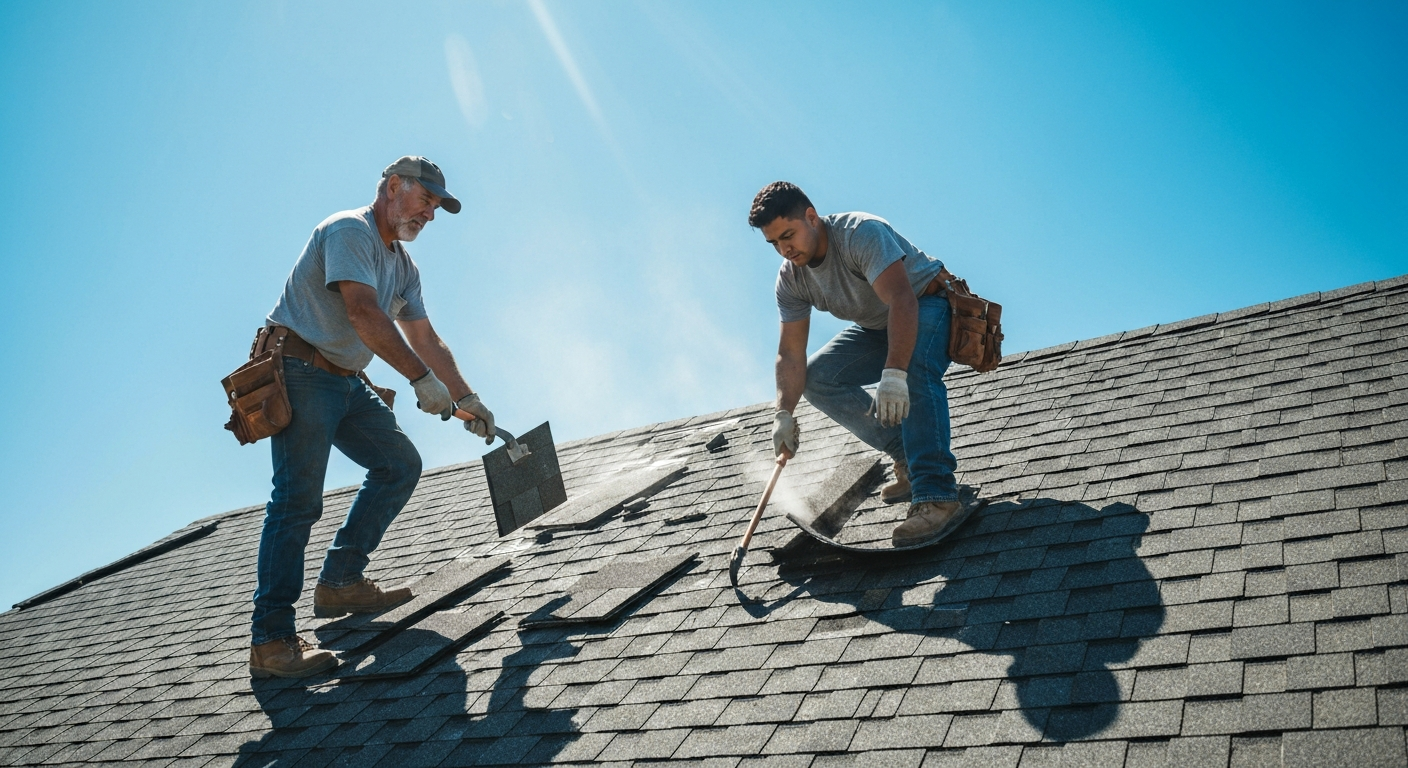
Roofing options and costs in Grousewoods
Grousewoods homeowners usually want a roof that can handle long stretches of coastal rain, occasional wind-driven storms, and a modest snow load without turning every repair into a major project. With a population of 1,320 (Statistics Canada, 2021 Census), Grousewoods is a small market, so the pool of available roofers can be thinner than in the larger Vancouver-side suburbs; that often means faster scheduling in slow periods, but tighter labour availability when storms hit and leaks start showing up at once. In the Lower Mainland–Southwest, pricing is shaped less by heavy snow work and more by waterproofing details, careful flashing, and weather windows that let crews work through damp conditions without compromising adhesion. That is why a roof in Grousewoods can cost more than a simple national “average” once you factor in underlayment upgrades, chimney detailing, and access constraints on steeper streets.
In a neighbourhood like West Vancouver’s hillside edges and similar pockets near Grousewoods, homes commonly need more attention at valleys, skylights, and wall flashings because wind-driven rain finds every weakness. Older homes can also mean more tear-off labour, especially if there are two shingle layers or tired plywood that needs replacement. The good news is that coastal BC does not usually require the same ice-dam build-out you would budget for in colder Ontario or Alberta markets, which keeps some costs in check. The trade-off is that the best value often comes from better underlayment and flashing rather than simply the cheapest shingle. If you are comparing quotes for a full replacement in the $8,000 – $18,000 range, the biggest differences usually come from material tier, roof complexity, and whether the contractor is pricing for dry weather only. The table below shows how the main roofing options stack up in Grousewoods.
| Type |
Typical Use |
Lifespan |
Best For |
Price Range |
| Full asphalt shingle replacement (tear-off + new install) |
Most detached homes needing a complete renewal |
15–25 years |
Budget-conscious homeowners replacing worn shingles |
$8,000 – $18,000 |
| Architectural / laminated shingle (premium asphalt) |
Upgraded steep-slope residential roofs |
20–30 years |
Better curb appeal, thicker protection, stronger wind resistance |
$10,000 – $22,000 |
| Impact-resistant shingle (Class 4 — hail & wind zones) |
Homes where impact resistance and storm performance matter |
25–30 years |
Added durability, insurance-minded upgrades, exposed sites |
$12,000 – $26,000 |
| Metal roofing (steel panels or standing seam) |
Long-life replacement for steep-slope roofs |
40–50+ years |
Maximum durability, wind performance, lower lifetime maintenance |
$20,000 – $45,000 |
| Flat / low-slope membrane (TPO or EPDM) |
Flat roofs, additions, balconies, low-slope sections |
15–30 years |
Watertight performance on low-slope areas and multi-plane roofs |
$9,000 – $25,000 |
| Roof repair + flashing only (no full replacement) |
Localized leaks, damaged flashings, small storm repairs |
Varies by repair scope |
Targeted fixes when the roof is otherwise serviceable |
$500 – $8,000 |
Prices are estimates only and vary by project scope, site access and material selection.
What affects the price of roofing in Grousewoods
Two homeowners in Grousewoods can get quotes that differ by 30–50% for what sounds like the same roof because the fine print is never the same. One quote may assume a straightforward tear-off and standard underlayment, while another builds in extra disposal, new plywood, upgraded flashing, and safer access equipment for a steeper roof. Across Lower Mainland–Southwest BC, coastal rain and wind push contractors toward better waterproofing details, while in Ontario and Alberta the pricing story changes because snow load and freeze-thaw cycles force more ice-dam protection and heavier underlayment. Alberta’s hail belt also drives demand for impact-rated shingles, which lifts the material bill. In colder provinces, shorter install seasons compress demand into a few summer months, and labour rates often rise accordingly. Grousewoods benefits from year-round installability, but access, weather delays, and material choices still move the price sharply.
For example, a simple asphalt reroof might sit near the low end of the $8,000 – $18,000 range if the deck is sound and the roof is easy to walk. Add two layers to tear off, rotten plywood at a few sections, and a couple of skylight flashings, and that same job can jump several thousand dollars. On the other hand, a compact low-slope addition could land around $9,000 – $25,000, depending on membrane type and how much edge metal and drainage correction is required. In Grousewoods, one of the biggest local cost drivers is water management: wind-driven rain means better underlayment, more careful valley work, and stronger flashing details at walls, chimneys, and penetrations. Older housing stock can also hide decking repairs that add $75–$150 per sheet once labour and materials are counted. Steep roofs near exposed waterfront or hillside locations may need more crew time, which raises labour even when the material list stays unchanged.
| Price Factor |
Why It Matters |
Cost Impact |
| Roof pitch and steepness |
Affects safety equipment and install speed |
Steeper roofs need more fall protection and take longer, often adding 10–20% |
| Number of shingle layers to tear off |
2 layers = extra labour + disposal |
Can add $1,000 – $3,500 or more depending on roof size |
| Total roof area in squares (1 square = 100 sq ft) |
Larger roofs need more material and labour |
More squares usually moves the job into a higher band, especially above 20 squares |
| Decking condition — rotted OSB or plywood must be replaced |
Hidden repairs are common under old shingles |
Replacement sheets often add $75 – $150 each installed |
| Chimney, skylight and vent flashing complexity |
More penetrations mean more labour and leak risk |
Can add $300 – $2,000 depending on detail count |
| Ice-and-water shield coverage required (climate-driven) |
Extra membrane is common at eaves, valleys and penetrations |
Usually adds a modest material premium; more coverage raises both material and labour |
| Regional labour rates and length of the install season |
Strong demand and weather windows affect crew pricing |
Can swing total quotes by 15–25% between slower and peak periods |
| Material quality tier (standard vs. impact-rated vs. premium) |
Better products cost more but often last longer |
Impact-rated shingles can add 20–30% over standard architectural shingles |
Permits & regulations in British Columbia
In British Columbia, most like-for-like re-roofing jobs do not need a building permit, so replacing worn asphalt shingles with new shingles on the same roof shape is usually straightforward. That said, permits are commonly required if you are adding structural changes, replacing sheathing because of rot, converting a pitched roof to a flat roof, altering drainage in a way that affects structure, or building an addition. If the work changes the roof assembly in a major way, the municipality may want drawings or confirmation that the structure can handle the new load. A second layer of roofing is also a red flag: many roof systems are not meant to carry extra layers indefinitely, and local code or manufacturer instructions can limit what is acceptable.
Before signing, ask the contractor for three things: proof of liability insurance, proof of WCB coverage, and manufacturer certification if they are promising a warranty-backed install. To verify liability insurance, ask for a current certificate of insurance showing the insured business name and coverage dates. For WCB, request a clearance letter or account confirmation from WorkSafeBC, then check it against the company name. For contractor legitimacy, look for the business in the relevant British Columbia online registry and confirm the legal name matches the quote, invoice and insurance certificate. If a roofer refuses to provide these documents, that is a serious warning sign. In Grousewoods, where wind-driven rain can turn a small mistake into a ceiling leak, it is worth taking ten extra minutes to confirm the paperwork before any deposit changes hands.
Choosing the right roofing material for Grousewoods's climate
Grousewoods sits in a coastal BC climate where the roof has to deal more with water than snow, but that does not mean the weather is easy on materials. Freeze-thaw swings are less brutal than in the Prairies or Ontario, yet damp conditions, wind exposure, and prolonged wet periods still punish weak shingles and sloppy flashing. Standard architectural asphalt shingles are often the sweet spot for many homes because they balance cost, appearance, and reliability. On a typical detached house, they often make sense when the roof is simple, the pitch is reasonable, and the homeowner plans to stay for 10–15 years. If the difference between standard and impact-rated shingles is, say, $2,000 – $4,000 on a mid-sized roof, the upgrade only makes sense if the house is especially exposed, the existing roof has been repeatedly wind-lifted, or the insurance savings help offset the premium.
Impact-rated shingles can be worth the 20–30% uplift in locations that see more storm stress or where homeowners want better resilience and possibly better insurance treatment, but they are not automatically the best investment for every roof in Grousewoods. Metal roofing becomes attractive when long-term durability matters more than upfront cost: it shrugs off wind better than basic asphalt, sheds water quickly, and can last 40 years or more with proper installation. Flat TPO or EPDM makes sense only where the roof is actually low-slope, such as additions or contemporary designs, because those systems are engineered for standing-water control and watertight seams. In British Columbia, some insurers and product manufacturers may offer better terms for high-wind-rated or impact-resistant assemblies, but the savings are not always dramatic, so ask before assuming a rebate will appear. Resale value also matters: a well-installed metal roof can be a selling point, while a cheap 3-tab reroof can look dated sooner and may need replacement earlier. For many Grousewoods homes, the right answer is not the most expensive roof, but the one that best matches the roof’s geometry, exposure and maintenance plan.
| Material |
Lifespan |
Snow & Ice Performance |
Wind / Hail |
Maintenance |
Price Band |
| Asphalt 3-tab (entry-level) |
15–20 years |
Acceptable in mild coastal conditions, but weakest at sealed edges |
Moderate wind resistance; lower impact performance |
Higher maintenance, more likely to age visibly |
$8,000 – $14,000 |
| Asphalt architectural / laminated (standard) |
20–30 years |
Good for Grousewoods rain and modest snow load |
Better wind resistance than 3-tab |
Moderate maintenance |
$10,000 – $22,000 |
| Impact-resistant shingle (Class 4) |
25–30 years |
Strong all-around protection with better sealed construction |
Best asphalt option for wind and impact exposure |
Moderate maintenance, often better storm resilience |
$12,000 – $26,000 |
| Metal — steel panels (exposed fastener) |
30–45 years |
Excellent shedding of rain and wet snow |
Very good wind performance; impact depends on gauge and finish |
Low to moderate maintenance, watch fasteners |
$20,000 – $35,000 |
| Metal — standing seam (concealed fastener) |
40–50+ years |
Excellent for coastal rain and runoff |
Outstanding wind performance; strong long-term durability |
Low maintenance |
$28,000 – $45,000 |
| Flat TPO / EPDM membrane (low-slope only) |
15–30 years |
Good when slopes and drainage are correct |
Good if edges and seams are detailed well |
Moderate maintenance, inspections recommended |
$9,000 – $25,000 |
How to choose a roofing contractor in Grousewoods
Start with proof, not promises. Ask each contractor to show current liability insurance, WorkSafeBC coverage, and any manufacturer certification they rely on for warranty-backed installs. Liability insurance should be in the legal business name on the quote; WorkSafeBC should have an active clearance letter or account standing, and the name should match the crew company exactly. Then request 2 to 3 itemised quotes so you can compare labour, materials, tear-off, disposal, flashing, ventilation, and decking repair separately instead of trying to decode one lump sum. In Grousewoods, that breakdown matters because small details like extra flashing or wet-weather underlayment can explain a large share of the difference between bids. Read the scope carefully: ask what is excluded, whether permits are included if needed, whether disposal is included, and what happens if rotten plywood is found. Warranty language should also be clear: workmanship warranty length, manufacturer warranty term, and whether the warranty transfers to a new owner if you sell.
Payment terms should be conservative. A normal deposit is usually no more than 10–15%, with the balance tied to completion and inspection. Get the start date and estimated completion date in writing, especially during a busy rain break. Practical checklist:
- Verify the legal company name matches the quote and invoice.
- Ask for a current certificate of liability insurance.
- Check WorkSafeBC coverage or clearance before any deposit.
- Confirm the contractor’s local business address and phone number.
- Request 2 to 3 written, itemised quotes.
- Compare underlayment, flashings, ventilation and disposal line by line.
- Ask whether permits are included if the scope changes.
- Confirm decking replacement pricing per sheet.
- Get workmanship warranty length in writing.
- Ask if the manufacturer warranty is transferable.
- Make sure the payment schedule is staged, not front-loaded.
- Require a written start date and completion estimate.
Red flags in Grousewoods include a roofer who will not provide insurance documents, a quote that is far below the $8,000 – $18,000 replacement range without explanation, pressure for a large cash deposit, vague “extras as needed” wording, and crews that cannot explain how they will manage wet weather, flashing, or disposal.
Frequently asked questions — roofing in Grousewoods
What are the signs I need a new roof?
In Grousewoods, the warning signs are often water-based rather than snow-based. Look for curling or cracked shingles, moss that has started lifting edges, repeated leaks after wind-driven rain, granules piling up in gutters, and soft spots near valleys or chimneys. Inside the home, stains on ceilings, bubbling paint, or damp attic insulation are strong clues that the roof assembly is failing. If your roof is approaching the lower end of the $8,000 – $18,000 replacement band and you are already paying for repairs every year, replacement usually makes better financial sense than repeated patching. Older homes in British Columbia can also hide bad flashing or tired decking, so a roof that looks “fine” from the street may still be near the end of its service life.
Can I roof over my existing shingles?
Sometimes, but it is rarely the best choice in Grousewoods. A second layer can trap heat, hide decking damage, and make future leaks harder to trace. It can also limit warranty coverage and create extra weight on the structure. In British Columbia, some projects may be allowed only if the existing roof is in good condition and local code requirements are met, but many roofers will recommend a full tear-off because coastal rain makes hidden problems more expensive later. If you are already near the $8,000 – $18,000 asphalt reroof range, spending a little more for a clean tear-off often improves durability and long-term value. Roof-over jobs also complicate flashing around chimneys, vents and skylights, which are exactly the places where leaks start in wet Lower Mainland weather.
How do ice dams affect roofs in Grousewoods and how do I prevent them?
Ice dams are less common in Grousewoods than in colder parts of Canada, but they can still happen during cold snaps when a warm attic melts snow and the water refreezes at the eaves. That backed-up water can work under shingles, soak insulation, and stain ceilings. Prevention starts with balanced attic ventilation, proper insulation, and solid edge detailing. On coastal BC roofs, the bigger issue is usually not deep snow but poor flashing and water intrusion during repeated freeze-thaw events. A well-installed roof in the $8,000 – $18,000 range should include proper underlayment and sealed transitions at valleys and eaves. If your home has older roof framing or spotty attic airflow, ask the contractor to inspect soffits, ridge vents and bath fan exhausts before the new roof goes on, because those details matter more than cosmetic shingle choice.
What roofing warranty should I expect?
For a proper roof replacement in British Columbia, expect two separate warranties: the manufacturer’s product warranty and the contractor’s workmanship warranty. On a Grousewoods home, a typical workmanship warranty might be 5 to 10 years, while manufacturer coverage depends on the product line and whether the install followed approved instructions. Higher-end products in the $10,000 – $22,000 architectural band or above may come with stronger material coverage, but only if the roofer is certified and the install is documented properly. Ask whether the warranty is transferable if you sell the home, because that can matter to buyers. Just as important, get the exclusions in writing: blown-off shingles from poor fastening, ponding on low-slope sections, or neglected maintenance may not be covered. A warranty is only useful if the contractor is easy to reach and the paperwork is complete.
Is metal roofing worth the extra cost in Grousewoods?
Often, yes, but only if you plan to stay long enough to benefit from the lifespan. In Grousewoods, metal roofing makes sense on exposed sites, steeper roofs, or homes where wind resistance and low maintenance are priorities. A steel roof in the $20,000 – $45,000 range costs much more upfront than asphalt, but it can outlast two asphalt replacements and usually handles coastal rain very well. Standing seam systems are especially strong for long-term value because the fasteners are concealed, which reduces maintenance. If your home is modest and the roof geometry is simple, architectural shingles may still be the better return. But if you have repeated shingle blow-offs, lots of shade and moss, or a buyer pool that values premium finishes, metal can improve resale appeal in British Columbia.
What time of year is best to replace a roof in Grousewoods?
Late spring through early fall is usually the easiest window for roof replacement in Grousewoods because crews get more dry stretches for tear-off, underlayment and flashing work. That said, coastal BC is much more installable year-round than colder provinces, so good contractors can still roof in cooler months if the weather cooperates. The key is avoiding long wet periods that slow progress and make adhesion less reliable. If you wait until the first major storm, pricing can rise as emergency demand spikes, even on a job that would normally sit near the $8,000 – $18,000 band. Booking ahead also helps you secure a better crew and a cleaner start date. For low-slope work in particular, choose a dry forecast and ask how the contractor will protect open sections overnight if the weather turns.