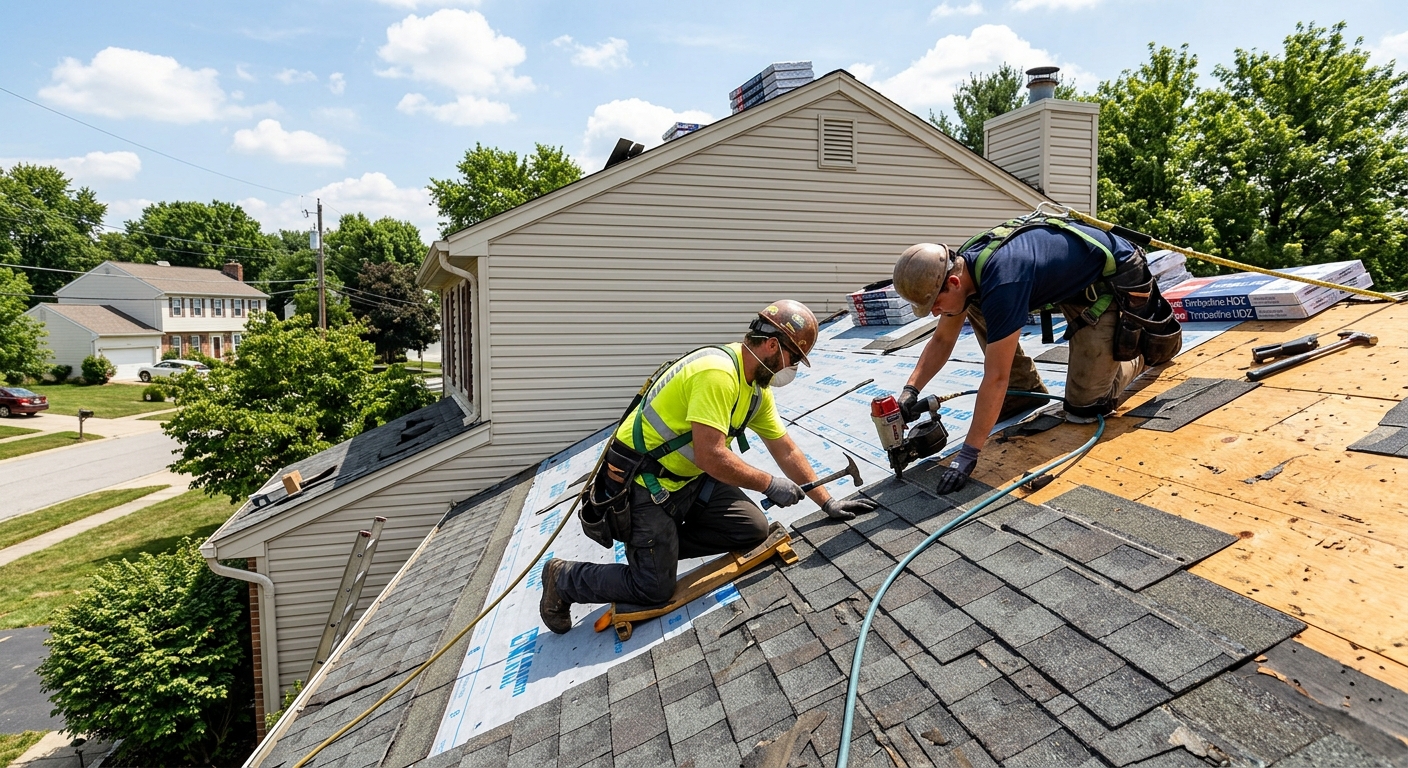
Roofing options and costs in Mary Hill
Mary Hill homeowners often start comparing roofing quotes when a roof is nearing the end of its service life, and in this area that usually means paying close attention to age, exposure and repair history. Mary Hill has a population of 3,974 (Statistics Canada, 2021 Census), so it is a small, tightly defined pocket of Port Coquitlam where word-of-mouth matters and roofers are often seeing the same housing stock year after year. In neighbourhoods with older homes and repeat repair cycles, two-layer tear-offs and hidden deck damage become more common, which can push a standard replacement beyond the base pricing quickly. In Lower Mainland–Southwest BC, the market is shaped by long stretches of rain, wind-driven storms and fewer snow-load complications than Ontario or Alberta. That means contractors here spend more effort on waterproofing details, flashings and underlayment than on heavy ice-dam buildouts, but labour is still competitive because the Vancouver–Surrey–Burnaby corridor has a strong construction market and tight access on many lots. In Mary Hill, where steep roofs and mature trees are common around areas like Dominion Avenue and the hillside streets near Westwood/Clarke, roofers often price for access, debris control and careful water management. That is why one quote may look simple on paper while another includes better underlayment, upgraded flashings or a more durable material. The comparison below shows the typical options homeowners in Mary Hill see most often, along with realistic local price bands.
| Type |
Typical Use |
Lifespan |
Best For |
Price Range |
| Full asphalt shingle replacement (tear-off + new install) |
Standard sloped homes needing complete renewal |
15–25 years |
Budget-conscious homeowners wanting a straightforward replacement |
$8,000 – $18,000 |
| Architectural / laminated shingle (premium asphalt) |
Most detached homes and better curb-appeal upgrades |
20–30 years |
Homeowners wanting better wind resistance and appearance |
$10,000 – $20,000 |
| Impact-resistant shingle (Class 4 — hail & wind zones) |
Higher-performance sloped roofing where durability matters |
25–35 years |
Owners who want stronger impact and wind performance |
$12,000 – $24,000 |
| Metal roofing (steel panels or standing seam) |
Long-life steep-slope roofs and premium replacements |
40–50+ years |
Homeowners prioritizing longevity and storm resistance |
$20,000 – $45,000 |
| Flat / low-slope membrane (TPO or EPDM) |
Porches, additions, flats and low-slope sections |
20–30 years |
Proper drainage and reliable waterproofing on flat areas |
$9,000 – $25,000 |
| Roof repair + flashing only (no full replacement) |
Targeted fixes for leaks, penetrations and storm damage |
2–10 years depending on condition |
Localized problems where the roof field is still serviceable |
$500 – $8,000 |
Prices are estimates only and vary by project scope, site access and material selection.
What affects the price of roofing in Mary Hill
In Mary Hill and across Lower Mainland–Southwest BC, it is normal for two quotes on the same roof to differ by 30–50% because contractors are not always pricing the same scope. One roofer may include premium synthetic underlayment, wider metal flashings, full perimeter ice-and-water shield and upgraded ventilation, while another may quote a basic replacement that only meets minimum expectations. Climate explains much of that spread. Ontario and Alberta roofs often require more ice-dam protection, heavier underlayment and colder-weather detailing because snow load and freeze-thaw cycles are harsher; Alberta also sees stronger demand for impact-rated shingles because of hail risk. Coastal BC is different: sustained rain and gusty wind push contractors toward better waterproofing, metal detailing and premium underlayment, but the milder winter means the price driver is usually weatherproofing quality rather than deep cold protection. In Mary Hill, a steep roof on a split-level home may add labour because setup is slower and fall protection is more involved. A home with two layers of shingles can add several thousand dollars in tear-off and disposal costs before new materials are even installed. By contrast, a simple single-layer asphalt job on a smaller roof may stay closer to the low end of the $8,000 – $18,000 range. If the roof has skylights, chimneys or rotted plywood, the total can move toward the $9,000 – $25,000 flat-roof or higher-end replacement band depending on the system. Older housing stock and repeated patching also increase the odds of surprise deck repairs, which can add $1,000–$4,000 or more once the old covering comes off.
| Price Factor |
Why It Matters |
Cost Impact |
| Roof pitch and steepness |
Affects safety equipment and install speed |
Steeper roofs often add 10–25% to labour |
| Number of shingle layers to tear off |
2 layers = extra labour + disposal |
Can add $1,000 – $3,500 |
| Total roof area in squares (1 square = 100 sq ft) |
More area means more material and labour |
Each additional square adds roughly $400 – $900 depending on material |
| Decking condition |
Rotted OSB or plywood must be replaced |
Can add $800 – $4,000 or more |
| Chimney, skylight and vent flashing complexity |
More penetrations mean more labour and leak risk |
Often adds $300 – $1,500 |
| Ice-and-water shield coverage required |
Climate-driven waterproofing detail |
Can add $300 – $1,200 |
| Regional labour rates and length of the install season |
Local demand and scheduling pressure affect pricing |
May shift the quote by 10–20% |
| Material quality tier |
Standard vs. impact-rated vs. premium |
Can move a job from $8,000 – $18,000 to $20,000 – $45,000 |
Permits & regulations in British Columbia
In British Columbia, most like-for-like re-roofing jobs do not require a building permit when you are simply replacing the same type of roof covering on an existing structure. That usually includes stripping old shingles and installing new asphalt shingles, or replacing old metal with new metal, provided you are not changing the structure or roof form. A permit is much more likely to be required if the work includes structural deck repairs, framing changes, adding new skylights that alter the roof opening, converting a pitched roof to a flat roof, or making changes that affect building envelope performance. If the contractor is adding a second layer where local code or manufacturer rules do not allow it, that should be discussed carefully before work begins. Homeowners in Mary Hill should also confirm the contractor carries valid liability insurance, WCB coverage for workers, and manufacturer certification if they want warranty-backed installation. Start by checking the company name in an online business registry and asking for their insurance certificate and WCB clearance letter before any deposit changes hands. The insurance certificate should name the contractor and show current dates and coverage limits; the WCB clearance letter should confirm workers are covered if someone gets hurt on your property. Then ask the contractor to explain whether your exact scope needs a permit, and get that answer in writing. If they are vague, that is a warning sign. A reputable roofer will tell you plainly whether the job is a simple replacement or one that crosses into permit territory.
Choosing the right roofing material for Mary Hill's climate
Mary Hill sits in a mild coastal climate, but that does not mean roofs get an easy life. The real issue here is prolonged rain, seasonal wind and wet winters that test every flashing, seam and nail line. Architectural shingles are usually the sensible choice for many homes because they balance price, appearance and decent wind resistance, especially on standard detached houses where the roof shape is uncomplicated. For a typical Mary Hill homeowner, that often means staying within the $10,000 – $20,000 range while still getting a roof that looks good and performs well. Impact-rated shingles can be worth the 20–30% premium if your home has heavy tree exposure, stronger wind loading or a history of storm-related shingle loss; they can also make sense if your insurer offers a discount or if you want a tougher product on a house you plan to keep long term. Metal roofing starts to make financial sense when you want lower maintenance, stronger wind performance and a 40-year-plus service life, but the upfront cost is much higher. On a small house, paying an extra $8,000–$15,000 over premium asphalt can be hard to justify unless resale value, durability and reduced repair risk matter a lot. Flat or low-slope membrane systems are the correct choice for additions and low-pitch sections because they manage standing water better than shingles. In British Columbia, some high-wind-rated products may qualify for better insurance treatment, but homeowners should always verify the specifics with their insurer before assuming a discount. In this climate, the best roof is not necessarily the cheapest one today; it is the one that matches the roof slope, drainage and exposure of the home you actually have.
| Material |
Lifespan |
Snow & Ice Performance |
Wind / Hail |
Maintenance |
Price Band |
| Asphalt 3-tab (entry-level) |
15–20 years |
Basic performance; acceptable in mild BC winters |
Moderate wind resistance; limited hail resistance |
Higher maintenance and earlier replacement risk |
$8,000 – $14,000 |
| Asphalt architectural / laminated (standard) |
20–30 years |
Good for coastal rain and typical freeze-thaw cycles |
Better wind performance than 3-tab |
Moderate maintenance; good all-around choice |
$10,000 – $20,000 |
| Impact-resistant shingle (Class 4) |
25–35 years |
Strong all-season performance with upgraded underlayment |
Best shingle option for wind and impact resistance |
Low-to-moderate maintenance |
$12,000 – $24,000 |
| Metal — steel panels (exposed fastener) |
30–45 years |
Excellent shedding in rain and light snow |
Very good wind resistance; good impact tolerance |
Low maintenance; fasteners need periodic checks |
$20,000 – $35,000 |
| Metal — standing seam (concealed fastener) |
40–50+ years |
Excellent for wet BC conditions and drainage |
Top-tier wind performance; strong long-term durability |
Very low maintenance |
$28,000 – $45,000 |
| Flat TPO / EPDM membrane (low-slope only) |
20–30 years |
Excellent when drainage is designed correctly |
Good wind performance when edges and seams are detailed properly |
Moderate maintenance; seam and drainage checks important |
$9,000 – $25,000 |
How to choose a roofing contractor in Mary Hill
Start by verifying that the contractor is operating legally in British Columbia and can prove their insurance and workers’ coverage before you discuss a start date. Ask for the company’s legal business name, then check it against an online registry and request a current certificate of liability insurance. The certificate should show the policy number, effective dates and coverage limits; do not accept a screenshot without the underlying policy details. Next, ask for a WCB clearance letter or equivalent coverage confirmation so you know workers are protected on your property. Get at least 2–3 itemised written quotes and make sure each one separates labour, materials, removal, disposal, flashings, underlayment and any deck repairs. If a quote is just a lump sum, you cannot compare it properly. Read the scope closely and ask what is excluded: permit application fees, rotten plywood replacement, chimney repointing, gutter work, and interior leak repairs are all common exclusions. Ask how long the workmanship warranty lasts, what the manufacturer warranty covers and whether the warranty transfers to a buyer if you sell your home. For payment, never put down more than 10–15% upfront, and keep a holdback until the work is complete, inspected and cleaned up. Finally, get the expected start date and completion estimate in writing so you are not left waiting through the rainy season.
- Confirm the exact legal company name.
- Check insurance dates and limits before signing.
- Ask for WCB coverage or clearance documentation.
- Get 2–3 itemised quotes, not lump sums.
- Compare underlayment, flashing and ventilation, not just shingle brand.
- Ask whether permit fees are included.
- Confirm disposal and magnet cleanup are included.
- Ask how many plywood sheets are included before extra charges begin.
- Read the workmanship warranty length carefully.
- Verify whether manufacturer warranties are transferable.
- Keep the deposit low and tied to material ordering only.
- Get a written schedule with start and finish dates.
Red flags in Mary Hill include a roofer who will not provide insurance paperwork, pushes for a large cash deposit, refuses to itemise flashing or disposal, gives a “today only” price drop, or cannot explain why their quote is far below a realistic $8,000 – $18,000 asphalt replacement range.
Frequently asked questions — roofing in Mary Hill
Asphalt shingles vs metal roofing — which is better for Mary Hill's climate?
For many Mary Hill homes, architectural asphalt shingles are the practical middle ground because they handle coastal rain well, look familiar on local housing stock and usually stay within the $10,000 – $20,000 range. Metal roofing is better if your priority is long service life, strong wind resistance and lower maintenance over decades, but the upfront cost is often much higher, typically in the $20,000 – $45,000 band. In British Columbia’s Lower Mainland–Southwest climate, the decision usually comes down to roof pitch, exposure and how long you plan to stay in the home. Metal can be a smart investment on steep, weather-exposed roofs, while asphalt is often the better value on standard suburban homes where resale appeal and moderate cost matter most.
How long should a roof last in Mary Hill?
In Mary Hill, lifespan depends on material, ventilation and how well the roof was detailed against rain and wind. Standard asphalt shingles often last 15–25 years, premium laminated shingles can reach 20–30 years, and metal roofing can exceed 40 years when installed properly. Flat membrane systems usually fall in the 20–30 year range. Because Mary Hill is in British Columbia’s coastal climate, persistent moisture and storm exposure matter more than snow load, so maintenance and flashing quality are critical. If you see curling shingles, repeated leaks, or patching that keeps returning, the roof may be near the end of its useful life even if the shingles are not visibly falling apart. A proper replacement within the $8,000 – $18,000 asphalt band can be cheaper than years of repeated repairs.
Do I need a permit to replace my roof in British Columbia?
Usually, a straightforward like-for-like roof replacement in British Columbia does not need a building permit. That generally applies when you are replacing shingles with shingles or metal with metal on the same roof form, without structural changes. You are more likely to need a permit if the job includes deck repairs that affect structure, changing a pitched roof to a flat roof, adding openings like skylights, or altering the roof framing. In Mary Hill, the safest approach is to ask the contractor to confirm in writing whether your exact scope needs a permit. If the work is only a normal replacement, you may stay within a typical $8,000 – $18,000 or $20,000 – $45,000 material band, but structural work can move the total higher.
What are the signs I need a new roof?
Common signs include curled or missing shingles, repeated leaks, soft spots in the roof deck, daylight in the attic, loose flashing around chimneys or skylights, and granules collecting in gutters. In Mary Hill, moss growth and moisture staining can also be a clue because the local climate stays damp for long periods. If you are seeing repairs every winter or spring, replacement may be more economical than chasing leaks. Homeowners often first notice problems after a wind event, which is common in the Lower Mainland. If the roof is already near the end of a 15–25 year asphalt lifespan, a full replacement in the $8,000 – $18,000 range is often the more sensible fix than patching again.
Can I roof over my existing shingles?
Sometimes, but it is usually not the best choice for Mary Hill homes. Roofing over existing shingles can hide deck damage, add unnecessary weight and reduce the quality of the finished roof. If there are already two layers, many contractors will recommend a tear-off instead of a third layer because it gives a cleaner, longer-lasting result. In British Columbia’s wet climate, proper underlayment and flashing matter more than saving a little tear-off cost. A roof-over may seem cheaper at first, but it can create problems with warranty coverage and future repairs. If the current roof is nearing replacement anyway, a full tear-off in the standard $8,000 – $18,000 range is often the better long-term choice.
How do ice dams affect roofs in Mary Hill and how do I prevent them?
Ice dams are less of a problem in Mary Hill than in colder parts of Canada, but they can still happen during cold snaps, especially on poorly ventilated roofs with warm attic air and uneven melt-and-refreeze cycles. The bigger issue here is usually wind-driven rain finding weak points in the roof system. Prevention starts with good attic insulation, proper ventilation, sealed penetrations and high-quality underlayment at edges and valleys. In British Columbia, the best defence is often not heavy ice-dam hardware but careful waterproofing and flashing. If you are replacing the roof, ask the contractor to include a sensible perimeter membrane detail and confirm attic airflow. Spending a bit more within the $10,000 – $20,000 shingle range can be justified if it prevents repeat leak repairs later.