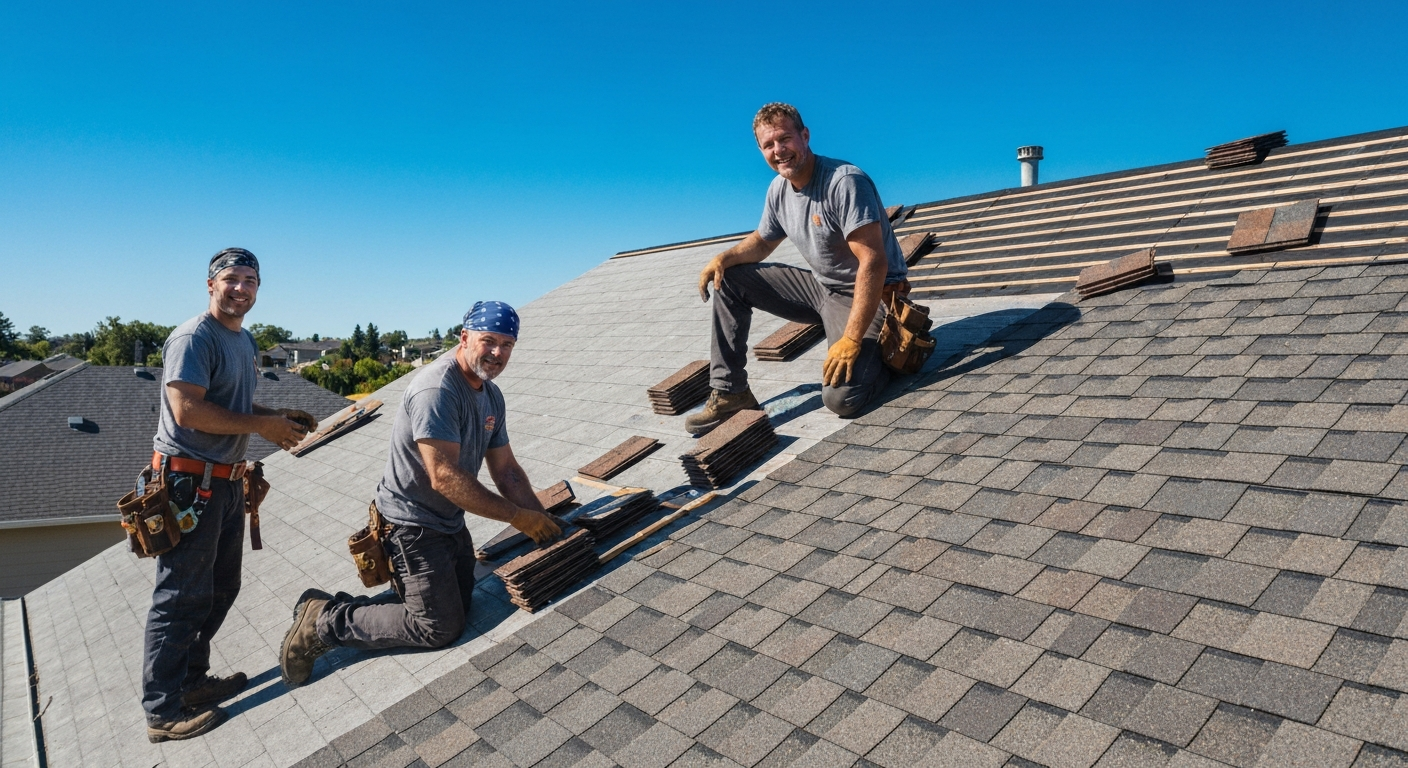
Roofing options and costs in Queensborough
Queensborough homeowners are in a coastal market where roofs age more from persistent rain, wind-driven moisture and flashing fatigue than from heavy snow loads, so the right system is usually about waterproofing quality, not just shingle thickness. With a population of 11,000 in the 2021 Census, this is a compact community where contractors often see repeat work on older houses, townhomes and mixed residential buildings; that matters because older roof assemblies are more likely to have worn underlayment, soft decking or prior patch repairs that complicate a “simple” replacement (Statistics Canada, 2021 Census). In neighbourhood pockets like Port Royal and along the waterfront edges of Queensborough, wind exposure and long wet spells make leak protection especially important. Compared with inland markets, Lower Mainland–Southwest pricing is shaped by year-round installability, urban access and steady construction demand, which keeps quotes more predictable than in colder provinces but still firmly tied to site conditions and material choice. In this climate, contractors often budget extra attention to high-quality underlayment, step flashing, eave detailing and ventilation because a small detailing error can turn into a recurring leak. For many homeowners, the biggest price difference comes from whether the job is a straightforward tear-off or one that uncovers deck repairs, two layers of old shingles or complicated penetrations. The comparison below shows the realistic range most Queensborough homeowners should expect when they start collecting bids.
| Type |
Typical Use |
Lifespan |
Best For |
Price Range |
| Full asphalt shingle replacement (tear-off + new install) |
Standard detached homes and townhouses needing a complete refresh |
20–30 years |
Homeowners wanting the lowest upfront cost with a familiar look |
$8,000 – $18,000 |
| Architectural / laminated shingle (premium asphalt) |
Most resale-focused homes and properties exposed to stronger weather |
25–35 years |
Better curb appeal, thicker profile and improved wind performance |
$9,500 – $20,500 |
| Impact-resistant shingle (Class 4 — hail & wind zones) |
Homes where insurance savings or added durability are priorities |
25–40 years |
Storm resilience and better resistance to wind damage |
$11,000 – $24,000 |
| Metal roofing (steel panels or standing seam) |
Long-life replacements for exposed or high-maintenance roofs |
40–60 years |
Durability, low maintenance and strong wind performance |
$20,000 – $45,000 |
| Flat / low-slope membrane (TPO or EPDM) |
Garages, additions, condos and low-slope sections |
20–30 years |
Reliable waterproofing on low-slope roofs |
$9,000 – $25,000 |
| Roof repair + flashing only (no full replacement) |
Targeted leak repairs, step flashing, vents, chimneys and penetrations |
Varies by existing roof condition |
Buying time when the roof structure is still sound |
$500 – $8,000 |
Prices are estimates only and vary by project scope, site access and material selection.
What affects the price of roofing in Queensborough
For the same roof, quotes in Lower Mainland–Southwest British Columbia can vary by 30–50% because contractors are not pricing the same risk, access or detailing package. A simple rancher in Queensborough with one layer of shingles, easy ladder access and clean decking may land near the lower end of the $8,000 – $18,000 asphalt replacement band, while a steep roof with two tear-off layers, multiple skylights and soft plywood can climb quickly into the premium range. Coastal BC rain and wind also push contractors toward better underlayments, upgraded flashings and more careful edge detailing, while Ontario and Alberta projects often carry extra cost for ice-dam protection, cold-roof ventilation and heavier underlayment because snow load and freeze-thaw cycles are harsher. Alberta’s hail belt further increases demand for impact-rated shingles, which can add meaningful material cost per square foot. In contrast, Queensborough does not usually need the same level of snow-driven build-up, but it does need durable waterproofing, especially where rooflines meet walls, chimneys and side entries. Labour can also run higher on tight urban lots, shared driveways and waterfront access where staging materials is harder. On a low-slope garage or addition, a membrane system in the $9,000 – $25,000 range may be the right answer if repeated patching is already costing money. If the deck needs repairs, add several hundred to several thousand dollars immediately. That is why one quote might look “high” while actually including proper disposal, replacement plywood and upgraded flashing that another contractor left out.
| Price Factor |
Why It Matters |
Cost Impact |
| Roof pitch and steepness |
Affects safety equipment and install speed |
Steeper roofs cost more because crews work slower and need more fall protection |
| Number of shingle layers to tear off |
2 layers = extra labour + disposal |
Can add several hundred to a few thousand dollars depending on area and access |
| Total roof area in squares (1 square = 100 sq ft) |
Larger roofs need more material, labour and waste removal |
Often the biggest driver of total price; every additional square adds cost |
| Decking condition |
Rotted OSB or plywood must be replaced |
Usually adds $80–$150 per sheet installed, sometimes more with difficult access |
| Chimney, skylight and vent flashing complexity |
Penetrations take time and require precision to prevent leaks |
Can add $150–$500+ per detail depending on type and condition |
| Ice-and-water shield coverage required |
Climate-driven protection at eaves, valleys and penetrations |
Moderate cost increase; more coverage means more material and labour |
| Regional labour rates and length of the install season |
Market demand affects crew pricing and scheduling |
Can shift the quote by 10–20% during peak season or busy months |
| Material quality tier (standard vs. impact-rated vs. premium) |
Higher-grade products last longer and may improve wind performance |
Can raise the total by 20–40% depending on the material choice |
Permits & regulations in British Columbia
In British Columbia, most like-for-like re-roofing does not require a building permit, but there are important exceptions. If you are changing the roof structure, adding or modifying framing, replacing extensive decking, converting a pitched roof to a flat roof, or making structural repairs beyond normal maintenance, a permit is often required. Large alterations to roof geometry or load-bearing components are not treated the same as a simple tear-off and re-shingle. By contrast, a standard replacement of asphalt shingles with new asphalt shingles on an existing roofline typically does not trigger a permit, provided the work stays within the existing structure and local requirements. Before hiring anyone in Queensborough, ask for three things: proof of liability insurance, proof of WCB coverage in British Columbia, and manufacturer certification if the job is meant to carry a system warranty. Check the contractor’s business name and licence details in an online business registry, then request a current certificate of insurance showing coverage limits and expiration dates. For WCB, ask for a clearance letter or account confirmation showing the company is in good standing. If they hesitate, give vague answers, or cannot produce documents immediately, walk away. A real contractor will expect this request. Also confirm whether the company uses trained installers approved by the shingle or membrane manufacturer, because warranty claims can be denied if the product is not installed to spec. In a market like Queensborough, where wet-weather details matter, paperwork is part of the quality check.
Choosing the right roofing material for Queensborough's climate
Queensborough’s climate calls for materials that can handle repeated rain, wind-driven moisture and the occasional freeze-thaw cycle without depending on heavy snow protection. For many homes, architectural shingles are the practical middle ground: they are more robust than entry-level 3-tab products, cost less than metal, and usually make sense when the roof deck is sound and the homeowner wants a balanced upgrade. If the roof is straightforward and the budget is tight, architectural shingles often deliver the best value in the lower end of the $8,000 – $18,000 range. Impact-resistant shingles are worth considering when the home sits in a more exposed part of Queensborough, when the roof has previously lost tabs in windstorms, or when an insurer offers a meaningful credit for upgraded materials. The premium is often 20–30%, but that can be justified if it helps avoid an early repair or reduces long-term claims risk. A metal roof makes the most financial sense when the homeowner plans to stay put long term, wants the lowest maintenance burden, or has a property where wind resistance and water shedding are top priorities. In the Lower Mainland–Southwest market, the upfront cost is much higher, but the service life and resale appeal can offset that over time. Flat TPO or EPDM systems are the correct choice on low-slope sections, additions and garages where shingles simply are not appropriate. Insurance discounts for high-wind-rated or impact-rated materials are not universal in British Columbia, but some carriers do recognise upgraded systems, so it is worth asking before you sign. As a rule of thumb, spending an extra $2,000–$4,000 on better shingles is reasonable if it adds years of service; spending that much on a roof that will be replaced soon is not.
| Material |
Lifespan |
Snow & Ice Performance |
Wind / Hail |
Maintenance |
Price Band |
| Asphalt 3-tab (entry-level) |
15–20 years |
Basic performance; relies on proper underlayment and detailing |
Moderate wind resistance; weakest option for storm exposure |
Higher maintenance and earlier curling or granule loss |
$8,000 – $14,000 |
| Asphalt architectural / laminated (standard) |
25–35 years |
Good overall for coastal BC when installed with proper flashing |
Better wind resistance than 3-tab; moderate hail resistance |
Moderate maintenance; inspect after storms |
$9,500 – $20,500 |
| Impact-resistant shingle (Class 4) |
25–40 years |
Good performance with strong underlayment and sealed detailing |
Best asphalt option for wind and impact resistance |
Lower storm-related maintenance; inspect seals periodically |
$11,000 – $24,000 |
| Metal — steel panels (exposed fastener) |
30–45 years |
Excellent water shedding; needs careful fastening and flashing |
Very good wind performance; limited hail dent resistance depending on gauge |
Low to moderate maintenance; fasteners may need checks |
$20,000 – $35,000 |
| Metal — standing seam (concealed fastener) |
40–60 years |
Excellent in sustained rain and stormy weather |
Excellent wind performance; strong long-term durability |
Low maintenance; best premium option for longevity |
$28,000 – $45,000 |
| Flat TPO / EPDM membrane (low-slope only) |
20–30 years |
Strong for low-slope drainage when seams and edges are detailed correctly |
Good wind resistance if properly secured; hail resistance varies |
Moderate maintenance; periodic seam and drain checks |
$9,000 – $25,000 |
How to choose a roofing contractor in Queensborough
Start by confirming the contractor is operating legally in British Columbia and can actually stand behind the work. Ask for the legal business name, then verify it online through the relevant provincial business and licence registry. Next, request a current certificate of insurance showing liability coverage and the policy expiry date; do not rely on a verbal promise. For WCB coverage, ask for a clearance letter or account confirmation, especially if the company uses employees rather than only subcontractors. Then ask for 2–3 itemised written quotes, each showing labour, materials, tear-off, disposal, flashing, vents and any plywood replacement separately. A lump sum with no breakdown makes it hard to compare. Read the scope carefully: is permit pulling included, are dump fees included, and what is excluded if hidden deck damage is found? Ask for both workmanship and manufacturer warranty details, including whether the warranty is transferable if you sell the home. Payment should be staged, with no more than 10–15% upfront and the balance held until the job is complete and cleaned up. Get the start date and completion estimate in writing. In Queensborough, where wet weather can interrupt a job, ask how the crew handles tarp protection and rain delays.
- Verify the contractor’s business identity in an online registry.
- Ask for a current certificate of liability insurance.
- Request WCB coverage confirmation or a clearance letter.
- Get 2–3 itemised quotes, not lump sums.
- Compare labour, materials, disposal and flashing separately.
- Confirm whether permit pulling is included.
- Ask what happens if rotten plywood or hidden damage is found.
- Check workmanship warranty length in writing.
- Confirm manufacturer warranty terms and transferability.
- Keep the deposit to 10–15% maximum.
- Ask for a start date and finish estimate in writing.
- Make sure cleanup, magnets and disposal are included.
Red flags in Queensborough include a contractor who will not name the insurer, refuses to show WCB paperwork, pushes a same-day signature, only offers a cash price, or leaves out disposal and flashing from the quote. Another warning sign is a bid that is far below the others but somehow “includes everything.”
Frequently asked questions — roofing in Queensborough
What roofing warranty should I expect?
In Queensborough, you should expect two warranties: a workmanship warranty from the roofer and a product warranty from the manufacturer. A solid contractor will usually offer at least 5 years of workmanship coverage, and some will provide longer terms on premium systems. Manufacturer warranties vary a lot, especially if the roof is installed exactly to spec with approved accessories. For a standard asphalt replacement in the $8,000 – $18,000 range, ask whether the warranty is transferable if you sell the home, because that can matter in British Columbia’s resale market. Also ask if the warranty covers labour, not just the shingles themselves. In a wet coastal climate, flashing and installation quality matter as much as the product name, so a strong warranty is only useful if the contractor is properly insured and certified.
Is metal roofing worth the extra cost in Queensborough?
Metal roofing can be worth it in Queensborough if you plan to stay in the home long term, want lower maintenance, or have wind exposure that makes repeat asphalt repairs frustrating. A steel or standing seam roof often costs well above the $20,000 – $45,000 band, but it can last 40 years or more with proper installation. In British Columbia’s rainy coastal environment, metal sheds water very well and handles storm gusts better than basic shingles. The trade-off is upfront cost, so if you are only staying five to seven years, premium asphalt may give better short-term value. Some insurers may recognise high-wind-rated systems, but discounts are not guaranteed, so ask before you commit. In Queensborough, the decision often comes down to whether long-term durability is worth the higher cheque today.
What time of year is best to replace a roof in Queensborough?
Late spring through early fall is usually the easiest window for roofing in Queensborough because weather is more stable and crews can work more predictably. That said, Lower Mainland–Southwest British Columbia is more installable year-round than colder provinces, so a good roofer can still replace a roof in shoulder seasons if conditions are managed properly. Summer and early autumn are often busiest, which can push scheduling and sometimes labour rates. If your roof is leaking, do not wait just to hit a perfect month; emergency repairs in the $500 – $8,000 range may buy time until a full replacement is practical. The main advantage of replacing in drier weather is fewer interruptions and less tarping. In Queensborough, where rain can return quickly, ask how the contractor protects exposed decking if the project spans multiple days.
How do I compare roofing quotes fairly?
Compare roofing quotes in Queensborough by making sure every contractor is pricing the same scope. If one quote includes a full tear-off, new flashings, vent replacements and disposal, while another only prices shingles, the cheaper number is misleading. Ask for itemised pricing for labour, materials, tear-off, dumpster, plywood replacement and permit work. Then compare the warranty terms and whether the product line is identical. A fair comparison often shows why one quote lands near $9,500 – $20,500 while another is much lower. In British Columbia’s coastal climate, cheap bids sometimes skip essential underlayment or flashing details that matter more than the shingle brand. Also check whether the roofer included ice-and-water shield, drip edge and cleanup. The best quote is usually the one that explains the job clearly, not the one with the lowest headline price.
Should I repair or replace my roof in Queensborough?
Repair if the roof is generally sound, the leak is isolated, and the damage is limited to flashing, vents or a small area of shingles. Replace if the roof is near the end of its service life, has multiple leaks, repeated patching, soft decking or widespread curling and granule loss. In Queensborough, older roofs can deteriorate faster because persistent rain and wind-driven moisture wear out sealants and flashing. If repairs are already creeping into the high end of the $500 – $8,000 repair band, it may be smarter to put that money toward a full replacement in the $8,000 – $18,000 range. A contractor should inspect the attic, decking and roof surfaces before recommending either option. If they push a replacement without showing evidence, get a second opinion.
What is ice and water shield and do I need it in British Columbia?
Ice and water shield is a self-adhering waterproof membrane installed at vulnerable roof areas such as eaves, valleys, skylights and penetrations. In Queensborough and across British Columbia, it is useful because wind-driven rain can get under shingles at the edges long before you see damage indoors. While it is often discussed more in snowy provinces, coastal BC still benefits from targeted membrane coverage, especially on low-slope sections or roofs with lots of valleys. You do not usually need full-roof coverage on every home, but you do want it where water is most likely to back up. On a standard replacement in the $8,000 – $18,000 range, ask how much membrane is included and whether the contractor is following the manufacturer’s recommended layout. Proper coverage is a small cost compared with a leak repair later.