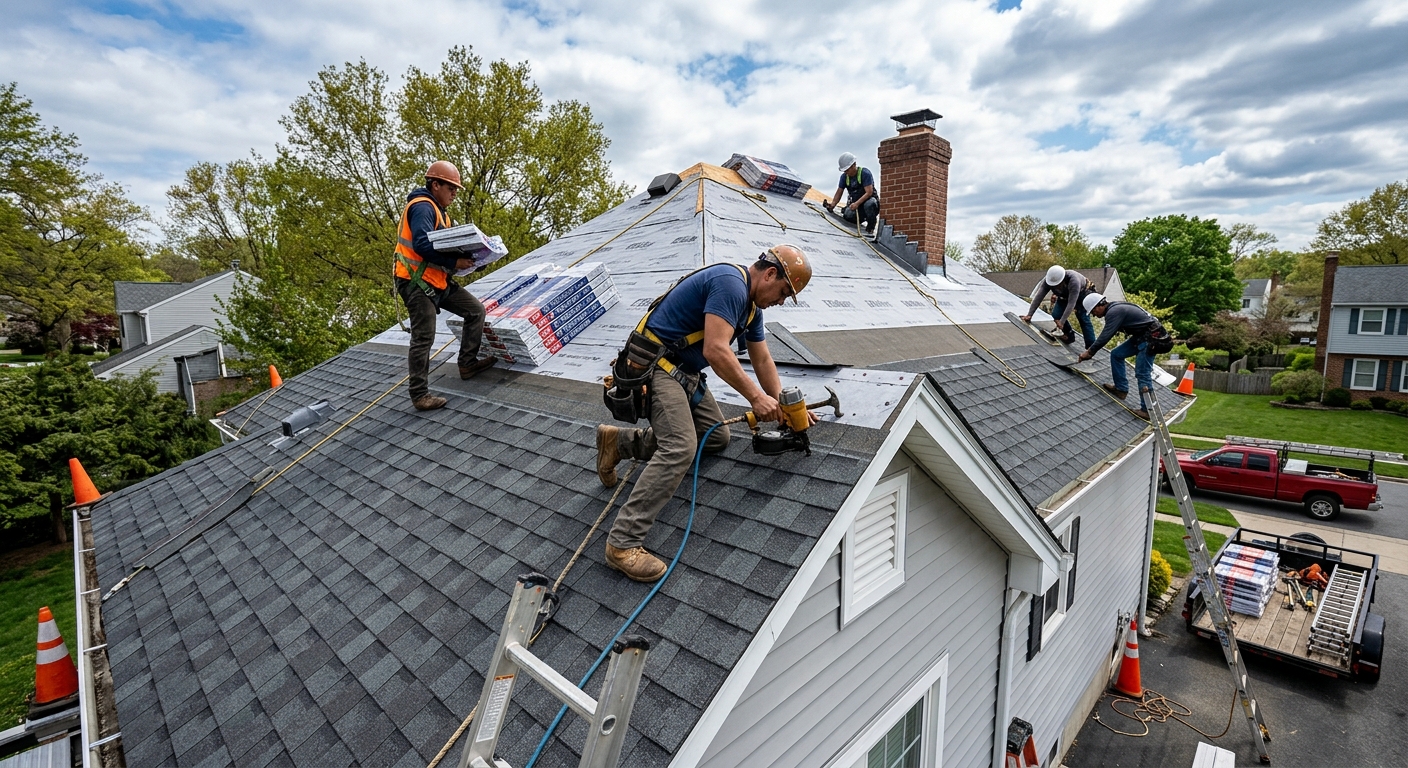
Roofing options and costs in Vancouver
Vancouver homeowners often start comparing quotes when a roof reaches that awkward middle stage: it is not failing everywhere, but it is no longer something you want to ignore through another rainy season. That is especially true here because 43.0% of homes were built before 1981, and in a city where many houses are older, roof decks, flashings and ventilation details are more likely to need extra work during replacement. With 138,845 homeowner households in the city, roofing demand stays steady, and the North Shore to Kitsilano to East Vancouver corridor keeps experienced crews busy year-round. The local climate also shapes pricing: Lower Mainland–Southwest BC gets sustained rain, wind events and relatively modest snow loads, so contractors focus more on waterproofing, underlayment and flashing quality than on the heavy ice-dam packages common in colder provinces. That usually makes workmanship and access a bigger part of the quote than winter-specific build-ups, though steep sites, laneway access and older framing can still push labour higher. In neighbourhoods like Dunbar, Kerrisdale and Mount Pleasant, older homes and tight lot access often mean more detailed tear-off and protection work, which is why two quotes for the same roof can differ noticeably. The comparison below shows the most common options homeowners in Vancouver will be offered, along with typical life expectancy and realistic local pricing.
| Type |
Typical Use |
Lifespan |
Best For |
Price Range |
| Full asphalt shingle replacement (tear-off + new install) |
Most detached homes and townhomes with pitched roofs |
18–25 years |
Budget-conscious homeowners needing a full reset |
$8,000–$18,000 |
| Architectural / laminated shingle (premium asphalt) |
Upgraded pitched roofs with better curb appeal |
25–30 years |
Owners wanting better wind resistance and appearance |
$10,000–$20,000 |
| Impact-resistant shingle (Class 4 — hail & wind zones) |
Homes exposed to stronger wind or insurance-driven upgrades |
25–30 years |
Property owners prioritizing storm performance |
$12,000–$24,000 |
| Metal roofing (steel panels or standing seam) |
Long-life pitched roofs, heritage-sensitive upgrades and coastal exposure |
40–50+ years |
Durability, wind resistance and low maintenance |
$20,000–$45,000 |
| Flat / low-slope membrane (TPO or EPDM) |
Modern homes, condos, coach houses and commercial-style roofs |
20–30 years |
Flat or low-slope structures needing reliable waterproofing |
$9,000–$25,000 |
| Roof repair + flashing only (no full replacement) |
Local leaks, chimney work, vent boots, skylight flashing, minor storm damage |
Varies by repair |
Targeted fixes when the roof is otherwise serviceable |
$500–$8,000 |
Prices are estimates only and vary by project scope, site access and material selection.
What affects the price of roofing in Vancouver
In the Lower Mainland–Southwest region, quotes for the same roof can easily vary by 30% to 50% because contractors are pricing more than just shingles or membrane. They are pricing access, slope, tear-off complexity, deck repairs, weather risk and how much time they expect to spend keeping the job watertight in a rainy coastal climate. A simple bungalow with easy driveway access may land near the bottom of the full replacement range, while an older East Vancouver house with two layers to remove, soft plywood and multiple penetrations can move well toward the upper end. That is one reason a straightforward asphalt replacement might be quoted at $8,000–$18,000, while a flat membrane job with deck repairs and detailed flashing can move into the $9,000–$25,000 range. Across Ontario and Alberta, snow load and freeze-thaw cycles drive heavier ice-dam protection and more underlayment work, and Alberta’s hail belt increases demand for impact-rated shingles. By contrast, Vancouver’s rain and wind favour premium underlayments, meticulous flashing and, in some cases, metal roofing. Colder regions also have shorter install seasons, which concentrates demand and pushes summer labour rates higher; in Vancouver, year-round installability helps, but urban congestion, parking limits and steep lots still raise labour. A Mount Pleasant heritage home with old decking can add several thousand dollars in hidden repairs, while a newer build in Richmond with simple rooflines may stay close to the base estimate.
| Price Factor |
Why It Matters |
Cost Impact |
| Roof pitch and steepness |
Affects safety equipment, staging and install speed |
Steeper roofs can add $1,000–$4,000 |
| Number of shingle layers to tear off |
2 layers means extra labour and more disposal |
Often adds $1,500–$3,500 |
| Total roof area in squares (1 square = 100 sq ft) |
Larger roofs need more materials and labour hours |
Every extra square can add $500–$1,200 |
| Decking condition |
Rotted OSB or plywood must be replaced before roofing |
Can add $75–$150 per sheet installed |
| Chimney, skylight and vent flashing complexity |
More penetrations mean more detail work and leak risk |
Usually adds $300–$2,000 |
| Ice-and-water shield coverage required |
Climate-driven waterproofing at eaves, valleys and critical areas |
Can add $250–$1,500 |
| Regional labour rates and length of the install season |
Busy urban crews and weather windows affect pricing |
Often changes total by 10%–20% |
| Material quality tier |
Standard, impact-rated and premium products are priced differently |
Can shift the job by $2,000–$10,000 |
Permits & regulations in British Columbia
In British Columbia, most like-for-like re-roofing does not require a building permit when you are simply replacing the existing roof covering with a similar system and not changing the structure. That said, a permit is more likely if you are adding a second layer where local code or the existing structure does not allow it, replacing damaged roof framing or decking in a structural way, or converting a pitched roof to a flat or low-slope assembly. If the project changes the roof’s load path, drainage or structural configuration, assume it needs review. Contractors should also carry liability insurance, WCB coverage for their workers, and manufacturer certification or approved installer status where warranty-backed systems require it. Before signing, ask for the contractor’s British Columbia business information and check it against the online registry or corporate listing, then request a certificate of insurance showing current liability coverage. For WCB, ask for a clearance letter or account status confirmation so you are not exposed if a worker is injured on site. A reputable roofer in Vancouver will provide all three without hesitation. If they dodge the question, that is a warning sign. For older homes in Vancouver, especially where there is visible sagging, rotten sheathing or prior patchwork, it is smart to confirm whether any structural work will be part of the scope before the job starts.
Choosing the right roofing material for Vancouver's climate
Vancouver’s coastal climate is really a water-management problem first and a snow problem second. We get long wet periods, wind-driven rain, occasional winter freeze-thaw on colder nights, and enough exposed shoreline and elevated sites that uplift resistance matters. For many homes in the Lower Mainland–Southwest market, an architectural shingle is sufficient if the roof pitch is sound, the attic is ventilated properly and the installer uses quality underlayment and flashings. That said, if your house is exposed to stronger gusts or has a history of blown-off shingles, impact-resistant shingles can be worth the 20% to 30% premium. On a typical roof, spending an extra $2,000 to $4,000 over a basic asphalt job may buy better wind performance and fewer repairs over time. Metal roofing starts to make financial sense when you plan to stay long term, want lower maintenance or have a site that sees repeated storm exposure; the upfront cost is higher, but the lifespan can be double or more than standard asphalt. Flat TPO or EPDM is the right choice for low-slope roofs, where water shedding matters more than appearance. In British Columbia, some insurers may offer better terms for wind-resistant assemblies, but rebates are limited and usually more project-specific than province-wide. For many Vancouver homeowners, the decision comes down to whether a $10,000–$20,000 laminated roof is enough, or whether a $20,000–$45,000 metal system makes better long-term sense for resale value and reduced maintenance.
| Material |
Lifespan |
Snow & Ice Performance |
Wind / Hail |
Maintenance |
Price Band |
| Asphalt 3-tab (entry-level) |
15–20 years |
Adequate in Vancouver, but less forgiving in wet weather |
Basic wind resistance; weakest option overall |
Higher maintenance and earlier replacement risk |
$8,000–$14,000 |
| Asphalt architectural / laminated (standard) |
25–30 years |
Good for coastal rain when paired with proper underlayment |
Better wind performance than 3-tab |
Moderate maintenance |
$10,000–$20,000 |
| Impact-resistant shingle (Class 4) |
25–30 years |
Solid moisture performance with correct flashing |
Stronger against wind and impact |
Moderate maintenance, lower storm-related repair risk |
$12,000–$24,000 |
| Metal — steel panels (exposed fastener) |
35–45 years |
Excellent water shedding, but detailing matters |
Very good wind resistance; good hail tolerance |
Low to moderate maintenance |
$20,000–$35,000 |
| Metal — standing seam (concealed fastener) |
40–50+ years |
Excellent in heavy rain and storm-driven moisture |
Outstanding wind performance; strong hail resistance |
Low maintenance |
$28,000–$45,000 |
| Flat TPO / EPDM membrane (low-slope only) |
20–30 years |
Excellent when drainage is correct |
Good wind performance with proper termination |
Moderate maintenance; seams and penetrations need checking |
$9,000–$25,000 |
How to choose a roofing contractor in Vancouver
Start by verifying the contractor’s British Columbia business registration and reputation, then confirm they carry active liability insurance and WCB coverage. In practice, that means asking for the legal business name, checking the online registry or corporate search, and requesting a current certificate of insurance that names the company and shows coverage dates and limits. For WCB, ask for a clearance letter or account confirmation before work begins. Do not rely on a verbal promise. Next, get 2 or 3 itemised written quotes that separate labour, materials, tear-off, disposal, flashing, decking repairs and cleanup. A lump-sum estimate makes it hard to compare apples to apples. Read the scope line by line: does it include permit pulling if needed, ice-and-water shield, new vents, chimney flashing, or hauling away old shingles? Ask how long the workmanship warranty lasts, whether the manufacturer warranty is fully registered, and whether the warranty transfers to a buyer if you sell the home. For payment, avoid large deposits; in Vancouver, a reasonable upfront payment is usually no more than 10% to 15%, with the rest due after completion and inspection. Get the start date and a realistic completion window in writing, especially during the busy spring and summer season.
- Confirm the exact legal business name.
- Check the contractor’s British Columbia registration or company listing online.
- Ask for a current certificate of liability insurance.
- Request WCB coverage confirmation or a clearance letter.
- Get 2 to 3 written, itemised quotes.
- Compare labour, materials, disposal and decking repairs separately.
- Ask whether permits are included if the project needs one.
- Confirm the workmanship warranty length in writing.
- Confirm the product warranty and whether it is registered.
- Ask if the warranty is transferable to a future buyer.
- Limit the deposit to 10%–15%.
- Get start and completion dates in writing.
Red flags in Vancouver include a roofer who wants most of the money up front, refuses to itemise flashing or disposal, cannot produce insurance or WCB documentation, gives only a verbal timeline, or pressures you to sign immediately because “materials are on sale today.” Another warning sign is a quote that is far below the rest but leaves out tear-off, flashing or cleanup, which usually means change orders later.
Frequently asked questions — roofing in Vancouver
What are the signs I need a new roof?
In Vancouver, the biggest signs are recurring leaks, curled or brittle shingles, missing tabs after wind events, lifted flashing around chimneys and skylights, and dark stains on ceilings or attic sheathing. Because our climate is rain-heavy, you can have a roof that still looks acceptable from the street but is failing at the penetrations. If your home is older, especially one of the many pre-1981 houses in British Columbia’s coastal communities, it is worth inspecting for soft decking or multiple past repairs. If you are seeing leaks plus widespread wear, a full replacement often makes more sense than patching. For budgeting, small repairs may sit in the $500–$8,000 range, while a full asphalt replacement is usually $8,000–$18,000. If you are unsure, have a roofer inspect the attic, flashings and underlayment, not just the surface.
Can I roof over my existing shingles?
Sometimes, but it is usually not the best choice in Vancouver. Roof-overs can save some tear-off cost upfront, yet they also hide deck problems, add weight, and make future leaks harder to diagnose. On older British Columbia homes, especially where the roof has already had a patch history, I usually recommend full tear-off so the contractor can inspect the sheathing and replace damaged flashing properly. If there is already more than one layer, adding another can trigger code and warranty issues. A roof-over may look cheaper than a $8,000–$18,000 tear-off and re-install, but it can cost more later if soft plywood or trapped moisture is found. In a wet coastal climate, that risk is not worth it for most detached homes unless the existing roof is in unusually good condition and the manufacturer allows it.
How do ice dams affect roofs in Vancouver and how do I prevent them?
Ice dams are less common in Vancouver than in colder inland regions, but they can still happen during cold snaps when snow melts and refreezes at the eaves. The risk is highest on poorly ventilated roofs, warm attic spaces and areas where snow lingers on shaded sections. When water backs up behind ice, it can push under shingles and damage the deck, insulation and drywall. Prevention starts with good attic ventilation, proper insulation, sealed penetrations and quality underlayment at the eaves and valleys. On a coastal roof, the goal is not heavy winter build-up; it is keeping the assembly dry and managing drainage. If your home needs targeted remediation, the work may fall in the $500–$8,000 repair range, depending on how much flashing or decking needs replacement. On steep or older roofs in Vancouver, a roofer should check for blocked soffits, failing vents and sagging areas that trap moisture.
What roofing warranty should I expect?
For Vancouver and British Columbia, expect two warranties: a manufacturer material warranty and a contractor workmanship warranty. Material warranties can be long, but they only help if the product is installed correctly and the warranty is registered properly. Workmanship warranties are usually shorter and should clearly state what is covered, what is excluded and how service calls are handled. For an asphalt job in the $8,000–$18,000 range, I would want a written workmanship warranty, not just a promise over the phone. For metal or premium systems, the warranty should also explain whether it transfers to a buyer if you sell the home. Ask whether the installer is certified by the manufacturer, because that often determines whether the full warranty applies. In a wet coastal market, flashing and installation details matter as much as the product label.
Is metal roofing worth the extra cost in Vancouver?
Often yes, but only if the house and budget justify it. Metal roofing performs very well in Vancouver’s rain and wind, and it can outlast asphalt by decades if the detailing is done right. That makes it appealing for homeowners planning to stay put for the long term or for houses exposed to stronger gusts. The trade-off is cost: a steel or standing seam roof commonly lands between $20,000–$45,000, which is a big jump from an asphalt replacement at $8,000–$18,000. In British Columbia, some insurers may look favourably on more resilient roofs, but direct rebates are limited, so the financial case is usually lower maintenance, better storm resistance and improved resale appeal rather than a quick payback. For a modest starter home, architectural shingles are often the smarter value.
What time of year is best to replace a roof in Vancouver?
Late spring through early fall is usually the easiest window in Vancouver because crews can work more efficiently in drier conditions and adhesive products set more predictably. That said, our coastal climate allows year-round roofing more easily than in colder provinces, so if your roof is leaking, do not wait for a “perfect” season. Emergency repairs can be handled in winter, and full replacements can still be done if the contractor plans for weather protection. The downside of peak season is scheduling pressure: good crews book up fast, and that can affect pricing and start dates. If you want the best combination of weather and availability, get quotes well before the rush. For budgeting, an asphalt replacement at $8,000–$18,000 is still the benchmark, but the final number depends more on access and scope than the month alone. In Vancouver, the best time is often the first dry window you can realistically secure.