Roofing options and costs in Victoria
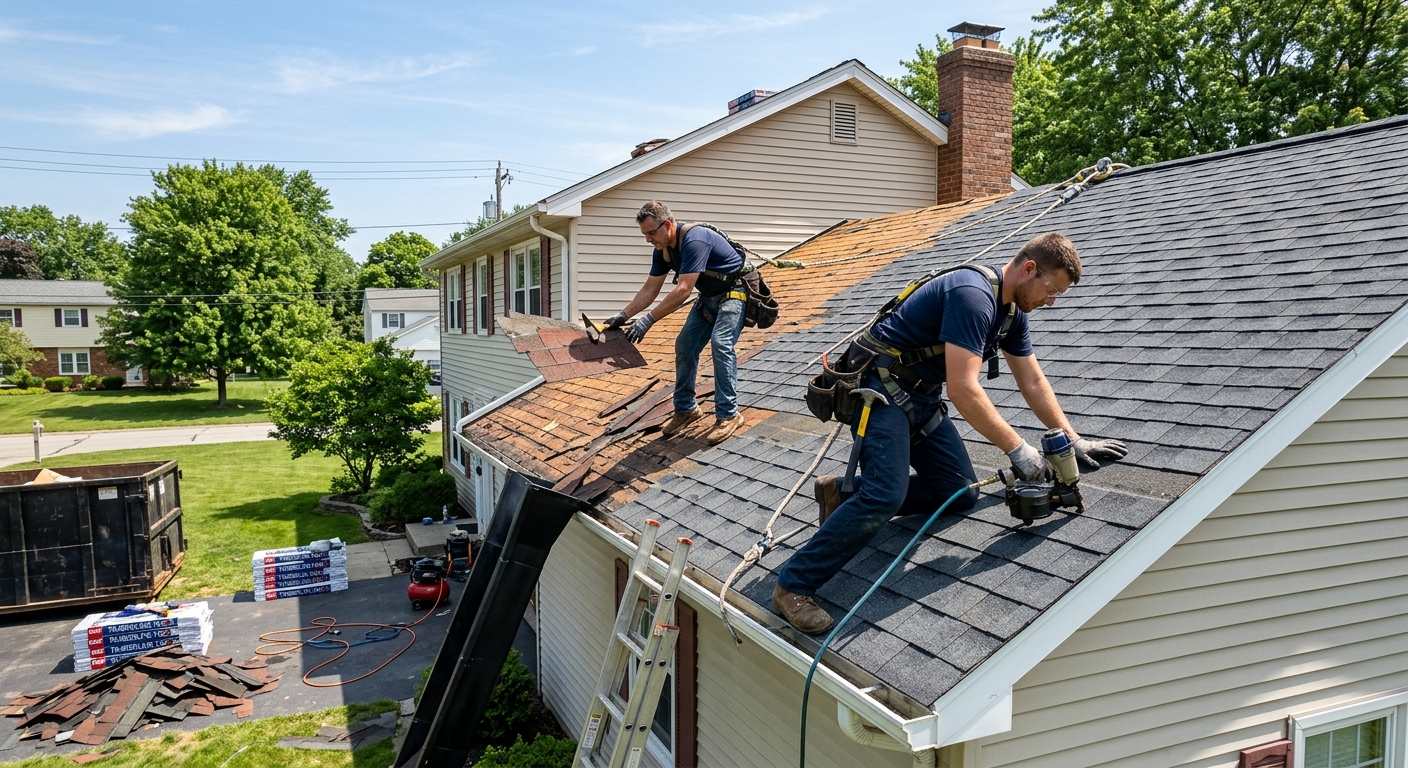
Victoria roofing costs are shaped by an older housing stock and a coastal climate that is hard on materials. In the city, 63.6% of homes were built before 1981, which means many roofs are nearing end of life, and older framing details often make tear-offs slower or reveal extra repairs once the shingles come off (Statistics Canada, 2021 Census). With 39.5% of households owning their home, there is steady demand from long-term homeowners who are weighing repairs against full replacement, especially in established areas like Fernwood, Oak Bay and Saanich border streets where reroofing work is common. On Vancouver Island and the Coast, the pricing picture is different from Ontario or Alberta: we are not designing around deep freeze-thaw cycles or heavy snow loads, but around persistent rain, salt air, wind uplift and moss. That means better underlayments, more careful flashing, and often more time spent on detailing around chimneys, skylights and wall tie-ins. Labour in Victoria tends to run higher than in many other parts of BC because of local cost of living and contractor demand, and crews may book out quickly in the drier months. For homeowners, the practical result is that an asphalt reroof can still sit in the mid five-figure range once scope, access and ventilation upgrades are included. The table below shows what different roof systems typically cost and who they suit best.
| Type |
Typical Use |
Lifespan |
Best For |
Price Range |
| Full asphalt shingle replacement (tear-off + new install) |
Most detached homes with aged shingles, leaks, or two-layer tear-offs |
18–25 years |
Budget-conscious homeowners needing a full reset |
$12,000–$25,000 |
| Architectural / laminated shingle (premium asphalt) |
Standard steep-slope residential reroofs |
25–35 years |
Better curb appeal, thicker profile, improved wind performance |
$14,000–$28,000 |
| Impact-resistant shingle (Class 4 — hail & wind zones) |
Homes exposed to stronger winds or where owners want upgraded durability |
25–35 years |
Higher impact resistance and better insurance conversations |
$16,000–$30,000 |
| Metal roofing (steel panels or standing seam) |
Long-life upgrades, coastal exposure, and architectural homes |
40–50+ years |
Wind resistance, shedding rain quickly, low maintenance |
$22,000–$45,000 |
| Flat / low-slope membrane (TPO or EPDM) |
Low-slope additions, garages, porches and modern homes |
20–30 years |
Ponds, parapets and low-slope drainage detailing |
$9,000–$25,000 |
| Roof repair + flashing only (no full replacement) |
Minor leaks, isolated damage, chimney or skylight detailing |
Varies by roof condition |
Short-term fixes where the rest of the roof still has life |
$500–$5,000 |
Prices are estimates only and vary by project scope, site access and material selection.
What affects the price of roofing in Victoria
Quotes for the same roofing job can easily vary by 30–50% across Vancouver Island and the Coast, and that is normal when contractors are pricing the real scope rather than just the square footage. In Victoria, a roof with a simple layout, good access and one shingle layer might come in near the low end of the $12,000–$25,000 asphalt range, while the same house with a steep pitch, two tear-off layers, rotted sheathing and multiple skylights can climb quickly. The difference is even more obvious compared with other provinces: Ontario and Alberta often require heavier ice-dam protection, more insulation-related detailing and, in Alberta, impact-rated product demand because of hail. Here on the coast, the biggest price pressures are rain, wind and access. That means premium synthetic underlayment, better flashing around chimneys and sidewalls, and sometimes a switch to metal because it sheds water and handles wind well. In older neighbourhoods, a home built before 1981 may hide extra labour in the deck repairs, vent upgrades or emergency plywood replacement once the old roof is removed. A straightforward repair can stay within the $500–$5,000 band, but once a project turns into a full roof replacement with fascia, venting and disposal, costs rise fast. Shorter install seasons in colder regions concentrate demand and push labour rates higher in peak summer, whereas Victoria’s milder weather helps spread work through more of the year, though crews still get booked up in dry spells.
| Price Factor |
Why It Matters |
Cost Impact |
| Roof pitch and steepness |
A steeper roof needs more fall protection, staging and slower installation. |
Can add 10–25% to labour. |
| Number of shingle layers to tear off |
Two layers mean extra labour, disposal and sometimes deck inspection delays. |
Often adds $1,000–$3,000. |
| Total roof area in squares (1 square = 100 sq ft) |
More surface area means more material, labour and waste disposal. |
Directly increases total price; larger homes often move from $12,000–$18,000 into the mid or upper range. |
| Decking condition |
Rotted OSB or plywood must be replaced before new roofing goes on. |
Commonly adds $150–$300 per sheet installed. |
| Chimney, skylight and vent flashing complexity |
Every penetration adds detailing time and leak risk if not done properly. |
Can add $300–$1,500 depending on count and access. |
| Ice-and-water shield coverage required (climate-driven) |
Extra membrane at eaves, valleys and penetrations improves water protection. |
Usually adds a few hundred dollars, more on complex roofs. |
| Regional labour rates and length of the install season |
Victoria and Nanaimo crews often price higher because of local overhead and demand. |
Can lift the project total by 15–20% versus lower-cost areas of BC. |
| Material quality tier (standard vs. impact-rated vs. premium) |
Better products cost more but may last longer and resist wind better. |
Upgrading from standard to premium can add $2,000–$8,000. |
Permits & regulations in British Columbia
In Victoria and across British Columbia, most like-for-like reroofing jobs do not require a building permit if you are simply replacing the same type of roof covering on an existing roof structure. That said, a permit is commonly required when the work changes the structure or roof form, such as adding a second layer where local code or manufacturer limits would be exceeded, repairing or replacing structural decking or rafters in a significant way, or converting from a pitched roof to a flat or low-slope assembly. If the project includes altering drainage, changing roof height, or adding new skylights that affect framing, the permit question should be checked before the job starts.
Before you sign, verify the contractor’s licensing and coverage step by step. First, look up the business online through the provincial registry or business search tools to confirm the company is active and properly named on the quote. Second, ask for a current certificate of insurance showing liability coverage; you want the policy limits, insurer name and effective dates in writing. Third, request the contractor’s WCB clearance letter or account status directly from WorkSafeBC, especially if crews are being sent onto your property. For warranty-backed installs, ask whether the installer has manufacturer certification for the exact product being quoted. A legitimate Victoria roofer should be able to provide all three documents without hesitation.
Choosing the right roofing material for Victoria's climate
Victoria’s roofing choice should be driven by a coastal reality: lots of rain, moderate temperatures, wind exposure and periodic freeze-thaw at colder edges of the season, but not the deep winter abuse seen in many inland provinces. For many homes, architectural shingles are the practical baseline because they balance cost, appearance and decent wind performance. They are usually enough for a straightforward steep-slope roof if the attic ventilation is right and the underlayment is upgraded for wet weather. Impact-resistant shingles are worth considering when your home is on an exposed lot, you want stronger wind performance, or your insurer rewards tougher materials; the premium is often 20–30% over standard architectural shingles, which can mean roughly $2,000–$6,000 more on a typical reroof. That upgrade may make sense if you are trying to extend service life or improve resale appeal in a competitive market. Metal roofing starts to make financial sense when you plan to stay long term, want lower maintenance, or have a roof geometry that benefits from fast drainage. Standing seam especially suits high-exposure coastal sites because it sheds water well and resists wind better than basic shingles. Flat TPO or EPDM belongs on low-slope sections only, where proper membrane detailing matters more than style. In British Columbia, some insurers may offer pricing advantages for wind-rated or higher-performance assemblies, but the savings vary, so ask before you buy. On a Victoria bungalow, spending an extra $4,000 on a metal upgrade over standard shingles can be justified if it adds decades of service and cuts future repairs.
| Material |
Lifespan |
Snow & Ice Performance |
Wind / Hail |
Maintenance |
Price Band |
| Asphalt 3-tab (entry-level) |
15–20 years |
Basic performance; best with solid underlayment and ventilation |
Fair in moderate winds; not the best choice for exposed coastal lots |
Higher; tabs can curl and lose granules sooner |
$12,000–$18,000 |
| Asphalt architectural / laminated (standard) |
25–35 years |
Good for Victoria’s mild winters and wet conditions |
Good wind resistance when properly installed |
Moderate; periodic moss control helps |
$14,000–$28,000 |
| Impact-resistant shingle (Class 4) |
25–35 years |
Good with upgraded underlayment and proper edge protection |
Very good; better against impact and wind uplift |
Moderate; worth it on exposed sites |
$16,000–$30,000 |
| Metal — steel panels (exposed fastener) |
30–45 years |
Excellent shedding for rain and light snow |
Very good; exposed fasteners need periodic checking |
Low to moderate |
$22,000–$38,000 |
| Metal — standing seam (concealed fastener) |
40–50+ years |
Excellent; strong drainage and long service life |
Excellent wind performance; strong coastal option |
Low |
$28,000–$45,000 |
| Flat TPO / EPDM membrane (low-slope only) |
20–30 years |
Good when drainage and detailing are correct |
Good, but seams and edges must be detailed carefully |
Moderate; drainage and seal checks matter |
$9,000–$25,000 |
How to choose a roofing contractor in Victoria
Start by verifying the contractor before you compare price. In British Columbia, ask for the company legal name and check it through online business registries, then request proof of liability insurance and a current WCB/WorkSafeBC clearance letter. Do not rely on verbal promises. Next, get 2–3 itemised written quotes so you can compare labour, materials, tear-off, disposal, flashing, ventilation and any deck repairs separately. A lump sum hides differences that matter, especially on older Victoria homes where hidden sheathing repair can change the final bill. Read the scope carefully: does the price include permit pulls if needed, dumpster or dump fees, magnetic nail cleanup, and replacement of damaged plywood? Ask how long the workmanship warranty lasts, whether the manufacturer warranty is registered, and whether that warranty transfers to a new owner. Payment terms should be modest: never pay more than 10–15% upfront, and keep a holdback until the work is complete and you have walked the roof with the contractor. Finally, insist on a start date and a completion estimate in writing, because weather delays are normal on the coast but a professional should still give you a schedule range.
- Confirm the legal business name and address.
- Check British Columbia licensing or business registration details online.
- Ask for a current liability insurance certificate.
- Request a WorkSafeBC clearance letter.
- Get 2–3 itemised quotes, not just one lump sum.
- Compare the exact shingle or membrane brand and product line.
- Confirm tear-off, disposal and cleanup are included.
- Ask if permit applications are included where required.
- Verify workmanship warranty length in writing.
- Check whether manufacturer warranties are registered and transferable.
- Ask for a start window and completion estimate.
- Keep the final payment until the job is fully complete.
Red flags in Victoria include a bid that is far below the others, a contractor who will not name the exact product, refusal to provide insurance or WCB paperwork, pressure for a large cash deposit, or vague wording around flashing, disposal and plywood replacement.
Frequently asked questions — roofing in Victoria
What time of year is best to replace a roof in Victoria?
In Victoria, late spring through early fall is usually the best time for a reroof because the weather is drier and crews can work more consistently. That matters on the coast, where rain can interrupt tear-off and membrane installation. Summer is popular, but it is also when good contractors book up fastest, so you may wait longer or pay a bit more if you need a rush job. If your roof is leaking, though, do not wait for the “perfect” season. A straightforward repair may still fall in the $500–$5,000 band, and stopping active water entry is more important than timing. Older Victoria homes with pre-1981 roofing details may also reveal deck repair once the work starts, so having dry weather helps the crew inspect and replace damaged sheathing properly.
How do I compare roofing quotes fairly?
To compare roofing quotes fairly in Victoria or elsewhere in British Columbia, put each bid into the same checklist: exact material brand and type, tear-off depth, number of underlayment layers, flashing scope, ventilation changes, disposal, cleanup and warranty. If one quote is $14,000–$18,000 and another is $20,000–$25,000, the difference may be flashing quality, extra plywood, or a better shingle line rather than overpricing. Ask whether the price includes permit handling if the work triggers one, and confirm if the contractor plans to replace rotten decking at a fixed rate or only after approval. The cheapest bid is often missing something important, especially on older Victoria roofs where hidden labour is common.
Should I repair or replace my roof in Victoria?
The decision usually comes down to age, leak pattern and how much of the roof is failing. In Victoria, if the roof is relatively young and the problem is localised around a chimney, skylight or a valley, a repair can be the right move and may stay under $5,000. If the shingles are curling, granule loss is widespread, or the roof is already in the 18–25 year range, replacement is often the better long-term option. Coastal moisture and moss can shorten the usable life of older systems, especially on pre-1981 homes. A full asphalt replacement in the $12,000–$25,000 range may be more cost-effective than repeated emergency patches over the next few years. A trusted contractor should show you where the failure is coming from before recommending one path or the other.
What is ice and water shield and do I need it in British Columbia?
Ice and water shield is a self-adhered waterproof membrane used at vulnerable roof areas such as eaves, valleys, penetrations and wall intersections. In Victoria, you are not usually dealing with the same deep freeze-thaw cycle as inland Ontario or Alberta, but you still get wind-driven rain and occasional winter cold snaps. That makes this membrane very useful, especially on low-slope transitions, around skylights, and at roof edges exposed to coastal weather. On a typical reroof, adding proper membrane coverage is usually a modest part of the project cost, but it can protect a much larger investment. If your roofing quote is in the $14,000–$28,000 range, the extra membrane is usually worth it if the roof has valleys or a complicated layout. It is one of the best upgrades for water protection in British Columbia.
How do I spot a low-quality roofing bid in Victoria?
A low-quality bid in Victoria often looks attractive at first because it is missing scope. Watch for vague wording like “replace roof” without naming the shingle brand, underlayment type or flashing details. Be cautious if the contractor will not provide liability insurance, a WorkSafeBC clearance letter or a real business address. Another warning sign is a very low number compared with the local norm, such as someone quoting far below the usual $12,000–$25,000 asphalt range without explaining why. On the coast, that can mean thin margins, rushed labour or shortcuts on waterproofing. Also look out for pressure tactics, big cash deposits, and no mention of cleanup, disposal or deck repairs. A proper bid should read like a scope of work, not a guess.
What roofing upgrades add the most resale value in Victoria?
In Victoria, the upgrades that tend to add the most resale value are the ones buyers can see and trust: a clean architectural shingle replacement, better flashing, improved ventilation and, on the right home, a metal roof. A buyer looking at a home built before 1981 will often value knowing the roof is new and professionally installed more than paying for a flashy but unnecessary feature. Architectural shingles are usually the best balance of cost and curb appeal in the $14,000–$28,000 range. If the home is in a more exposed coastal location, standing seam metal can be compelling because it signals durability and lower maintenance, though it sits in the $28,000–$45,000 range. Insurance-friendly or wind-rated upgrades can also help, but the payoff depends on the exact property and buyer expectations in British Columbia.