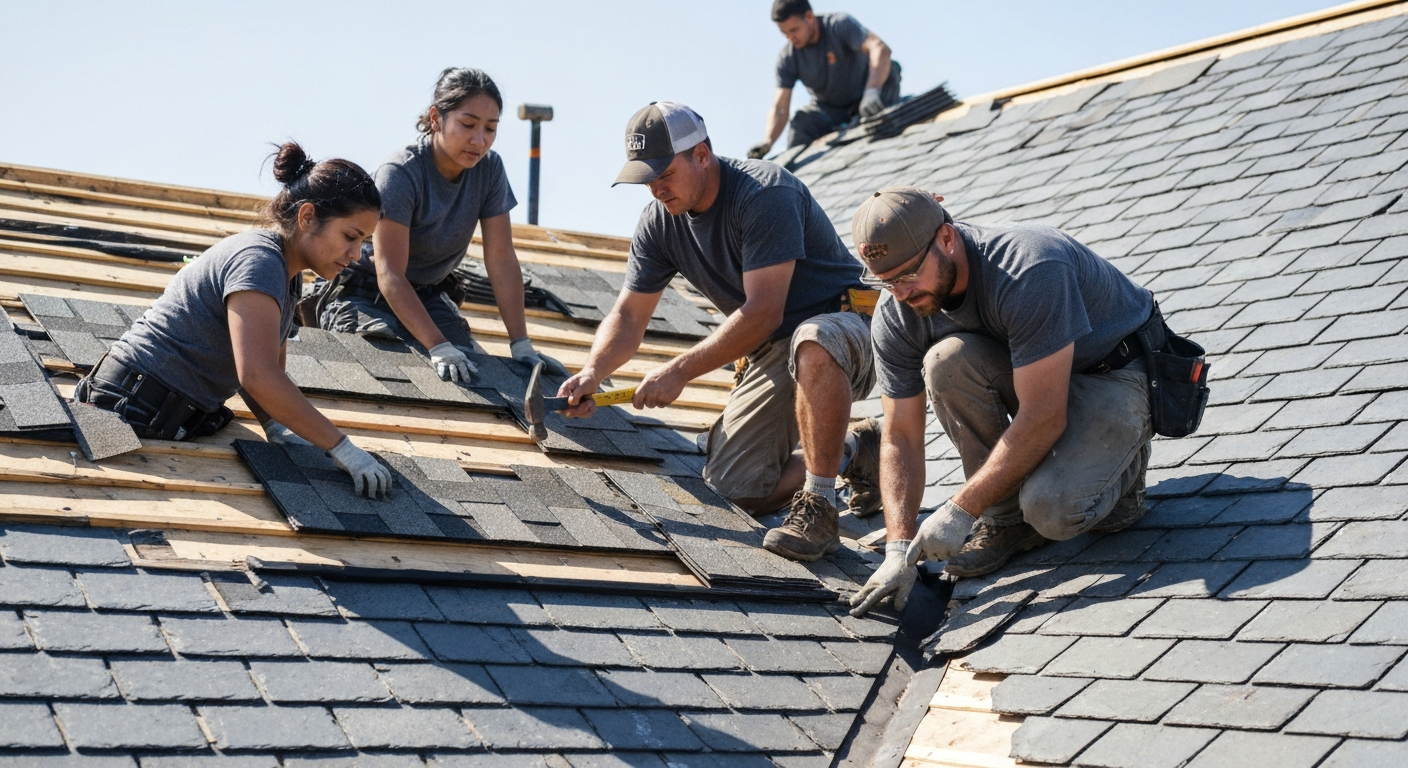
Roofing options and costs in West Point Grey
West Point Grey homeowners usually need roofing that can handle long stretches of coastal rain, wind-driven storms and the occasional winter cold snap without driving maintenance costs through the roof. In a neighbourhood with 13,065 residents in 2021, many houses are older character homes, and that often means more roofs are nearing end of life, more layered tear-offs, and more hidden deck repairs once the shingles come off (Statistics Canada, 2021 Census). In practical terms, that can move a project from a straightforward replacement into a more expensive scope with extra flashing, ventilation fixes or plywood replacement. Across the Lower Mainland–Southwest, pricing is shaped less by snow-load engineering and more by waterproofing detail, access, and labour availability. Coastal crews can work year-round, which helps keep schedules more predictable than in colder provinces, but urban access, parking constraints and strong demand across Vancouver, Surrey and Richmond can still push pricing up during busy periods. In West Point Grey, roofs near West 10th Avenue and the Dunbar edge often see steady demand because older housing stock and tree cover combine to create recurring moss, debris and drainage issues. If you are comparing options, the right starting point is understanding how material choice, pitch and scope affect your budget, so the range below gives a realistic local frame of reference.
| Type |
Typical Use |
Lifespan |
Best For |
Price Range |
| Full asphalt shingle replacement (tear-off + new install) |
Most detached homes and duplexes with pitched roofs |
18–25 years |
Budget-conscious owners needing a clean reset |
$8,000 – $18,000 |
| Architectural / laminated shingle (premium asphalt) |
Higher-end homes wanting better curb appeal and durability |
25–35 years |
Better wind performance and a stronger resale look |
$10,500 – $22,000 |
| Impact-resistant shingle (Class 4 — hail & wind zones) |
Homes exposed to stronger storms or insurance-driven upgrades |
25–35 years |
Added toughness and better storm resilience |
$12,000 – $26,000 |
| Metal roofing (steel panels or standing seam) |
Long-life premium roofs on detached homes and custom builds |
40–60+ years |
Maximum durability in coastal rain and wind |
$20,000 – $45,000 |
| Flat / low-slope membrane (TPO or EPDM) |
Flat roofs, additions, garages and multi-family sections |
20–30 years |
Waterproofing for low-slope surfaces |
$9,000 – $25,000 |
| Roof repair + flashing only (no full replacement) |
Targeted leak repairs, chimney work, vent and skylight flashing |
Varies by repair scope |
Fixing isolated issues before they spread |
$500 – $8,000 |
Prices are estimates only and vary by project scope, site access and material selection.
What affects the price of roofing in West Point Grey
Quotes for the same roof can easily vary by 30–50% across the Lower Mainland–Southwest and, more broadly, across British Columbia because the job is never just about square footage. Pitch, access, tear-off layers, hidden deck repairs and flashing complexity can change both labour and disposal costs in a hurry. In Ontario and Alberta, snow load and freeze-thaw cycles often push contractors to include more ice-dam protection, thicker underlayment and cold-roof ventilation upgrades as standard practice. Alberta’s hail belt also creates strong demand for impact-rated shingles, which raises material pricing but can reduce storm-related claims and future patching. By contrast, coastal BC rain and wind favour robust waterproofing, premium synthetic underlayment and, on some homes, metal roofing for better storm resistance. Shorter install seasons in colder regions compress demand into summer, which often lifts labour rates; West Point Grey avoids that seasonal bottleneck, but urban access and skilled labour demand still keep pricing firm. For example, a modest pitch with one chimney and straightforward access might land near the lower end of the $8,000 – $18,000 asphalt replacement band, while a steeper roof with two layers to remove, rotten plywood and multiple skylights can push a similar home toward the upper end. A flat section that needs new membrane, tapered insulation and upgraded flashing can move from a simple $9,000 – $25,000 project to the top of the range quickly. In West Point Grey, older homes near the Jericho area often have more complex detailing, and that detail work is where cost differences usually show up first.
| Price Factor |
Why It Matters |
Cost Impact |
| Roof pitch and steepness |
Affects safety equipment and install speed |
Steeper roofs need more labour time, harnessing and staging; can add 10–20% |
| Number of shingle layers to tear off |
2 layers = extra labour + disposal |
Often adds $1,000–$3,000 or more depending on roof size |
| Total roof area in squares (1 square = 100 sq ft) |
More surface area means more materials and time |
Primary driver of total price; larger homes can add several thousand dollars |
| Decking condition |
Rotted OSB or plywood must be replaced |
Commonly adds $80–$140 per sheet installed |
| Chimney, skylight and vent flashing complexity |
Each penetration needs careful waterproofing |
Can add $300–$1,500+ depending on count and condition |
| Ice-and-water shield coverage required |
Climate-driven waterproofing upgrade |
More coverage increases material and labour, especially at eaves and valleys |
| Regional labour rates and length of the install season |
Skilled crews and scheduling pressure affect pricing |
Can shift total bids by 10–25% between markets |
| Material quality tier |
Standard vs. impact-rated vs. premium |
Upgrade can add thousands; premium metal may double or more versus basic asphalt |
Permits & regulations in British Columbia
In British Columbia, most like-for-like re-roofing on a detached home does not require a building permit, but there are important exceptions. If you are adding a second layer where the code or manufacturer does not allow it, repairing structural decking or framing, changing roof shape, or converting from a pitched roof to a flat or low-slope system, a permit is often required. The same is true if the work changes drainage, structural loads or fire separation. For a standard tear-off and re-shingle, many West Point Grey homeowners can proceed without a building permit, but the contractor still needs to be properly insured and qualified. Before signing, ask for proof of liability insurance, WCB coverage and manufacturer certification if the install is meant to qualify for a product warranty. To verify a contractor in British Columbia, start with the provincial business/licensing registry if they claim a licence or incorporation, then ask for a current certificate of insurance showing coverage limits and effective dates. Next, request a WCB clearance letter or account standing confirmation for the company doing the work. Finally, ask which manufacturer training or certification they hold for the product they are quoting, especially on premium shingles or metal systems. If a roofer hesitates to provide all three documents, that is a warning sign. In West Point Grey, where access and weather exposure can expose poor workmanship quickly, those checks are worth doing carefully.
Choosing the right roofing material for West Point Grey's climate
West Point Grey’s climate should steer you toward materials that shed water quickly, resist wind uplift and hold up under repeated wet-dry cycles. Freeze-thaw is less severe than in Ontario or Alberta, but it still matters on colder nights and exposed roofs, especially where moss, trapped moisture or shaded valleys slow drying. Standard architectural shingles are usually sufficient for many detached homes here, especially if the roof pitch is decent and the homeowner wants a balanced mix of cost and appearance. They fit well within the $8,000 – $18,000 to $10,500 – $22,000 range for a typical replacement and usually give 25–35 years if installed correctly. Impact-resistant shingles are worth considering if your home is more exposed to wind, if you have had recurring storm damage, or if you want a tougher product in a highly visible location; the 20–30% premium can be justified when it adds meaningful insurance advantages or lowers repair frequency. For example, paying an extra $2,500 on a $12,000 roofing project can make sense if it extends service life and reduces future leak callouts. Metal roofing becomes financially sensible when you plan to stay long term, want superior wind resistance and are willing to invest upfront for 40–60+ years of service. Flat TPO or EPDM is the right choice for low-slope sections, additions and laneway structures where water management is more important than aesthetics. In British Columbia, some insurers may offer discounts for high-wind or impact-rated products, but rebates are not guaranteed and vary by carrier; ask before you sign. In West Point Grey, where curb appeal and resale value matter, premium materials often pay back better on visible front slopes than on hidden rear slopes.
| Material |
Lifespan |
Snow & Ice Performance |
Wind / Hail |
Maintenance |
Price Band |
| Asphalt 3-tab (entry-level) |
15–20 years |
Basic performance; needs careful underlayment detailing |
Moderate wind resistance; weakest of the group |
Higher upkeep, more prone to curling and granule loss |
$8,000 – $13,000 |
| Asphalt architectural / laminated (standard) |
25–35 years |
Good for coastal rain when paired with proper flashing |
Better wind performance than 3-tab |
Moderate maintenance, good all-around value |
$10,500 – $22,000 |
| Impact-resistant shingle (Class 4) |
25–35 years |
Solid moisture shedding with upgraded underlayment |
Strong wind and impact resistance |
Lower storm-related repair frequency |
$12,000 – $26,000 |
| Metal — steel panels (exposed fastener) |
30–45 years |
Excellent water shedding; relies on installation quality |
Very good wind resistance; hail can mark finish |
Low to moderate; fasteners need periodic checking |
$20,000 – $35,000 |
| Metal — standing seam (concealed fastener) |
40–60+ years |
Excellent in heavy rain and repeated wetting |
Best wind performance; strong long-term resilience |
Low maintenance, premium finish |
$28,000 – $45,000 |
| Flat TPO / EPDM membrane (low-slope only) |
20–30 years |
Designed for ponding control and drainage management |
Good wind resistance when fully adhered and detailed properly |
Periodic inspections and seam checks |
$9,000 – $25,000 |
How to choose a roofing contractor in West Point Grey
Start by confirming the contractor’s British Columbia business registration and asking for the full legal company name that will appear on the invoice and warranty. Then request a certificate of liability insurance showing current coverage, and ask for WCB coverage confirmation or a clearance letter for the active account. If they are quoting a product-backed system, ask for manufacturer certification or training documentation as well. Get at least 2–3 itemised written quotes so you can compare labour, materials, tear-off, disposal, ventilation, flashing and deck repair allowances separately rather than relying on a single lump sum. Read the scope carefully and check what is excluded: permit fees, plywood replacement, chimney rebuilding, skylight replacement, mould remediation and interior drywall repair are common omissions. Make sure the quote states who pulls any required permit, who pays disposal, and whether cleanup and magnet sweeping are included. Review both the workmanship warranty and the product warranty; ask whether each one is transferable if you sell the home. In British Columbia, a payment schedule should be modest upfront, usually no more than 10–15%, with the balance tied to completion and final inspection. Get the start date and estimated completion date in writing, especially in a busy market like West Point Grey where scheduling can slip after a weather delay.
- Verify the company’s full legal name and local contact information.
- Ask for a current certificate of liability insurance.
- Request WCB clearance or account standing before work starts.
- Confirm manufacturer certification for the quoted roofing system.
- Obtain 2–3 itemised written quotes.
- Compare labour, materials, disposal and deck repair allowances separately.
- Check whether the contractor pulls the permit if one is required.
- Ask what flashing, vents and underlayment are included.
- Confirm workmanship warranty length and what it covers.
- Ask if the product warranty is transferable.
- Keep the deposit to 10–15% maximum.
- Get the start date, completion estimate and cleanup plan in writing.
Red flags in West Point Grey include vague “all-in” pricing with no breakdown, no proof of WCB coverage, pressure to pay most of the job up front, refusal to specify flashing or tear-off details, and a bid that is dramatically lower than the rest without a clear explanation.
Frequently asked questions — roofing in West Point Grey
What time of year is best to replace a roof in West Point Grey?
For most homes in West Point Grey, late spring through early fall is the easiest window because the weather is typically drier and crews can move faster with fewer rain delays. That said, British Columbia’s coastal climate allows roofing almost year-round if the contractor is organized and the materials can be installed within manufacturer temperature limits. Summer can be busy, so lead times may stretch even though install conditions are good. If your roof is actively leaking, do not wait just for a perfect season; a smaller repair in the $500 – $8,000 range may buy time, but if the roof is near the end of life, a full replacement in the $8,000 – $18,000 range is often more sensible before interior damage spreads. West Point Grey homes with shade from mature trees may also stay damp longer, so timing the job for a drier stretch helps the new underlayment and flashing perform better right away.
How do I compare roofing quotes fairly?
Compare apples to apples by lining up the same scope on every quote. In West Point Grey, that means checking tear-off layers, underlayment type, flashing allowances, ventilation, disposal, permit handling and deck repair pricing. A quote for $10,500 – $22,000 on architectural shingles may actually be cheaper than a lower bid if the lower bid excludes flashing or plywood repairs. Ask each contractor to itemise labour, materials and any contingencies so you can see where the money goes. Also confirm whether the quote includes WCB coverage, liability insurance and a workmanship warranty. Because coastal BC rain and wind put extra pressure on detailing, a properly specified job is usually worth more than a bare-minimum price. If one bid is far below the others, ask what was left out before you assume it is a bargain. In British Columbia, the best comparison is not just total price, but total scope and total risk.
Should I repair or replace my roof in West Point Grey?
The answer depends on age, leak pattern and roof condition. If the problem is isolated flashing failure, a vent boot, or a small section of damaged shingles, a repair in the $500 – $8,000 range can be the right move. But if you have multiple leaks, widespread curling, soft decking, or a roof that is already past its expected service life, replacement is usually the better long-term choice. In West Point Grey, older housing stock and tree cover can hide deterioration until a storm exposes it, so it is wise to inspect attic staining and the roof deck before deciding. A full asphalt replacement in the $8,000 – $18,000 range may cost more up front, but it can prevent repeated service calls, patchwork repairs and interior water damage. If your roof is near 20 years old and the repair estimate keeps climbing, replacement often gives better value in British Columbia’s wet coastal climate.
What is ice and water shield and do I need it in British Columbia?
Ice and water shield is a self-adhered waterproof underlayment installed at vulnerable roof areas such as eaves, valleys, chimneys and skylight perimeters. Even though West Point Grey does not face the same freeze-thaw stress as Alberta or Ontario, British Columbia’s coastal rain means water can be driven under shingles during wind events, especially on low-slope sections and around penetrations. That is why the product is often a smart upgrade here, particularly on older homes with complex roofs. It is not a substitute for proper flashing, but it adds a valuable backup layer. On a standard reroof, the added cost is usually modest compared with the risk of repair work later. If you are already spending $10,500 – $22,000 on a better asphalt package, the extra waterproofing is often money well spent. For flat sections or valleys that see heavy runoff, the detail is even more important. In British Columbia, good underlayment is one of the best defences against hidden leak damage.
How do I spot a low-quality roofing bid in West Point Grey?
A weak bid usually hides more than it explains. Watch for one-line pricing with no breakdown, missing disposal charges, no mention of flashing or underlayment, and no clear allowance for plywood replacement. In West Point Grey, a contractor who ignores chimney details, skylights or low-slope tie-ins is asking for trouble because coastal rain finds every shortcut. Another warning sign is a price that is suspiciously low compared with the typical $8,000 – $18,000 or $20,000 – $45,000 bands depending on material. Low-quality bids often skip WCB paperwork, ask for a big deposit, or dodge questions about warranty coverage. If the company will not say who pulls the permit when required, or they will not put the start date in writing, move on. In British Columbia, the cheapest quote can become the most expensive roof if the install details are poor and the leak shows up after the first strong wind-driven rain.
What roofing upgrades add the most resale value in West Point Grey?
In West Point Grey, the best resale value usually comes from upgrades that improve curb appeal, reduce buyer concern and fit the neighbourhood’s character. Architectural shingles often deliver the best value-to-cost ratio because they look better than basic 3-tab shingles and perform well in coastal conditions without jumping to a premium price. A move from basic asphalt to architectural can make sense if your home is already in the $8,000 – $18,000 replacement range and you want a stronger visual result. Metal roofing can add value on higher-end homes, especially where buyers expect low maintenance and long service life, but the $20,000 – $45,000 upfront cost is harder to justify on every property. On visible sections, upgraded flashing, better venting and clean skylight detailing also help because they signal a well-maintained house. In British Columbia’s damp climate, buyers notice roofs that look dry, straight and professionally finished.