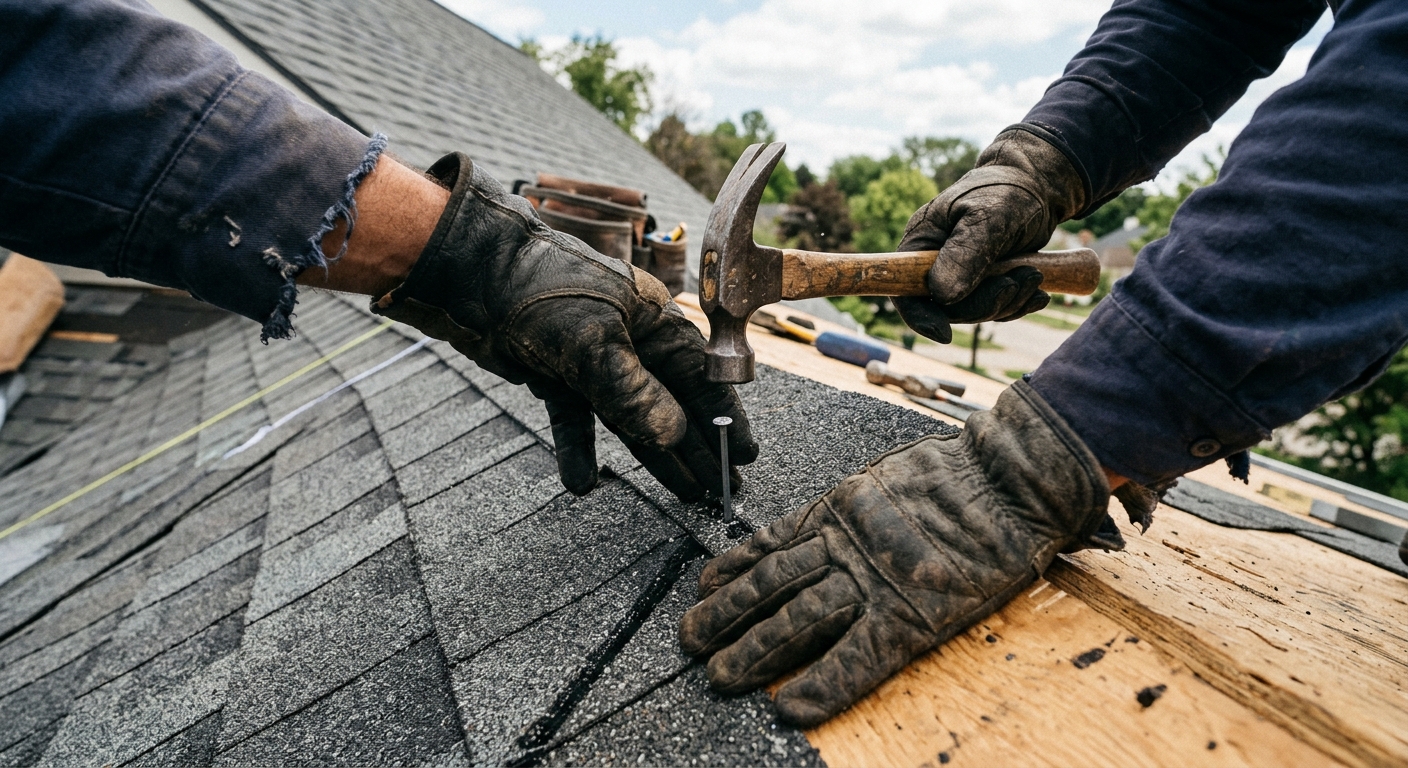
Roofing options and costs in Humber Heights-Westmount
Humber Heights-Westmount homeowners usually see roofing decisions shaped by older housing stock and Toronto’s weather more than by aesthetics alone. In a community of 10,948 people, many properties are long-established detached homes and low-rise buildings that have already lived through decades of freeze-thaw cycles, which means shingles, flashings, and even decking often reach end of life at roughly the same time. That matters because older roofs are more likely to hide multiple layers of shingles, soft sheathing, and tired ventilation, all of which push a simple job into a more involved tear-off. In this part of Toronto, roofing costs also reflect a cold, continental market: snow loads, ice dams, and repeated freeze-thaw stress mean contractors often specify extra eave protection, better underlayments, and improved attic ventilation instead of a bare-minimum install. Labour is not cheap either, because crews in the Toronto region book up quickly during the short high-season window between spring thaw and late fall. In areas like the Weston Road corridor and near the Humber River ravine edge, roof work is especially common where wind exposure and mature tree cover increase shingle wear and debris buildup. If you are comparing quotes, the biggest difference is often not just the shingles — it is how much prep, protection, and detailing is included. The table below shows the most common roof systems homeowners in Humber Heights-Westmount ask about, along with realistic cost bands for this market.
| Type |
Typical Use |
Lifespan |
Best For |
Price Range |
| Full asphalt shingle replacement (tear-off + new install) |
Standard sloped residential roofs needing a complete renewal |
18–25 years |
Homeowners wanting the most economical full replacement |
$7,000 – $18,000 |
| Architectural / laminated shingle (premium asphalt) |
Upgraded sloped roofs with better curb appeal and durability |
25–30 years |
Owners planning to stay long term and improve resale appeal |
$9,000 – $20,000 |
| Impact-resistant shingle (Class 4 — hail & wind zones) |
Homes exposed to stronger wind uplift or where insurance incentives apply |
30–40 years |
Roofers looking for better toughness and lower maintenance risk |
$10,500 – $23,000 |
| Metal roofing (steel panels or standing seam) |
Premium sloped-roof system for long-term performance |
40–50+ years |
Owners prioritizing durability, snow shedding, and low upkeep |
$15,000 – $35,000 |
| Flat / low-slope membrane (TPO or EPDM) |
Flat roofs, additions, garages, porches, and low-slope sections |
20–30 years |
Homes with low-slope roof areas needing watertight detailing |
$12,000 – $28,000 |
| Roof repair + flashing only (no full replacement) |
Leak fixes, chimney work, vent boots, valley and step flashing repairs |
Varies by repair |
Localized leaks where the main roof still has usable life left |
$300 – $2,500 |
Prices are estimates only and vary by project scope, site access and material selection.
What affects the price of roofing in Humber Heights-Westmount
Quotes for the same roof can vary by 30% to 50% across Toronto and Ontario because every contractor is pricing a different mix of risk, labour, access, and material specification. In Humber Heights-Westmount, a straightforward asphalt replacement may land near the lower end of the $7,000 – $18,000 range, but a house with a steep pitch, two layers of old shingles, and a chimney that needs new step flashing can move quickly toward the upper half. Snow load and freeze-thaw cycles across Ontario and Alberta drive the need for ice-dam protection membranes and heavier underlayment; Alberta’s hail belt pushes many homeowners toward impact-rated shingles; coastal BC rain and wind favour metal and premium synthetic underlayment. All of that affects how contractors build a quote, even in Toronto. In a neighbourhood like this, one home may need extra eave protection because of ice history, while another may need deck repairs after years of trapped attic moisture. A 1,700-square-foot roof with sound decking and easy access can be far less expensive than the same roof with rotted plywood, tight side-yard staging, or three skylights. Regional labour rates also move with the season: Toronto crews are busiest in late spring and summer, so the same roof can cost several hundred dollars more when scheduling is tight. On flat additions, a membrane job can start near $12,000 – $28,000, while a small flashing repair may stay within $300 – $2,500 if the damage is limited and caught early.
| Price Factor |
Why It Matters |
Cost Impact |
| Roof pitch and steepness |
A steeper roof slows installation and requires extra safety setup |
Can add 10%–20% to labour |
| Number of shingle layers to tear off |
2 layers = extra labour + disposal |
Often adds $1,000 – $3,000 |
| Total roof area in squares (1 square = 100 sq ft) |
Larger roofs use more materials and labour |
Can move a job from $7,000 – $18,000 into a higher bracket quickly |
| Decking condition |
Rotted OSB or plywood must be replaced before new roofing goes on |
Commonly adds $500 – $3,500 |
| Chimney, skylight and vent flashing complexity |
Penetrations need careful detailing to prevent leaks |
Can add $300 – $1,500 |
| Ice-and-water shield coverage required |
Climate-driven protection at eaves, valleys and vulnerable areas |
Usually adds $400 – $1,200 |
| Regional labour rates and length of the install season |
Toronto’s compressed season increases demand in peak months |
Can raise the final quote by 5%–15% |
| Material quality tier |
Standard vs. impact-rated vs. premium products carry different costs |
Premium systems can add $1,500 – $8,000 |
Permits & regulations in Ontario
In Ontario, most like-for-like re-roofing jobs do not require a building permit, so a straight shingle replacement on the same roof shape usually proceeds without municipal paperwork. That said, permits are commonly required when the work changes the structure or use of the roof assembly. Examples include adding a second layer where local code or the existing assembly does not allow it, replacing or repairing structural decking or framing in a way that affects load transfer, converting from a pitched roof to a flat roof, or changing drainage and structural details on a low-slope system. If a contractor tells you “no permit is ever needed,” treat that as a warning sign. For Humber Heights-Westmount homeowners, the safer approach is to verify that the scope is truly a maintenance replacement, not a structural alteration. Also confirm that the contractor carries liability insurance, WSIB or WCB coverage where applicable, and manufacturer certification if they are promising an extended product warranty.
To verify a contractor, start with the Ontario business registration or a trade association listing, then ask for a current certificate of insurance showing coverage limits and policy dates. Next, request a WSIB clearance letter directly from the contractor; a legitimate company should be able to provide one quickly. If the job involves a crew that claims to be licensed or certified for a specific system, ask for the manufacturer certification number and check it on the product brand’s website or dealer network. Finally, compare the legal business name on the quote, invoice, and insurance certificate so you know you are dealing with the same entity. If anything is vague, get clarification before any deposit changes hands.
Choosing the right roofing material for Humber Heights-Westmount's climate
In Humber Heights-Westmount, the right material is usually the one that balances freeze-thaw durability, snow shedding, wind resistance, and maintenance tolerance for a Toronto roof. Standard architectural shingles are enough for many homes here because they handle normal residential snow loads well, look good on older streets, and keep total cost within a reasonable range. For a typical home, that often means staying closer to the $9,000 – $20,000 band instead of jumping to metal. Impact-rated shingles become worth the 20% to 30% premium when the roof has a history of shingle blow-off, the property sits in a more wind-exposed pocket, or the homeowner wants a tougher product with a better shot at insurance savings. If the upgrade adds only $1,800 – $3,500 on a mid-sized roof but extends service life and reduces repair calls, the math can make sense. Metal roofing is the best long-term play when the owner wants maximum snow shedding, fewer leak points, and a roof that can outlast two asphalt cycles; that is why it often pencils out for people planning to stay put. Flat or low-slope membranes make sense only where the geometry demands it, such as rear additions, porches, and garages, because water management is more complex and workmanship matters greatly. In Ontario, some insurers and product lines offer discounts or preferred rates for high-wind-rated or impact-resistant assemblies, but the savings vary, so always ask for written confirmation before counting on them. Resale value improves most when the roof looks clean, is warrantied, and matches the home’s style, not just when it is the most expensive option.
| Material |
Lifespan |
Snow & Ice Performance |
Wind / Hail |
Maintenance |
Price Band |
| Asphalt 3-tab (entry-level) |
15–20 years |
Basic performance; more prone to ice-dam damage and curling |
Fair in wind, weakest option for severe weather |
Higher maintenance and earlier replacement risk |
$7,000 – $12,000 |
| Asphalt architectural / laminated (standard) |
25–30 years |
Better edge durability and winter resilience |
Good wind resistance when properly installed |
Moderate maintenance, good all-around value |
$9,000 – $20,000 |
| Impact-resistant shingle (Class 4) |
30–40 years |
Strong when paired with correct underlayment and ventilation |
Excellent for wind and improved resistance to impact |
Lower repair risk, especially in exposed areas |
$10,500 – $23,000 |
| Metal — steel panels (exposed fastener) |
30–45 years |
Very good snow shedding, fewer ice build-up points |
Good wind performance; exposed fasteners need inspection |
Low to moderate maintenance |
$15,000 – $28,000 |
| Metal — standing seam (concealed fastener) |
40–50+ years |
Excellent for snow shedding and long-term winter durability |
Excellent wind performance and strong overall durability |
Low maintenance, premium system |
$22,000 – $35,000 |
| Flat TPO / EPDM membrane (low-slope only) |
20–30 years |
Good when properly sloped and detailed; ponding must be controlled |
Decent, but edge and flashing detailing is critical |
Moderate maintenance and periodic inspections |
$12,000 – $28,000 |
How to choose a roofing contractor in Humber Heights-Westmount
Start by verifying the contractor’s business name, insurance, and compensation coverage before you compare price. Ask for a certificate of insurance showing active liability coverage, and request a WSIB clearance letter or WCB confirmation if the company uses that system for its crews. Then check that the quote names the exact company performing the work, not just a sales brand. In Ontario, you should also ask whether the crew is factory-certified for the product line they are proposing, because some warranties depend on certified installation. Get at least 2 to 3 written, itemised quotes so you can compare labour, materials, underlayment, flashing, disposal, and permit handling separately rather than accepting a lump sum. Read the exclusions carefully: are chimney repairs included, is ice-and-water shield specified at the eaves, and who pays if damaged decking is found? Warranty language matters too. A good proposal states the workmanship warranty length, the manufacturer warranty term, and whether the warranty transfers to a future buyer. Payment terms should be cautious: never pay more than 10% to 15% upfront, and hold back final payment until the roof is complete, cleaned up, and inspected. Finally, get the start date and the estimated completion date in writing so you are not left waiting through prime season.
- Confirm the legal business name and local contact number.
- Ask for current liability insurance documents.
- Request WSIB clearance before any deposit.
- Check product certification for the quoted shingle or membrane system.
- Compare at least 2 to 3 written quotes.
- Make sure labour, materials, disposal, and flashing are itemised.
- Ask whether permit handling is included if one becomes necessary.
- Confirm how many layers will be removed.
- Ask what happens if rotten decking is discovered.
- Read the workmanship warranty length and exclusions.
- Verify whether the manufacturer warranty is transferable.
- Get the start date, completion window, and payment schedule in writing.
Red flags in Humber Heights-Westmount include a roofer who wants cash only, refuses to itemise ice-and-water shield or flashing, pressures you to sign the same day, cannot show WSIB or insurance, or offers a price that is dramatically below the other bids while skipping disposal, ventilation, or deck repair allowances.
Frequently asked questions — roofing in Humber Heights-Westmount
How do I compare roofing quotes fairly?
Compare apples to apples, not just the bottom line. In Humber Heights-Westmount and across Ontario, one quote may include full tear-off, new flashing, ice-and-water shield, ventilation upgrades, and disposal, while another may leave those items out and look cheaper at first glance. Ask each contractor to itemise labour, materials, underlayment, flashing, vents, permits if needed, and waste removal. If one bid is $7,000 – $18,000 and another is much lower, find out whether they are pricing a single-layer overlay, cheaper shingles, or leaving out deck repairs. A fair comparison should also confirm workmanship warranty, product brand, and whether the quote assumes any rotten plywood replacement. In a colder Toronto market, those hidden extras matter as much as the shingle itself.
Should I repair or replace my roof in Humber Heights-Westmount?
If the damage is isolated, a repair may be the smarter move. A small flashing fix, a few replaced shingles, or a vent boot repair can often stay within $300 – $2,500, which makes sense when the rest of the roof is still sound. But if you are seeing repeated leaks, curling shingles, attic moisture, or two-layer tear-off conditions, replacement usually becomes the better long-term choice. In Humber Heights-Westmount, older homes can hide deck wear and ventilation problems, so one leak often points to a broader system issue rather than a single bad spot. I tell homeowners to think about roof age, not just the latest stain on the ceiling. If the roof is near the end of its expected service life, patching may only delay a larger bill.
What is ice and water shield and do I need it in Ontario?
Ice and water shield is a self-adhered waterproof membrane installed in vulnerable areas of the roof, usually at eaves, valleys, and around penetrations. In Ontario, it is strongly recommended because freeze-thaw cycles and snow buildup can create ice dams that force water back under shingles. For Humber Heights-Westmount homes, especially those with older attic ventilation or shallow eaves, this extra protection is often one of the most important details on the whole job. It is not a luxury add-on in our climate; it is part of good roofing practice. The cost is usually modest compared with the damage it can prevent, often adding $400 – $1,200 depending on roof size and coverage. If a contractor says you do not need it at all, ask them how they plan to handle winter backup at the eaves.
How do I spot a low-quality roofing bid in Humber Heights-Westmount?
Low-quality bids usually hide their weaknesses in vague language. Watch for missing details on shingle brand, underlayment, flashing, ventilation, tear-off layers, disposal, and deck repairs. In Humber Heights-Westmount, a bid that looks too cheap may be ignoring freeze-thaw protection or assuming there is no rotten plywood under older shingles. A suspicious proposal may also fail to mention the permit process if structural work is involved, or it may promise a “full roof” without naming the exact system. If a quote is far below the typical $7,000 – $18,000 asphalt replacement range, ask what has been removed from the scope. A good bid is specific, not vague, and it should tell you exactly what happens if hidden damage is found after tear-off.
What roofing upgrades add the most resale value in Humber Heights-Westmount?
The best resale value usually comes from visible quality and a clean, transferable warranty rather than from simply spending the most. In Humber Heights-Westmount, architectural shingles often give the best balance of cost and curb appeal, especially when they are installed with proper flashing and ventilation. Buyers notice a roof that looks recent and well detailed, and a project around $9,000 – $20,000 can improve marketability without overspending. Metal roofing can also boost perceived value because of its long life and low maintenance, but the premium only makes sense if the home suits the style and the owner plans to stay long enough to enjoy it. Impact-resistant products may help with insurance or peace of mind, but the resale premium varies. The strongest upgrade is usually the one that solves leaks and looks finished, not the flashiest material.
Can a roofing contractor work year-round in Humber Heights-Westmount?
Yes, but winter roofing in Ontario is more limited and weather dependent. In Humber Heights-Westmount, crews can sometimes complete repairs, small membrane work, and emergency leak calls during colder months, but full shingle replacements are harder when temperatures drop, snow piles up, or surfaces become unsafe. Shorter install seasons also mean peak summer schedules book up fast, which is one reason labour rates are firmer in Toronto than in milder regions. A contractor may be able to work year-round, but that does not mean every material should be installed year-round without caution. Some adhesives and sealants need warmer conditions to perform properly, and membrane work in freezing weather takes extra care. If you are planning a job in winter, ask the contractor how they manage temperature limits, snow removal, and temporary dry-in protection before they start.