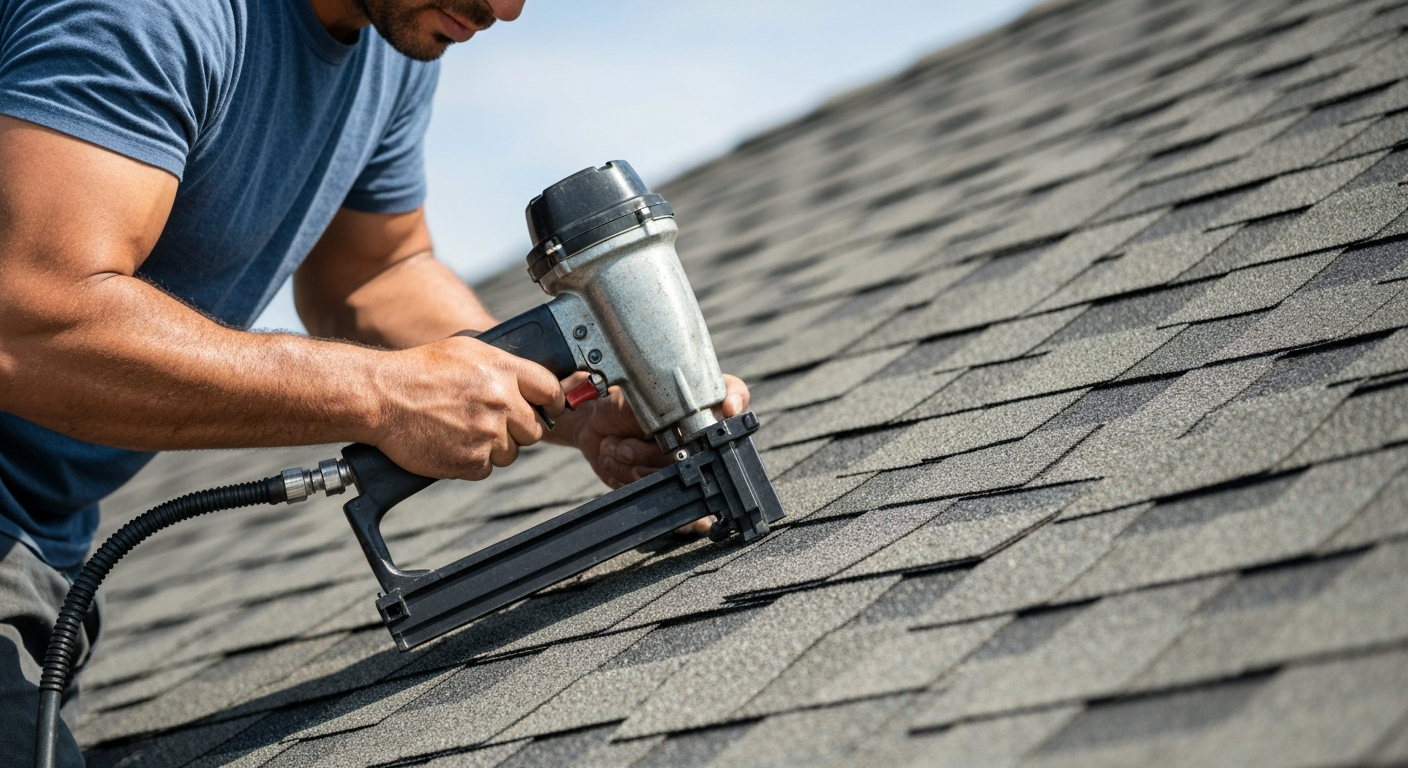
Roofing options and costs in Laurentian Hills
Laurentian Hills homeowners deal with a roofing market shaped by age, weather, and access. With 68.8% of homes built before 1981 and 90.0% of households owning their homes (Statistics Canada, 2021 Census), a lot of local roofs are reaching the point where patching is no longer the cheapest path. Older houses also tend to have ventilation shortcomings, tired flashing, and in some cases prior reroofs with two shingle layers, which can push tear-off labour higher. In a place like Chalk River, where many properties are detached and set on larger lots, contractors often spend more time on setup, access, and fall protection than they would on a tight urban street.
Costs in Kingston–Pembroke are also affected by cold-climate detailing. Snow load, freeze-thaw cycling, and winter ice-dam risk mean reputable roofers here usually specify better ice-and-water coverage, careful eave protection, and balanced soffit-to-ridge ventilation. That adds material and labour cost, but it is cheaper than dealing with recurring leaks in March. Shorter practical install seasons also matter: once the weather turns wet or icy, crews slow down, and the best installers book up quickly during the summer. That is one reason a quote for the same house can differ meaningfully from contractor to contractor. The table below compares the main roofing choices homeowners in Laurentian Hills are most likely to see, from basic asphalt to metal and low-slope membrane systems.
| Type |
Typical Use |
Lifespan |
Best For |
Price Range |
| Full asphalt shingle replacement (tear-off + new install) |
Standard pitched residential roofs needing a complete refresh |
15–25 years |
Homeowners wanting the most affordable full replacement |
$6,500 – $15,000 |
| Architectural / laminated shingle (premium asphalt) |
Most detached homes with a moderate slope |
20–30 years |
Better curb appeal, thicker profile, improved wind performance |
$8,500 – $18,500 |
| Impact-resistant shingle (Class 4 — hail & wind zones) |
Higher-exposure roofs where durability matters |
25–30 years |
Homes wanting stronger impact resistance and fewer storm repairs |
$10,000 – $20,500 |
| Metal roofing (steel panels or standing seam) |
Rural homes, higher-end houses, long-term ownership |
40–50+ years |
Maximum snow shedding, longevity, lower lifecycle maintenance |
$18,000 – $40,000 |
| Flat / low-slope membrane (TPO or EPDM) |
Garages, additions, porches, and commercial-style roofs |
20–30 years |
Low-slope roofs needing watertight seams and reliable drainage |
$9,000 – $25,000 |
| Roof repair + flashing only (no full replacement) |
Localized leak repair, chimney work, vents, valleys, and eaves |
Short-term to mid-term fix |
Good roof decks with isolated problem areas |
$350 – $2,500 |
Prices are estimates only and vary by project scope, site access and material selection.
What affects the price of roofing in Laurentian Hills
In Laurentian Hills, quotes for what looks like the same roof can vary by 30–50% because the real scope is often very different once the contractor measures pitch, access, layers, and flashing details. Across Kingston–Pembroke and Ontario generally, snow load and freeze-thaw cycles push roofers to use better ice-dam protection, heavier underlayments, and more careful edge detailing; that adds cost, but it reduces winter leak risk. In Alberta, frequent hail is a big reason impact-rated shingles are popular, while coastal BC’s persistent rain and wind make metal roofing and premium synthetic underlayments more attractive. Colder regions also have shorter install seasons, which compresses demand into a few good weather months and raises labour rates during peak summer windows. A straightforward bungalow reroof may land near the lower end of the asphalt band, while a steep, older home with two layers, damaged sheathing, and complex flashing can move quickly toward the top of the range. On a property built before 1981, it is common to discover extra decking replacement after tear-off, and that can add several hundred to a few thousand dollars. Even small details matter: a chimney chase, skylight curb, or awkward valley can turn a $6,500 – $15,000 job into something closer to a premium quote, while a low-slope addition may push you into the $9,000 – $25,000 range if drainage and membrane upgrades are needed.
| Price Factor |
Why It Matters |
Cost Impact |
| Roof pitch and steepness |
Affects safety equipment and install speed |
Steeper roofs usually add 10–25% to labour |
| Number of shingle layers to tear off |
2 layers = extra labour + disposal |
Can add $500 – $1,500 |
| Total roof area in squares (1 square = 100 sq ft) |
More surface area means more material, time and waste |
Larger homes can add $1,000 – $4,000 |
| Decking condition |
Rotted OSB or plywood must be replaced |
Often adds $300 – $2,500 |
| Chimney, skylight and vent flashing complexity |
More penetrations mean more labour and leak-risk detailing |
Can add $250 – $1,200 |
| Ice-and-water shield coverage required |
Climate-driven protection at eaves, valleys and penetrations |
Usually adds $200 – $900 |
| Regional labour rates and length of the install season |
Shorter seasons and weather delays raise peak pricing |
Can increase total price by 5–15% |
| Material quality tier |
Standard vs. impact-rated vs. premium products |
Can move a quote from $6,500 – $15,000 to $10,000 – $20,500 |
Permits & regulations in Ontario
In Ontario, most like-for-like re-roofing does not require a building permit. If you are replacing asphalt shingles with asphalt shingles on an existing pitched roof, that is typically a maintenance job, not a permit-triggering alteration. But there are clear exceptions. A permit is commonly needed if the work changes the roof structure, such as adding structural deck repairs that affect framing, converting from a pitched roof to a flat roof, or making major alterations that change the building envelope or load path. Adding a second layer beyond what the code and manufacturer allow is also a red flag; even where a permit is not strictly required, it can create warranty and inspection issues. Contractors should carry liability insurance, WSIB or WCB coverage, and manufacturer certification for warranty-backed installs. Before signing, ask for the Ontario business registration details, a current certificate of insurance, and proof of WSIB clearance.
To verify a contractor in Laurentian Hills, start online: check the company name in the appropriate Ontario business registry or local corporate listing, then ask for the insurance certificate and confirm the policy dates and coverage limits match the quote. Next, request a WSIB clearance letter directly from the contractor; reputable roofers can usually provide it quickly, and you can confirm its validity through WSIB channels. If the crew is using a subcontractor, verify that coverage too. Finally, ask the manufacturer certification number or installer status for the shingle or metal system being proposed. If a contractor hesitates, gives you only a verbal promise, or refuses to provide paperwork before deposit, move on.
Choosing the right roofing material for Laurentian Hills's climate
Laurentian Hills sits in a climate where freeze-thaw cycling, snow load, wind exposure, and seasonal ice can all shorten the life of a weak roofing system. That is why the material decision should be based on more than upfront cost. Standard architectural asphalt shingles are usually sufficient for many detached homes here, especially if the attic is well ventilated and the roof has a moderate slope. They offer solid value, decent curb appeal, and a lifespan that often lands in the 20- to 30-year range. If you are replacing a roof on a home that is exposed, has repeated wind uplift, or has had hail damage concerns, impact-resistant shingles can be worth the 20–30% premium because they often reduce future repair calls and may help with insurance pricing or underwriting on some policies in Ontario. A jump from a $8,500 – $18,500 architectural shingle roof to a $10,000 – $20,500 Class 4 product makes sense when the roof is hard to access, the home is long-term ownership, or storm repair history is already an issue. Metal roofing makes the most financial sense when you want 40+ years of service, better snow shedding, and lower maintenance, especially on rural homes or higher-value properties where lifecycle cost matters more than first cost. Flat TPO or EPDM is the right answer for low-slope additions and garage roofs, not for a standard pitched house. In Laurentian Hills, the best choice is usually the one that balances snow control, ventilation, and resale value rather than chasing the lowest quote.
| Material |
Lifespan |
Snow & Ice Performance |
Wind / Hail |
Maintenance |
Price Band |
| Asphalt 3-tab (entry-level) |
12–18 years |
Basic performance; more vulnerable to ice-dam stress |
Moderate wind resistance; weakest in storms |
Higher maintenance, more repairs over time |
$6,500 – $12,000 |
| Asphalt architectural / laminated (standard) |
20–30 years |
Good all-round choice with proper ventilation and ice shield |
Better wind performance than 3-tab |
Moderate maintenance |
$8,500 – $18,500 |
| Impact-resistant shingle (Class 4) |
25–30 years |
Very good when paired with proper eave protection |
Strong wind and improved impact resistance |
Lower storm-related repair frequency |
$10,000 – $20,500 |
| Metal — steel panels (exposed fastener) |
30–45 years |
Excellent snow shedding; careful fastening needed |
Good wind resistance; fair hail performance depending on gauge |
Low to moderate maintenance |
$18,000 – $28,000 |
| Metal — standing seam (concealed fastener) |
40–60 years |
Excellent snow and ice performance |
Excellent wind resistance; strong long-term durability |
Low maintenance |
$24,000 – $40,000 |
| Flat TPO / EPDM membrane (low-slope only) |
20–30 years |
Good for ponding control when installed correctly |
Good wind performance with proper edge detailing |
Moderate maintenance and inspection needs |
$9,000 – $25,000 |
How to choose a roofing contractor in Laurentian Hills
Start by confirming the contractor is properly set up to work in Ontario. Ask for a current certificate of liability insurance and make sure the named company matches the quote. Then request a WSIB clearance letter; if the firm uses subcontractors, ask whether those crews are covered too. For licensing, roofers are not all regulated the same way as electricians or plumbers, so your practical check is business registration, insurance, WSIB clearance, and manufacturer certification for the system being installed. Do not accept a verbal promise. Get 2 or 3 itemised quotes showing labour, materials, underlayments, ventilation upgrades, flashing, disposal, and any decking allowance separately. A lump sum hides the real comparison. Read the scope line by line: does the quote include permit pulling if needed, tear-off, magnetic nail sweep, cleanup, dumpster fees, and replacement of rotten sheathing? Ask about workmanship warranty length, product warranty terms, and whether the warranty is transferable if you sell. Payment should be staged; never pay more than 10–15% upfront, and hold back the rest until the job is complete and inspected. Get the start date, weather delays policy, and completion estimate in writing. In a smaller community like Laurentian Hills, you also want a roofer who answers the phone after the first storm, not just the day they collect the deposit.
- Ask for a detailed written quote, not a one-line total.
- Confirm liability insurance is current and matches the company name.
- Request WSIB clearance before any deposit.
- Check whether manufacturer certification applies to the proposed system.
- Verify tear-off, disposal, and cleanup are included.
- Confirm ice-and-water shield locations and ventilation upgrades.
- Ask how many shingle layers are being removed.
- Get decking replacement pricing per sheet or per square foot.
- Make sure flashing around chimneys, vents and walls is specified.
- Ask for the workmanship warranty in writing.
- Confirm whether the warranty is transferable.
- Hold back final payment until all work is complete and clean.
Red flags in Laurentian Hills include a contractor who demands cash only, refuses to itemize materials and labour, won’t show WSIB clearance, gives no written start date, or quotes far below the rest without explaining what they left out.
Frequently asked questions — roofing in Laurentian Hills
Is metal roofing worth the extra cost in Laurentian Hills?
Often, yes — but only if you plan to stay in the home long enough to benefit from the lifespan. In Laurentian Hills and across Ontario, metal roofing makes the most sense on rural homes, steep roofs, or places where snow shedding and low maintenance are priorities. A standing seam roof might cost $24,000 – $40,000, compared with a typical asphalt replacement at $6,500 – $15,000. That gap is large, but metal can last 40 to 60 years, which can make the lifecycle cost competitive if you would otherwise reroof asphalt twice. Metal also handles freeze-thaw and snow loading very well when installed correctly. If you are selling soon, though, the resale premium may not fully recover the extra upfront cost.
What time of year is best to replace a roof in Laurentian Hills?
Late spring through early fall is usually best in Laurentian Hills because temperatures are more stable and crews can work safely and efficiently. Shingle seal strips need warm, dry conditions to bond well, and Ontario weather can interrupt work quickly in shoulder seasons. Summer is the busiest period, so prices can be firmer and good contractors book up early. If you wait too long, you may end up paying rush pricing or accepting a weaker schedule. For flat roofs or emergency repairs, winter work is sometimes necessary, but it is slower and often more expensive. If you are trying to land in the lower part of the $6,500 – $15,000 asphalt range, booking ahead for a normal season usually helps.
How do I compare roofing quotes fairly?
Compare roofing quotes line by line, not just by total price. In Laurentian Hills, one quote may include full tear-off, ice-and-water shield, ventilation upgrades, disposal, and new flashing, while another omits half of that and looks cheaper. Ask each contractor to quote the same scope: number of layers removed, type of shingles, underlayment, venting, drip edge, flashing, dumpster, and cleanup. Make sure decking replacement is priced clearly. A fair comparison often comes down to whether the project is really a $8,500 – $18,500 architectural shingle replacement or something closer to a $10,000 – $20,500 upgraded package once details are included. If one bid is far lower, ask what was left out.
Should I repair or replace my roof in Laurentian Hills?
Repair makes sense when the roof is generally sound and the issue is isolated, such as a flashing leak, a handful of blown shingles, or a vent failure. In Laurentian Hills, a targeted repair and flashing job may fall in the $350 – $2,500 range, which is a smart move if the roof still has plenty of life left. Replacement is usually the better call when the roof is near end of life, has multiple leaks, has two layers already, or shows widespread curling, granule loss, or deck damage. On older homes built before 1981, hidden problems are common after tear-off, so it is worth getting a detailed inspection before choosing. If repairs are becoming frequent, replacement is often the lower-cost path over 3 to 5 years.
What is ice and water shield and do I need it in Ontario?
Ice and water shield is a self-adhered waterproof membrane used at vulnerable parts of the roof, especially eaves, valleys, and around penetrations. In Ontario, and especially in the Kingston–Pembroke region, it is a very important line of defence against ice dams caused by snow melt and refreezing at the roof edge. It is not a luxury add-on when the roof is exposed to freeze-thaw and winter snow load. On many jobs, proper coverage is part of a good replacement quote and may add $200 – $900 depending on roof size and coverage. It will not fix ventilation problems by itself, but when combined with balanced soffit and ridge venting, it greatly reduces winter leak risk.
How do I spot a low-quality roofing bid in Laurentian Hills?
A weak bid usually looks vague, too cheap, or incomplete. In Laurentian Hills, watch for quotes that do not say how many layers are being removed, skip ice-and-water shield details, omit ventilation, or fail to specify flashing around chimneys and walls. Be cautious if the roofer will not provide insurance, WSIB clearance, or a written start date. Another warning sign is a price that is dramatically below the local range, such as a full replacement that should be near $6,500 – $15,000 but is quoted far under that without explanation. Poor bids also hide disposal fees, decking replacement, and permit responsibilities. If the paperwork is thin, the job probably is too.