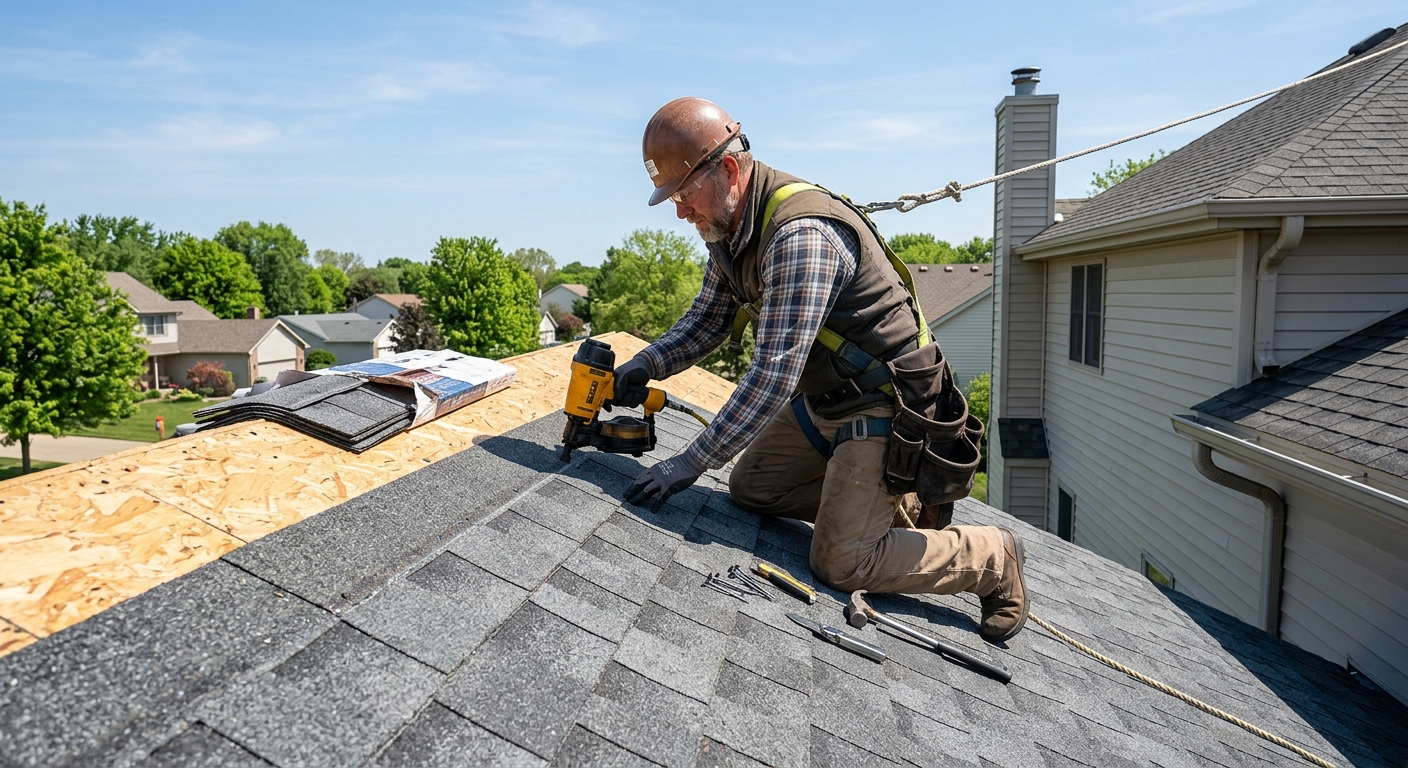
Roofing options and costs in New Toronto
New Toronto homeowners are often dealing with roofs that have already seen decades of freeze-thaw cycling, salt-laden lakefront air, and repeated winter snow loading. With a population of 11,463 (Statistics Canada, 2021 Census), this is a smaller lakeside community, but the housing stock still includes many older detached and semi-detached homes where roof age, past repairs, and hidden deck damage can materially change the final bill. In practical terms, that means more tear-offs, more flashing upgrades, and a higher chance of discovering rotted sheathing once the shingles come off. Along Lakeshore Boulevard West and the surrounding side streets, roofers are frequently asked to solve leak problems around chimneys, wall ties, and low-slope additions rather than simply swap shingles.
Toronto’s cold continental climate also raises baseline roofing costs because contractors need to budget for better ventilation, ice-dam protection, and more careful detailing at eaves and valleys. In the Toronto market, labour is priced for a compressed season: spring and summer demand is intense, so crews, disposal, and material delivery all cost more than in milder Canadian regions. That is why a standard asphalt roof in New Toronto can land much higher than a simple shingle swap in a softer climate, especially once you include proper underlayment and flashing. If your home is near Humber Bay’s wind exposure or closer to the lake, many contractors will also recommend stronger edge protection and more thorough sealing. The table below compares the most common roofing options so you can benchmark quotes before signing anything.
| Type |
Typical Use |
Lifespan |
Best For |
Price Range |
| Full asphalt shingle replacement (tear-off + new install) |
Most sloped residential roofs |
18–25 years |
Homeowners wanting a cost-effective full reset |
$7,000 – $18,000 |
| Architectural / laminated shingle (premium asphalt) |
Upsized replacement on family homes |
25–35 years |
Better wind resistance and curb appeal |
$8,500 – $20,000 |
| Impact-resistant shingle (Class 4 — hail & wind zones) |
Premium asphalt where durability matters |
30–40 years |
Owners prioritizing stronger storm performance |
$10,000 – $22,000 |
| Metal roofing (steel panels or standing seam) |
Long-life sloped roofs |
40–60+ years |
Low maintenance and strong snow-shedding performance |
$15,000 – $35,000 |
| Flat / low-slope membrane (TPO or EPDM) |
Porches, additions, garages and flat roofs |
20–30 years |
Low-slope areas needing watertight detailing |
$12,000 – $28,000 |
| Roof repair + flashing only (no full replacement) |
Targeted leak fixes and detail work |
Varies by roof condition |
Localized damage, leaking penetrations, or minor storm issues |
$300 – $2,500 |
Prices are estimates only and vary by project scope, site access and material selection.
What affects the price of roofing in New Toronto
Roofing quotes in New Toronto can easily vary by 30%–50% for what looks like the same job because every roof hides different labour, risk, and materials behind the shingles. A straightforward bungalow in a dry pocket of the city may come in near the low end of the asphalt replacement range, while a similar-sized home with two layers to remove, a steep pitch, and multiple penetrations can climb quickly toward the upper end. Across Ontario and Alberta, snow load and freeze-thaw cycles drive heavier ice-dam protection requirements and more robust underlayments; in Alberta’s hail belt, demand for impact-rated shingles pushes material pricing up; and on coastal BC jobs, persistent rain and wind often justify metal roofing and premium synthetic underlayment. Colder regions also have shorter install seasons, which concentrates demand into the peak summer window and pushes labour rates higher when crews are busiest.
In New Toronto, a few cost drivers show up again and again. Older homes near Lakeshore and on side streets with long service histories often need extra flashing work around chimneys, vents, and wall intersections, which can add several hundred dollars to a repair or full replacement. If the deck has soft spots from long-term leakage, replacing sheathing can add $300 – $1,200 or more depending on the amount of plywood or OSB involved. A basic asphalt reroof may still sit inside the $7,000 – $18,000 band, but adding upgraded ice-and-water shield, better ridge ventilation, and new metal flashing can move the price upward without being a mark-up gimmick. By contrast, a small repair job with flashing only might stay within $300 – $2,500, especially if the issue is localized. Roof size also matters: a 20-square roof costs materially more than a 12-square roof even before complexity is counted. In practical Toronto terms, the most expensive quote is not always the best, but the cheapest quote often leaves out the details that prevent leaks.
| Price Factor |
Why It Matters |
Cost Impact |
| Roof pitch and steepness |
Affects safety equipment and install speed |
Steeper roofs usually cost more because labour slows down and fall protection is required |
| Number of shingle layers to tear off |
2 layers = extra labour + disposal |
Often adds several hundred to a few thousand dollars depending on roof size |
| Total roof area in squares (1 square = 100 sq ft) |
Materials and labour scale directly with area |
Each additional square increases the quote; larger homes move faster toward the top of the range |
| Decking condition |
Rotted OSB or plywood must be replaced |
Can add $300 – $1,200 or more depending on how much sheathing is damaged |
| Chimney, skylight and vent flashing complexity |
Details take time and require custom metal work |
Can add a few hundred dollars for each difficult penetration |
| Ice-and-water shield coverage required |
Climate-driven protection at eaves, valleys and vulnerable areas |
More coverage increases material cost, but is often worth it in Toronto’s freeze-thaw climate |
| Regional labour rates and length of the install season |
Peak-season crews are booked and priced accordingly |
Can shift a quote upward by 10%–20% during busy months |
| Material quality tier |
Standard vs. impact-rated vs. premium products |
Can move a project from the lower end of $7,000 – $18,000 toward $15,000 – $35,000 |
Permits & regulations in Ontario
In Ontario, most like-for-like re-roofing does not require a building permit when you are simply removing an existing roof and installing a new one with the same basic roof type. That usually covers a standard asphalt shingle replacement on a home in New Toronto. However, a permit is commonly needed if the work changes the building structure or roof form, such as converting a pitched roof to a flat roof, making structural deck repairs that affect framing, or adding construction that changes load paths. If the existing roof has two shingle layers and your contractor proposes a third layer, that is a red flag: not only is it typically outside normal practice, it can trigger code and warranty problems. Contractors should carry liability insurance, WSIB coverage for their crew, and manufacturer certification for warranty-backed installations. Verify all three before signing.
To check a contractor properly, start with their legal business name and look for any provincial business registration details they provide. Ask for a current certificate of insurance and confirm the policy is active, names the company you are hiring, and includes adequate liability coverage. Next, request a WSIB clearance letter and verify that it is current; a legitimate roofing company should provide it without hesitation. If the company claims certification with a product manufacturer, ask for the actual installer credential or certificate number, not just a logo on a flyer. In New Toronto, it is also wise to ask whether the crew working on your home is in-house or subcontracted, because the paperwork should cover the actual labour force on site. Finally, compare the scope of work against permit-related language in the quote: if structural repairs, truss changes, or a roof-type conversion are involved, the contractor should tell you who is pulling the permit and what inspections are expected. That level of transparency is what separates a professional roofing quote from a sales pitch.
Choosing the right roofing material for New Toronto's climate
New Toronto’s roofing decisions should be driven by freeze-thaw severity, snow load, lake-influenced wind exposure, and the reality that water tends to find weak points fast in older Toronto homes. For many owners, architectural shingles are the sweet spot: they handle our climate well enough, look good on resale, and usually fit comfortably inside the mid-range replacement budget. If your roof is straightforward and you plan to stay five to 15 years, standard laminated shingles often make the most financial sense because they balance cost and performance without overbuilding the roof. Impact-rated shingles are worth considering when you want better resistance to wind damage, minor hail, or repeated seasonal stress; the premium is often 20%–30%, so a project that might cost $9,000 – $12,000 in standard architectural shingles could rise to $11,000 – $15,000 for an impact-rated upgrade. That extra spend can be justified if your home is exposed, already had storm repairs, or you want a stronger warranty package.
Metal roofing makes long-term sense when durability and snow shedding matter more than first cost. In Toronto, it is often the best answer for owners who are tired of recurring shingle replacements, especially on houses with steep pitches or persistent ice-dam history. A full metal roof may cost well above an asphalt system, but the lower maintenance burden and longer service life can pay back over time, particularly if you plan to own the home long-term. Flat TPO or EPDM is the right choice for low-slope additions, porches, and garage roofs where shingles are simply not the right tool. Ontario insurers and some manufacturers may offer discounts or favourable terms for higher wind resistance or impact-rated products, but the savings are usually modest and should not be the only reason to upgrade. In resale terms, a clean architectural shingle roof often boosts buyer confidence more efficiently than a premium material on the wrong roof shape. If your quote difference is only a few thousand dollars, a better underlayment and upgraded flashing are usually smarter than chasing the most expensive finish.
| Material |
Lifespan |
Snow & Ice Performance |
Wind / Hail |
Maintenance |
Price Band |
| Asphalt 3-tab (entry-level) |
15–20 years |
Basic performance; more vulnerable to ice-dam stress |
Moderate wind resistance, weakest of the group |
Higher; more prone to curling and granule loss |
$7,000 – $11,000 |
| Asphalt architectural / laminated (standard) |
25–35 years |
Good with proper ice-and-water shield and ventilation |
Good wind rating; fair hail resistance |
Moderate; periodic inspections recommended |
$8,500 – $20,000 |
| Impact-resistant shingle (Class 4) |
30–40 years |
Very good when paired with proper underlayment |
Strongest asphalt option for wind and impact |
Moderate; usually fewer storm-related repairs |
$10,000 – $22,000 |
| Metal — steel panels (exposed fastener) |
30–45 years |
Excellent snow shedding; watch fastener maintenance |
Very good wind resistance; good hail resistance |
Low to moderate; fastener checks over time |
$15,000 – $28,000 |
| Metal — standing seam (concealed fastener) |
40–60+ years |
Excellent for snow and ice management |
Excellent wind performance; strong hail resistance |
Low; premium detailing but very durable |
$22,000 – $35,000 |
| Flat TPO / EPDM membrane (low-slope only) |
20–30 years |
Good when drainage is properly designed |
Good if fully flashed and mechanically secured |
Moderate; seams and penetrations need attention |
$12,000 – $28,000 |
How to choose a roofing contractor in New Toronto
Start with proof, not promises. A reliable roofing contractor in New Toronto should provide a current certificate of liability insurance, a WSIB clearance letter, and a written quote that clearly identifies the legal business name. If they say they are “licensed,” ask what that means in Ontario and where you can verify the company’s registration. For roofing work that may trigger a permit, ask who is pulling it and how inspections will be handled. Then get 2 to 3 itemised quotes so you can compare labour, materials, disposal, flashing, ventilation, and any decking allowance separately instead of accepting one lump sum. Read the scope carefully: does the quote include tear-off, disposal, drip edge, ice-and-water shield, ridge vent, permit fees, and cleanup? Ask about workmanship warranty length, product warranty terms, and whether the warranty is transferable if you sell the house. Payment should be modest up front — never more than 10%–15% — with the rest held until the job is complete and you have walked the roof or reviewed photos. Make sure the start date and completion estimate are in writing, especially during Toronto’s busy season when delays are common.
- Ask for the full legal business name.
- Request a certificate of liability insurance.
- Request a WSIB clearance letter dated for your project.
- Get 2 to 3 written, itemised quotes.
- Confirm tear-off and disposal are included.
- Confirm ice-and-water shield coverage in vulnerable areas.
- Ask whether permit coordination is included if needed.
- Check workmanship warranty length in writing.
- Check manufacturer warranty coverage and transferability.
- Keep the deposit to 10%–15% maximum.
- Get the start date and completion window in writing.
- Ask who supervises the crew on site each day.
Watch for pressure tactics, vague “today only” pricing, a quote that is far below the $7,000 – $18,000 asphalt band without a clear reason, refusal to provide insurance paperwork, and missing line items for disposal or flashing. In New Toronto, another red flag is a contractor who ignores lakefront wind exposure or suggests skipping ice-dam protection on an older roof.
Frequently asked questions — roofing in New Toronto
Should I repair or replace my roof in New Toronto?
In New Toronto, the right choice usually comes down to roof age, leak history, and how much of the roof is failing at once. If you have a small, isolated issue such as a lifted flashing piece, a few missing shingles, or a single leak around a vent, a repair in the $300 – $2,500 range can make sense. But if your roof is near the end of its service life, has repeated ice-dam leaks, or shows curling, widespread granule loss, and soft decking, replacement is usually the smarter move. Older Toronto homes often hide damage under the shingles, so a “simple repair” can become a patch on a failing system. If you have already repaired the same area more than once, replacement is usually the better long-term value.
What is ice and water shield and do I need it in Ontario?
Ice and water shield is a self-adhering waterproof membrane installed at roof edges, valleys, and other leak-prone areas. In Ontario, and especially in Toronto’s freeze-thaw climate, it is one of the most important layers on a roof because melting snow can refreeze at the eaves and back water up under shingles. For New Toronto homeowners, the answer is usually yes: you want it at minimum along the eaves and in valleys, and often around chimneys and low-slope transitions too. It adds cost, but compared with the expense of interior water damage, it is cheap insurance. On a full replacement inside the $7,000 – $18,000 range, proper membrane coverage is standard practice, not an optional luxury.
How do I spot a low-quality roofing bid in New Toronto?
A low-quality bid often looks attractive because it is vague. If a contractor in New Toronto gives you one lump-sum price without specifying tear-off, disposal, flashing, ventilation, underlayment, and ice-and-water shield, that is a warning sign. Another red flag is a quote that is much lower than the usual Toronto market range without explaining what has been omitted. Be wary if the bid avoids mentioning warranty terms, has no start date, or will not confirm whether the crew is insured and covered by WSIB. For a roof that should be in the $8,500 – $20,000 range, an oddly low estimate often means shortcuts somewhere. Always compare itemised quotes side by side.
What roofing upgrades add the most resale value in New Toronto?
The best resale upgrades in New Toronto are usually the ones that reduce future buyer concern, not the flashiest materials. Architectural shingles, clean new flashing, proper ridge ventilation, and documented ice-and-water shield coverage tend to add the most practical value because they signal a roof that was done correctly for Ontario weather. If the house is a long-term hold or has repeated storm issues, impact-rated shingles can help, but the premium should be justified by exposure and expected ownership period. A jump from a basic roof repair to a full reroof in the $7,000 – $18,000 band can significantly improve buyer confidence, while a standing seam metal roof may be worth it on a premium home or where the roof shape and budget support it. Keep in mind that resale value is strongest when the work is documented and transferable.
Can a roofing contractor work year-round in New Toronto?
Yes, but not every roofing system is equally suited to winter work in New Toronto. Roof repairs can often be done year-round if weather and safety conditions allow, especially for leak emergencies, flashing issues, or small maintenance jobs in the $300 – $2,500 range. Full replacements are more weather-sensitive because shingles need proper handling, sealing, and dry conditions for best results. In colder Ontario months, crews may face shorter daylight hours, icy surfaces, and scheduling delays, which is why many larger jobs are concentrated in the warmer season. Some contractors will still replace roofs in late fall or winter when conditions permit, but a professional should explain how temperatures, snow, and material limitations affect the work plan rather than pretending weather does not matter.
What is a roofing square and how does it affect my quote?
A roofing square is a roofing industry measurement equal to 100 square feet of roof area. It matters because materials, labour, and waste are all priced partly by the number of squares on your roof. In New Toronto, a small bungalow might need far fewer squares than a larger two-storey home, which is why the quote can shift quickly even if the roof looks similar from the street. If your roof is 20 squares, that is roughly 2,000 square feet, and the cost will naturally be higher than a 12-square roof before you even factor in pitch, tear-off layers, or flashing. This is one reason Toronto quotes can sit anywhere inside the $7,000 – $18,000 asphalt band. Always ask the contractor how many squares they measured and whether that number includes overhangs, dormers, and low-slope sections.