Roofing options and costs in Runnymede-Bloor West Village
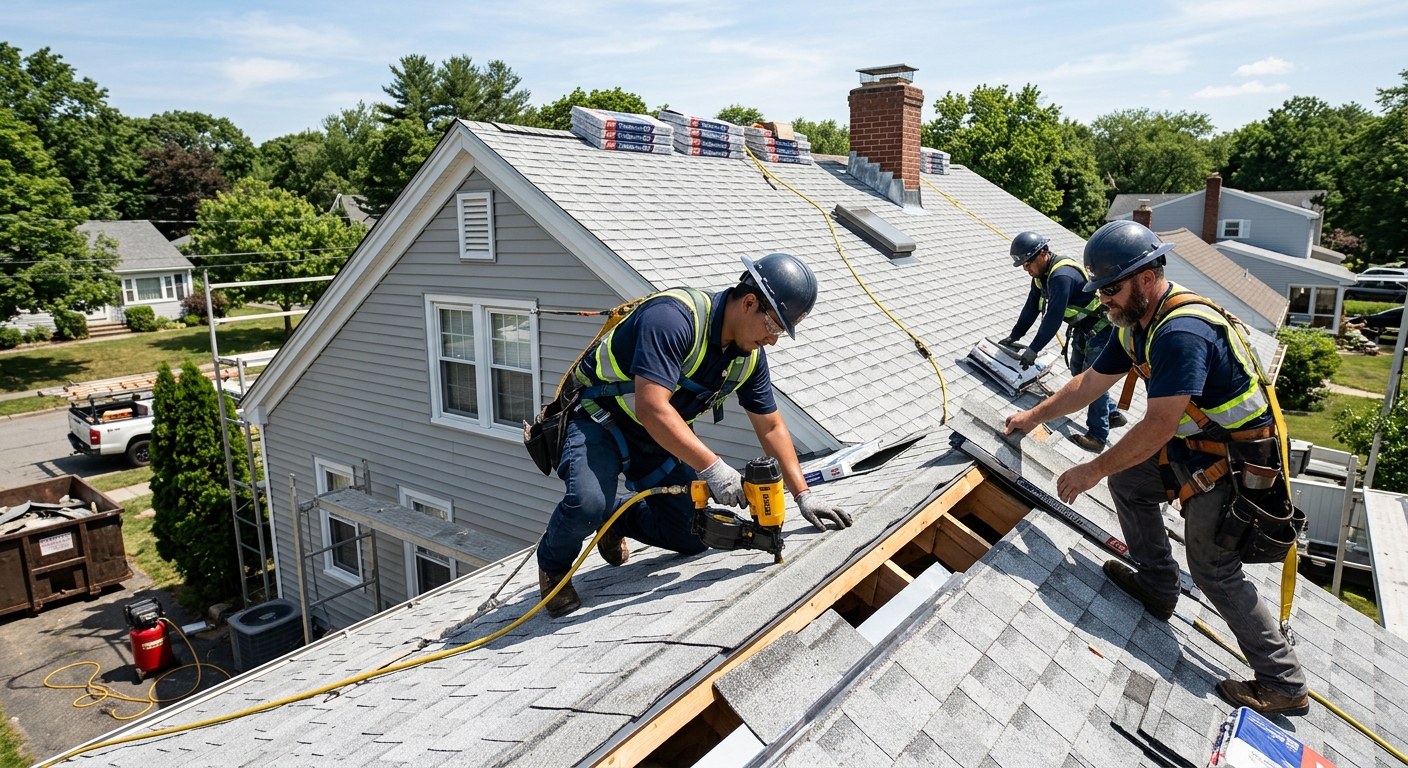
Runnymede-Bloor West Village homeowners usually discover that roofing quotes reflect much more than shingles alone. In a neighbourhood of 10,070 residents, the housing stock is mature enough that many roofs are reaching the stage where repairs stop being economical and a full replacement becomes the smarter option. Older homes in this part of Toronto often mean more flashing transitions, more vent penetrations, and a higher chance of hidden deck repairs once the old covering comes off. That matters because a “simple” re-roof can turn into a two-layer tear-off, extra disposal, or a partial re-deck if the plywood has softened over time. Toronto’s cold, continental climate adds another layer to pricing: freeze-thaw cycles, snow load, and ice dams push contractors to include better underlayments, eave protection, and careful attic ventilation detailing. Those are not optional add-ons if you want the roof to last through repeated winters. Labour is also priced into Toronto market bids because experienced crews book quickly during the short warm season, especially in demand-heavy pockets near Bloor West Village, The Junction edge, and the older housing streets around Runnymede. That combination of older construction and climate-sensitive detailing is why the same roof can come in at very different numbers from one contractor to the next. For most homeowners, the right way to compare is by material type, expected lifespan, and what is actually included in the scope. The table below gives a practical snapshot before you start collecting quotes.
| Type |
Typical Use |
Lifespan |
Best For |
Price Range |
| Full asphalt shingle replacement (tear-off + new install) |
Most detached and semi-detached homes needing a complete refresh |
15–25 years |
Budget-conscious owners who want a solid, standard re-roof |
$7,000–$18,000 |
| Architectural / laminated shingle (premium asphalt) |
Mainstream upgrade for sloped roofs with better curb appeal |
20–30 years |
Homes exposed to repeated freeze-thaw cycles and higher wind loads |
$8,500–$22,000 |
| Impact-resistant shingle (Class 4 — hail & wind zones) |
Premium asphalt option for tougher weather performance |
25–35 years |
Owners who want better durability and possible insurance benefits |
$10,000–$25,000 |
| Metal roofing (steel panels or standing seam) |
Long-life upgrade for steep or complex roofs |
40–50+ years |
Homeowners prioritizing low maintenance and long-term value |
$15,000–$35,000 |
| Flat / low-slope membrane (TPO or EPDM) |
Flat roofs, additions, porches, and low-slope sections |
20–30 years |
Homes with rear additions or low-slope architectural sections |
$12,000–$28,000 |
| Roof repair + flashing only (no full replacement) |
Targeted leak fixes, chimney work, vent boots, valley flashing |
2–10 years depending on condition |
Localized leaks where the main roof still has useful life |
$300–$2,500 |
Prices are estimates only and vary by project scope, site access and material selection.
What affects the price of roofing in Runnymede-Bloor West Village
Quotes for the same roof can vary by 30% to 50% across Toronto and Ontario because contractors are not pricing only square footage; they are pricing risk, access, labour intensity, disposal, and how much weather protection the home needs. In this market, snow load and freeze-thaw cycles drive up the need for ice-dam protection, thicker underlayments, and careful eave detailing, while Alberta’s hail belt creates demand for impact-rated shingles and more resilient systems. Coastal BC, by contrast, favours metal and premium synthetic underlayments because wind-driven rain is the bigger enemy. Shorter install seasons in colder regions also compress demand, so peak summer labour rates climb when every crew is booked. In Runnymede-Bloor West Village, an older roof with two shingle layers, a steep pitch, and chimney flashing can move a job from the lower end of the market into the mid-range quickly. A straightforward asphalt replacement might land around $7,000–$18,000, but once there are extra valleys, skylights, and deck repairs, the same home can edge toward the high end. A flat rear addition can also push costs into the $12,000–$28,000 range because membrane work is more detail-heavy than many homeowners expect. On a mature street near Bloor West Village or around Runnymede, limited driveway staging and parking restrictions can add labour time, which contractors factor into the bid. If rotten decking is found after tear-off, add several hundred to a few thousand dollars depending on how much plywood must be replaced.
| Price Factor |
Why It Matters |
Cost Impact |
| Roof pitch and steepness |
Steeper roofs need more safety gear, slower movement, and sometimes extra crew time |
Usually adds 10% to 25% |
| Number of shingle layers to tear off |
2 layers = more labour, more disposal, and a longer tear-off process |
Can add $500–$2,000 |
| Total roof area in squares (1 square = 100 sq ft) |
More surface area means more materials, underlayment, and labour |
Each extra square can add $250–$600 |
| Decking condition |
Rotted OSB or plywood must be repaired before new roofing goes on |
Commonly adds $300–$2,500 |
| Chimney, skylight and vent flashing complexity |
More penetrations mean more labour and leak-risk detailing |
Often adds $200–$1,200 |
| Ice-and-water shield coverage required |
Climate-driven protection at eaves, valleys and problem areas reduces winter leak risk |
Can add $150–$700 |
| Regional labour rates and length of the install season |
Toronto crews book fast in peak months, and compressed seasons raise labour pricing |
Often changes the total by 10% to 20% |
| Material quality tier |
Standard, impact-rated, and premium products carry different durability and warranty levels |
Can shift a quote from $7,000–$18,000 to $15,000–$35,000 |
Permits & regulations in Ontario
In Ontario, most like-for-like re-roofing jobs do not require a building permit when you are simply replacing shingles or membranes with the same general roof configuration. That usually means a straightforward tear-off and re-install on a pitched roof, or replacing an existing flat membrane with a similar system, can proceed without a permit. A permit is more likely to be required if you are adding structural deck repairs, changing the roof structure, converting from pitched to flat roofing, or altering the building envelope in a way that affects framing or load paths. Adding a second roofing layer beyond what local code permits is another red flag that can trigger permit and compliance issues. Before signing, verify that the contractor carries liability insurance, WSIB coverage, and manufacturer certification if you want warranty-backed installation. To check Ontario business status, look up the company online through the relevant provincial business registry or ask for their legal business name and HST number. For insurance, ask for a current certificate of insurance showing general liability limits and effective dates, not just a verbal claim. For WSIB, request a clearance letter and confirm it is current. If the contractor uses subcontractors, ask whether those crews are covered as well. In Runnymede-Bloor West Village, where many homes are older and roof details are more involved, this paperwork matters as much as the shingle brand. A missing certificate today can become a major headache if there is a leak, injury, or warranty dispute tomorrow.
Choosing the right roofing material for Runnymede-Bloor West Village's climate
Runnymede-Bloor West Village sits in a Toronto climate that punishes weak roofing details: freeze-thaw cycles can split seals, snow load tests structure, and wind-driven rain finds every weak flashing joint. For many homes here, architectural shingles are the practical sweet spot because they offer better thickness, better curb appeal, and stronger wind resistance than entry-level 3-tab shingles without jumping to metal pricing. On a typical house, that often means spending in the mid-range instead of chasing the lowest bid, but the extra durability usually pays for itself in fewer repairs and a more stable appearance over time. Impact-resistant shingles are worth the 20% to 30% premium when you want better hail and wind performance, especially if your home is exposed on a corner lot or has already had repeated shingle damage. That premium can be justified if it keeps you out of the repair cycle and helps with insurance underwriting, though Ontario discounts are not guaranteed and vary by insurer. Metal roofing makes the most financial sense when you want a long service life, low maintenance, and strong winter performance; it is a bigger upfront investment, but on a complex roof it can beat re-shingling twice over a 40-year window. Flat TPO or EPDM only makes sense on low-slope sections where shingles would fail. If your rear addition is causing leak concerns, a better membrane system may be smarter than repeatedly patching a $300 to $2,500 repair. In this market, choose for the next 20 to 30 winters, not just the cheapest install date.
| Material |
Lifespan |
Snow & Ice Performance |
Wind / Hail |
Maintenance |
Price Band |
| Asphalt 3-tab (entry-level) |
12–18 years |
Basic winter performance; more vulnerable to ice-dam stress |
Lower wind resistance; least suitable for exposed roofs |
Higher maintenance and earlier replacement risk |
$7,000–$12,000 |
| Asphalt architectural / laminated (standard) |
20–30 years |
Good with proper underlay and ventilation |
Better wind performance; moderate hail resistance |
Moderate maintenance |
$8,500–$22,000 |
| Impact-resistant shingle (Class 4) |
25–35 years |
Strong winter durability when installed with ice protection |
Best asphalt option for hail and wind |
Lower repair frequency than standard asphalt |
$10,000–$25,000 |
| Metal — steel panels (exposed fastener) |
30–45 years |
Excellent snow shedding and good ice resistance |
Very good wind resistance; good hail tolerance |
Moderate maintenance, especially at fasteners |
$15,000–$28,000 |
| Metal — standing seam (concealed fastener) |
40–50+ years |
Excellent for snow and freeze-thaw conditions |
Superior wind performance; strong long-term durability |
Low maintenance |
$22,000–$35,000 |
| Flat TPO / EPDM membrane (low-slope only) |
20–30 years |
Works well on low-slope roofs when detailed correctly |
Good when mechanically attached and properly flashed |
Moderate maintenance; seam and flashing checks matter |
$12,000–$28,000 |
How to choose a roofing contractor in Runnymede-Bloor West Village
Choosing the right roofer in Runnymede-Bloor West Village starts with proof, not promises. Ask for the contractor’s legal business name, then verify insurance, WSIB/WCB coverage, and manufacturer certification before you even discuss colour options. In Ontario, the insurance certificate should show current general liability coverage, and the WSIB clearance letter should be recent enough to confirm the company is in good standing. If the contractor cannot provide those documents quickly, move on. Get 2 or 3 itemised written quotes so you can compare labour, materials, tear-off, disposal, ventilation, and flashing line by line. A lump-sum number hides scope gaps, which is where many disputes begin. Read the exclusions carefully: does the quote include permit pulling if one is needed, ice-and-water shield at eaves and valleys, replacement of damaged plywood, and full disposal of old materials? Ask how long the workmanship warranty lasts, whether the product warranty is manufacturer-backed, and whether either one transfers if you sell the home. Payment terms matter too; never hand over more than 10% to 15% upfront, and keep the balance until the work is complete and inspected. Finally, insist on a written start date and a realistic completion estimate, because good crews in Toronto book fast and weather can move jobs around. A professional roofer will welcome that level of scrutiny.
- Verify the company’s legal name and operating status before signing.
- Ask for a current certificate of liability insurance.
- Request a WSIB clearance letter and confirm it is valid.
- Check whether the installer is certified for the shingle or membrane brand.
- Get 2 or 3 itemised quotes, not one lump-sum number.
- Confirm tear-off, disposal, underlayment, flashing, and ventilation are included.
- Ask whether plywood replacement is priced per sheet or as an allowance.
- Read the workmanship warranty length and the product warranty terms.
- Ask if warranties are transferable to a future buyer.
- Keep upfront payment to 10% to 15% maximum.
- Get the start date and completion estimate in writing.
- Confirm who is responsible for permits, if any are required.
Red flags in Runnymede-Bloor West Village include vague “cash only” pricing, no written scope, refusal to show insurance or WSIB documents, pressure to sign immediately after a door-to-door visit, and a quote that is far below the local norm such as an unrealistically cheap full replacement that should be closer to $7,000–$18,000. Be cautious if the bidder will not itemise flashing, vent work, or disposal, because those omissions often become change orders later.
Frequently asked questions — roofing in Runnymede-Bloor West Village
What is ice and water shield and do I need it in Ontario?
Ice and water shield is a self-adhering waterproof membrane installed in vulnerable areas of the roof, usually along eaves, valleys, around chimneys, and sometimes at penetrations or low-slope transitions. In Ontario, and especially in Toronto’s freeze-thaw climate, it is not a luxury item; it is one of the best defences against ice-dam leaks. When snow melts and refreezes at the eaves, water can back up under shingles and into the deck. On a home in Runnymede-Bloor West Village, that is a real concern because many roofs have older details and attic ventilation that may not have been updated for modern winter stress. It adds cost, but compared with a roof repair that can range from $300–$2,500, it is usually money well spent. Ask your contractor exactly where it will be installed and how many courses are included.
How do I spot a low-quality roofing bid in Runnymede-Bloor West Village?
A low-quality bid is usually easy to spot once you know what to look for. If the quote is a single lump sum with no breakdown for labour, tear-off, disposal, underlayment, flashing, and ventilation, that is a warning sign. In Runnymede-Bloor West Village, the cheapest number often leaves out ice-and-water shield, plywood replacement, or chimney flashing, which are exactly the things that matter in Ontario’s winter climate. Another red flag is a price that is wildly below the local range, such as a full replacement that should sit around $7,000–$18,000 but comes in dramatically lower with no explanation. Also watch for vague material descriptions like “good shingles” instead of a named product line, and ask whether the quote includes permit handling if needed. A professional bid should be clear, specific, and boring in the best possible way.
What roofing upgrades add the most resale value in Runnymede-Bloor West Village?
The upgrades that tend to add the most resale value are the ones that reduce buyer concern: a well-installed architectural shingle roof, proper flashing, improved attic ventilation, and clean soffit-to-ridge airflow. In Runnymede-Bloor West Village, buyers are often wary of older homes with hidden roof issues, so a roof that looks finished and has documented warranty coverage can help the home show better and sell with fewer objections. Impact-rated shingles can also be a smart upgrade if the home is exposed or has a history of storm wear, though the premium over standard architectural shingles only makes sense if you plan to stay long enough to benefit or if your insurer rewards the upgrade. Metal roofing can boost perceived quality, but on some homes the price jump from mid-range asphalt to metal may exceed what the market will immediately pay back. In practical terms, spending an extra $2,000–$5,000 on better underlayment, flashing, and ventilation often yields more day-to-day value than chasing the most expensive finish.
Can a roofing contractor work year-round in Runnymede-Bloor West Village?
Yes, but not every roofing system and not every day. In Ontario, roofers can work through much of the year, but winter brings limits from snow, ice, cold temperatures, and shorter daylight hours. In Runnymede-Bloor West Village, a contractor may still handle emergency repairs, flashing fixes, and some low-slope membrane work during cold weather, but full shingle replacements are usually scheduled for milder conditions because materials seal better and crews work more safely. Cold weather can also affect labour pricing and scheduling, since many homeowners want the job done in the short peak season when the weather is favourable. That is one reason Toronto quotes can feel tighter in late spring and summer. If you are planning a replacement in the $7,000–$18,000 asphalt range, book early and ask how the contractor handles weather delays, material storage, and winter sealing requirements. A reputable company will explain those limits clearly and not pretend every roof is a four-season job.
What is a roofing square and how does it affect my quote?
A roofing square is a standard unit equal to 100 square feet of roof surface. Contractors use it to estimate material quantity and labour, which is why it matters so much when you compare quotes in Ontario. If your home in Runnymede-Bloor West Village has, for example, 22 squares of roof area rather than 16, the total material and labour cost rises even if the roof looks similar from the street. This is also where pitch, dormers, valleys, and waste factor come into play. More cuts and more steep surfaces mean more time, more waste, and sometimes more safety setup. On a Toronto replacement, an extra square can add a few hundred dollars to the job, and if the roof is complex, the price can move from the lower end of the market toward the mid or upper end. That is why a clear quote should state the number of squares, the waste allowance, and whether tear-off and disposal are included.
How do I maintain my roof between replacements in Runnymede-Bloor West Village?
Routine maintenance is the cheapest way to stretch the life of a roof in Runnymede-Bloor West Village. Inspect it twice a year, ideally in spring and fall, and after major wind or snow events. Keep eavestroughs clear so meltwater can drain instead of backing up into the roof edge, and trim back branches that rub shingles or drop debris into valleys. In Ontario’s freeze-thaw climate, check around chimneys, vents, skylights, and plumbing stacks because those are common leak points. If you spot lifted shingles, damaged flashing, or a small leak, deal with it quickly; a modest repair is far less expensive than letting water travel into the deck. A targeted fix might be in the $300–$2,500 range, while waiting can lead to a far more expensive re-roof. If you have a flat rear section, keep an eye on ponding water and membrane seams. Good maintenance does not make a roof last forever, but it can delay replacement and preserve resale value.