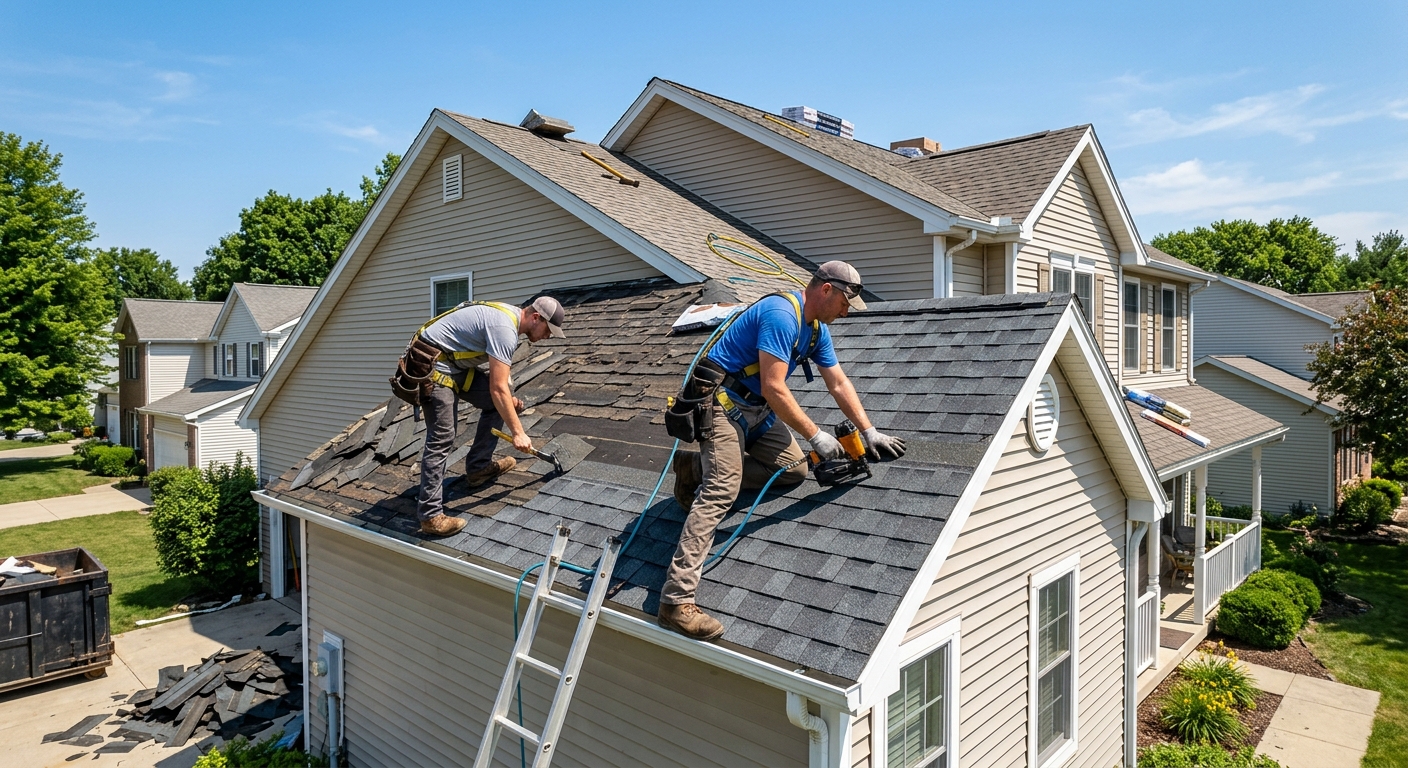
Roofing options and costs in Thunder Bay
Thunder Bay homeowners often discover that roofing quotes are shaped as much by climate as by the roof itself. In a city of 108,843 people, where 67.7% of households own their homes and 72.9% of dwellings were built before 1981, there is a lot of ageing roof stock that is reaching the point where tear-off work, deck repairs and upgraded ventilation become part of the job. That older housing mix also means more homes with layers of legacy shingles, uneven decking and dated flashing details that can slow production and raise labour costs. In neighbourhoods like Westfort, Port Arthur and along the Waterfront area, roofers are frequently dealing with homes that need careful ice-dam detailing, chimney re-flashing and better attic air movement rather than just a quick re-cover.
Northwest Ontario’s roofing market is also more expensive to build in than milder southern markets because crews are working around heavy snow loads, long winters and freeze-thaw cycles that punish edges, valleys and penetrations. Contractors in Thunder Bay usually price in thicker ice-and-water shield at eaves, improved underlayment and weather delays that reduce daily output. Shorter install seasons in the northwest can also tighten labour availability during the best summer windows, which is why a job that looks similar on paper can still land at very different numbers. The practical result is that a simple asphalt replacement may still come in near the lower band, while a roof with steep slopes, multiple dormers or hidden deck damage can move quickly toward the middle of the range. The table below compares the most common roofing choices homeowners ask about when collecting quotes.
| Type |
Typical Use |
Lifespan |
Best For |
Price Range |
| Full asphalt shingle replacement (tear-off + new install) |
Standard sloped homes needing a full refresh |
20–30 years |
Budget-conscious owners replacing worn shingles on straightforward roofs |
$6,500 – $14,000 |
| Architectural / laminated shingle (premium asphalt) |
Most common upgrade for resale and durability |
25–35 years |
Homes that need better wind performance and a thicker, more dimensional look |
$8,500 – $16,500 |
| Impact-resistant shingle (Class 4 — hail & wind zones) |
Higher-spec asphalt for tougher weather exposure |
25–40 years |
Owners wanting stronger impact resistance and better insurance appeal |
$10,000 – $19,500 |
| Metal roofing (steel panels or standing seam) |
Long-life solution for steep or exposed roofs |
40–60+ years |
Homes where snow shedding, durability and low maintenance matter most |
$18,000 – $38,000 |
| Flat / low-slope membrane (TPO or EPDM) |
Porches, additions, garages and low-slope main roofs |
20–30 years |
Roof areas that need reliable waterproofing and clean drainage detailing |
$9,000 – $26,000 |
| Roof repair + flashing only (no full replacement) |
Leak fixes, chimney work, vent boots, valleys and edge details |
Varies by repair |
Localized damage where the roof deck and most shingles are still serviceable |
$450 – $3,500 |
Prices are estimates only and vary by project scope, site access and material selection.
What affects the price of roofing in Thunder Bay
Two homes with the same square footage can still receive quotes that differ by 30% to 50% across Northwest Ontario because the real cost is driven by access, roof complexity, disposal, season timing and hidden repair work. Snow load and freeze-thaw cycles across Ontario and Alberta drive ice-dam protection requirements and heavier underlayment; Alberta’s hail belt pushes demand for impact-rated shingles; coastal BC rain and wind favour metal and premium synthetic underlayment. In Thunder Bay, those climate pressures show up as extra ice-and-water shield at the eaves, wider protection in valleys and more careful flashing around chimneys, skylights and vents. The shorter install season in colder regions also concentrates demand into a few good weather months, which tends to push labour rates higher when crews are booked solid.
A straightforward bungalow in Current River may sit near the bottom of the $6,500 – $14,000 asphalt replacement band if it has one layer of shingles and a clean deck. By contrast, an older Westfort home with two shingle layers, a steep pitch and rotted plywood can move into a much higher quote once tear-off, waste haulage and sheet-good replacement are added. Metal roofing often lands in the $18,000 – $38,000 range because the material itself costs more and the install takes more precision, especially around snow-shedding details. Even a repair that sounds minor can rise quickly if chimney flashing, plumbing stacks and gutter-edge ice protection all need attention. The age of Thunder Bay’s housing stock matters too: homes built before 1981 are more likely to need vent upgrades, deck repairs and extra fastener work, which can add several hundred to several thousand dollars to a quote. That is why contractors should break out labour, materials and extras separately instead of giving you a single round number.
| Price Factor |
Why It Matters |
Cost Impact |
| Roof pitch and steepness |
A steeper roof needs more fall protection, staging and slower shingle placement. |
Moderate to high increase; steep roofs can add 10%–25% |
| Number of shingle layers to tear off |
Two layers mean more labour, more disposal and more chance of deck damage. |
Often adds $800 – $2,500 |
| Total roof area in squares (1 square = 100 sq ft) |
Bigger roofs require more materials, time and truckload disposal. |
Scales directly with size; larger homes can add thousands |
| Decking condition |
Rotted OSB or plywood must be cut out and replaced before new roofing goes on. |
Commonly adds $300 – $3,000+ |
| Chimney, skylight and vent flashing complexity |
Each penetration needs custom metal and careful sealing to prevent leaks. |
Can add $250 – $1,200 |
| Ice-and-water shield coverage required |
Thunder Bay’s freeze-thaw cycles make extended eave and valley protection important. |
Usually adds $200 – $900 |
| Regional labour rates and length of the install season |
Shorter seasons and weather delays reduce output and tighten contractor availability. |
Can push pricing up 5%–15% in peak periods |
| Material quality tier |
Standard, impact-rated and premium systems have very different material costs. |
Upgrade from standard asphalt to premium can add $1,500 – $5,000 |
Permits & regulations in Ontario
In Ontario, most like-for-like re-roofing does not require a building permit, but there are important exceptions. If you are adding structural changes, replacing damaged roof framing, increasing the roof load, converting a pitched roof to a flat roof, or changing the building envelope in a way that affects structural or drainage design, a permit is much more likely to be required. Adding a second layer of shingles where the roof already has the maximum allowed layers, or doing major deck repairs that change the structure, can also trigger permit review. By contrast, replacing worn shingles with a similar roofing system, renewing flashing, swapping vent boots, and redoing underlayment on an otherwise sound roof typically does not require a permit.
Before you sign anything in Thunder Bay, ask the contractor for proof of Ontario business registration and check that the company name matches every document. Next, request a current certificate of liability insurance showing adequate coverage for residential roofing work. Then ask for a WSIB clearance letter; you can verify the clearance status directly through WSIB’s online services rather than relying on a verbal promise. If a contractor uses subcontractors, confirm that those crews are covered too. For warranty-backed installs, ask whether the crew is manufacturer-certified for the product they are quoting, because some shingle and metal warranties depend on approved installation methods. A proper contractor should have no problem showing these documents before booking a start date. If they hesitate, send you a blurry screenshot, or refuse to put details in writing, treat that as a warning sign. For older homes common in Thunder Bay, this paper trail matters because hidden deck repairs or ventilation corrections can come up once the tear-off starts.
Choosing the right roofing material for Thunder Bay's climate
Thunder Bay’s climate is hard on roofs in a very specific way: snow sits for long periods, then meltwater refreezes at the eaves and around penetrations, which means ice dams and trapped moisture are a real concern. That is why material choice should start with the roof’s slope, exposure and maintenance tolerance, not just the sticker price. Architectural shingles are usually sufficient for many suburban homes if the attic is well ventilated, the insulation is upgraded and the eaves receive proper ice-and-water protection. They offer a good balance of cost and appearance, and for many owners they are the best value in the local market. Impact-resistant shingles make sense when the roof is exposed, the homeowner wants better toughness, or insurance savings may help offset the 20%–30% premium. In Ontario, some insurers may consider high-wind or impact-rated systems more favourably, but any discount is insurer-specific rather than guaranteed.
Metal roofing starts to make more financial sense when a homeowner plans to stay put long term, wants lower maintenance and has a roof shape that benefits from snow shedding. A metal roof may cost an extra $8,000 – $18,000 over a standard asphalt job, but the longer service life and reduced repair burden can justify that premium on a difficult roof. Flat TPO or EPDM systems are the right answer for low-slope areas where water management matters more than appearance. On older Thunder Bay homes, especially those built before 1981, deck repairs and ventilation improvements can make even a modest roof choice more expensive, so it is worth comparing total installed cost, not just material price. A cheap 3-tab roof may save money today, but if it means more wind damage, earlier replacement and higher maintenance, the short-term savings can disappear quickly.
| Material |
Lifespan |
Snow & Ice Performance |
Wind / Hail |
Maintenance |
Price Band |
| Asphalt 3-tab (entry-level) |
15–20 years |
Basic performance; more vulnerable to ice-dam stress and edge lifting |
Average wind resistance; weaker in exposed spots |
Higher maintenance and earlier replacement risk |
$6,500 – $10,500 |
| Asphalt architectural / laminated (standard) |
25–30 years |
Good when paired with proper ventilation and ice protection |
Better wind performance than 3-tab |
Moderate maintenance; solid all-around choice |
$8,500 – $16,500 |
| Impact-resistant shingle (Class 4) |
25–40 years |
Strong if installed with upgraded underlayment and ice shield |
Best asphalt option for hail and high-wind exposure |
Lower storm-related repair risk |
$10,000 – $19,500 |
| Metal — steel panels (exposed fastener) |
30–45 years |
Excellent snow shedding; fasteners need inspection over time |
Very good wind resistance; hail denting possible |
Moderate maintenance |
$18,000 – $30,000 |
| Metal — standing seam (concealed fastener) |
40–60+ years |
Outstanding for snow and ice control |
Excellent wind performance; premium hail resistance |
Low maintenance |
$24,000 – $38,000 |
| Flat TPO / EPDM membrane (low-slope only) |
20–30 years |
Reliable on low-slope roofs when drainage is correct |
Good when mechanically secured and detailed properly |
Moderate; seams and penetrations need inspection |
$9,000 – $26,000 |
How to choose a roofing contractor in Thunder Bay
Start by verifying the contractor’s business identity and insurance. Ask for the full legal company name, then confirm the details on the quote match the paperwork. Request a certificate of liability insurance and make sure it is current and large enough for residential roofing work. For WSIB or WCB coverage, ask for a clearance letter and verify it yourself through the relevant online system rather than accepting a photo of an expired page. If the company is using subcontractors, ask whether those crews are covered too. Then collect 2 or 3 itemised written quotes so you can compare labour, materials, underlayment, ice-and-water shield, ventilation, flashing, disposal and any deck repairs separately. A lump-sum quote makes it too easy for surprise extras to appear later.
Read the scope carefully. It should say what is included, what is excluded, whether permit applications are included, and whether dumpster or dump fees are part of the price. Ask how long the workmanship warranty lasts, what the manufacturer warranty covers, and whether the warranty is transferable if you sell the home. Payment terms matter too: do not give more than 10% to 15% upfront, and keep a holdback until the work is complete and inspected. Finally, get the start date and completion estimate in writing. In Thunder Bay, weather can shift the schedule, but a good contractor will still give you a realistic plan and tell you how they handle delays.
- Confirm the legal company name on the quote.
- Ask for a current certificate of liability insurance.
- Verify WSIB clearance before work starts.
- Check whether the crew is manufacturer-certified for the quoted system.
- Get 2 to 3 itemised quotes, not lump sums.
- Make sure tear-off, disposal and cleanup are listed.
- Confirm whether permit filing is included.
- Ask how much ice-and-water shield will be installed.
- Get the workmanship warranty in writing.
- Ask if the product warranty is transferable.
- Never pay more than 10% to 15% upfront.
- Get a written start date and completion window.
Red flags in Thunder Bay include no physical address, vague “special” pricing that expires the same day, refusal to name the shingle brand, no WSIB clearance letter, and a contractor who will not explain how they handle old deck damage, attic ventilation or ice-dam protection on older homes.
Frequently asked questions — roofing in Thunder Bay
How do I know if a roofing contractor is licensed in Ontario?
In Thunder Bay and across Ontario, the first step is to confirm the contractor is a real business with a traceable name, address and insurance record. Ask for the legal company name, then compare it with the name on the quote, the liability insurance certificate and any warranty paperwork. Ontario does not use one single roofing licence the way some homeowners expect, so proof of legitimacy usually comes from a combination of business registration, insurance, WSIB coverage and manufacturer certification. Ask for the WSIB clearance letter and verify it yourself online. If the contractor cannot provide those documents, or gives you only a phone number and a first name, that is a problem. For a typical Thunder Bay reroof, you should also expect itemised pricing in the range of $6,500 – $14,000 for standard asphalt work. The paperwork should match the scope of that job.
How much does a new roof cost in Thunder Bay?
Most Thunder Bay homeowners will see a new asphalt shingle roof land somewhere in the $6,500 – $14,000 range, but the final number depends on roof size, pitch, tear-off layers, deck condition and how much ice-dam protection is needed. If the home is older, which is common in Thunder Bay, hidden repairs can add to the bill once the shingles come off. Metal roofing usually starts much higher, often in the $18,000 – $38,000 range, because the material and installation take more time and skill. Flat or low-slope systems sit in between. A simple bungalow in good condition may stay near the low end, while a steep roof with two layers to remove, flashing work and plywood replacement can climb quickly. The best way to judge value is to compare itemised quotes, not just the bottom line.
How long does a roof replacement take in Thunder Bay?
For many Thunder Bay homes, a straightforward asphalt reroof takes one to three days once the crew is on site. Larger houses, steeper roofs, multiple dormers, skylights or hidden deck repairs can extend that to several days. Weather matters more here than in milder regions, because crews have to work around wind, rain, snow, frost and shorter working windows. That is especially true in Northwest Ontario, where install season is tighter and a good weather stretch fills up quickly. If a contractor has to replace rotten plywood, redo chimney flashing or install extra ice-and-water shield, the schedule can lengthen even on a relatively small house. A metal roof generally takes longer than standard asphalt because the detailing is more precise. Ask for a written start date and completion estimate, and make sure the quote explains what could cause delays. On a typical project in the $6,500 – $14,000 asphalt range, clear communication matters almost as much as the price.
Asphalt shingles vs metal roofing — which is better for Thunder Bay's climate?
Both can work in Thunder Bay, but they serve different priorities. Architectural asphalt shingles are often the best value for homeowners who want a decent lifespan, good appearance and a lower upfront cost. They are usually enough when the attic is well ventilated and the roof has proper ice-and-water protection. Metal roofing costs more, often in the $18,000 – $38,000 range, but it sheds snow well, handles freeze-thaw cycles better and usually needs less maintenance over time. That makes metal attractive on exposed roofs, steep pitches or homes where the owner plans to stay long term. Asphalt can still be the smarter choice if budget is tight or if the roof is simple and sheltered. In Thunder Bay, the better option often comes down to how much you value long-term durability versus upfront savings. If you are comparing a standard asphalt quote near $6,500 – $14,000 against a metal system, ask about expected service life, not just today’s invoice.
How long should a roof last in Thunder Bay?
In Thunder Bay, a typical asphalt shingle roof often lasts 20 to 30 years if it is installed properly, ventilated well and protected against ice dams. Three-tab shingles usually sit at the shorter end of that span, while architectural shingles often last longer and look better as they age. Metal roofing can last 40 years or more, which is why it is popular on homes where the owner wants fewer future replacements. The local climate shortens roof life when ventilation is poor, snow sits on the roof for long periods, or ice builds up at the eaves each winter. Older houses, especially those built before 1981, may also have attic and insulation issues that affect durability. If you are already near the end of service life, a repair in the $450 – $3,500 band may be a temporary fix, not a long-term solution. The roof’s actual lifespan depends heavily on maintenance and installation quality.
Do I need a permit to replace my roof in Ontario?
Usually, a like-for-like roof replacement in Ontario does not require a building permit, including most standard asphalt reroofs in Thunder Bay. However, you may need a permit if the work changes the structure, such as replacing damaged framing, altering the roof shape, converting a pitched roof to a flat roof, or making major deck repairs that affect the building envelope. Adding a second layer where the roof already has the maximum allowed layers can also raise code and inspection issues. If you are only removing worn shingles, replacing flashing, upgrading underlayment and installing a similar roofing system, the work typically falls into the no-permit category. Still, you should always confirm with the contractor and the city if anything unusual is involved. A quote in the $6,500 – $14,000 range may be straightforward, but once structural work is added, the rules can change quickly. Asking early prevents delays later.