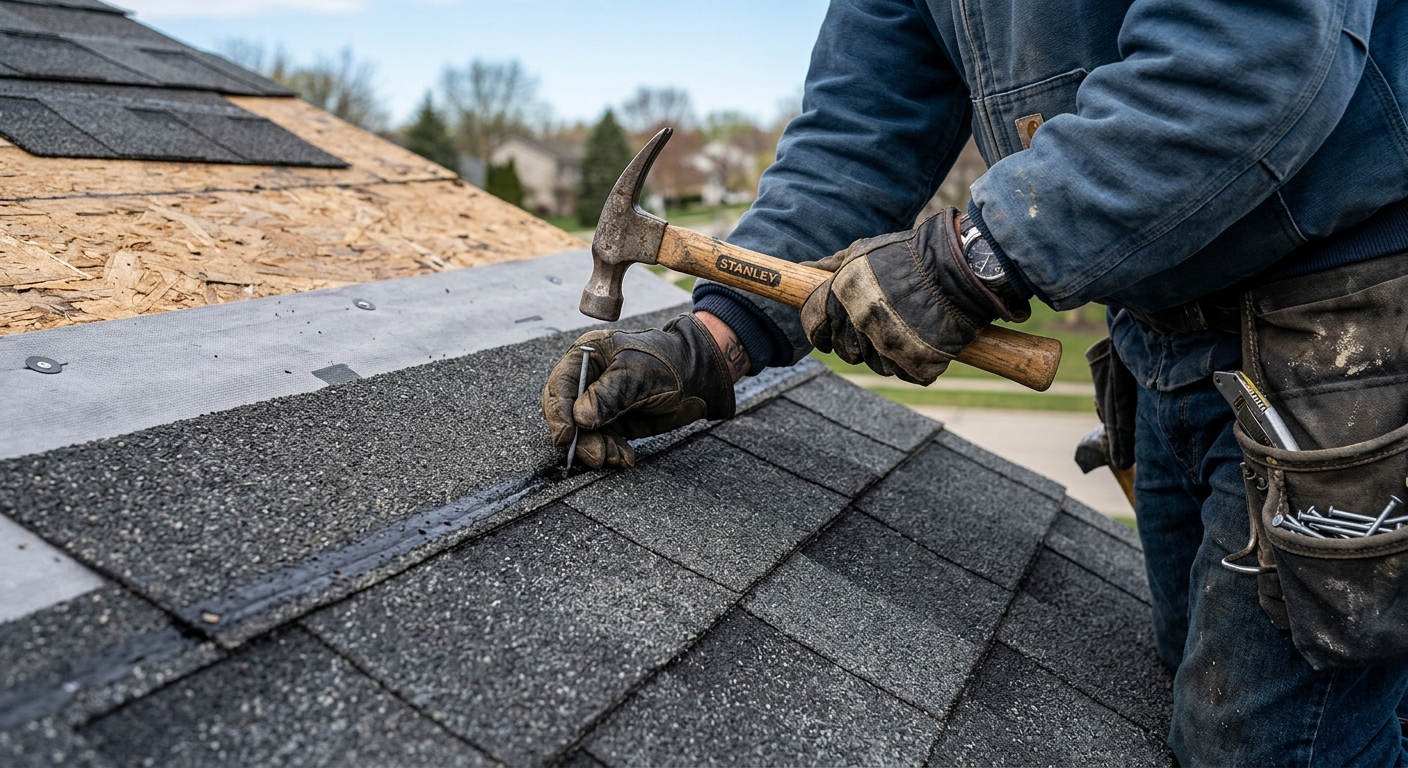
Roofing options and costs in Wexford/Maryvale
Wexford/Maryvale, Ontario homeowners are often dealing with roofs that are well into their service life, especially in a neighbourhood with 27,917 residents and a housing mix that includes many long-established homes (Statistics Canada, 2021 Census). Older homes in this part of Toronto often mean older roof decks, more ventilation corrections, and sometimes a second layer of shingles already in place, all of which can increase tear-off labour and disposal costs. In practical terms, that means a “simple” re-shingle can turn into a more involved replacement once hidden rot, chimney work, or ice-dam damage shows up at the eaves. The Toronto market also runs hot in peak season: once the spring thaw passes and crews are booked solid across Scarborough, North York, Markham, and the rest of the region, pricing tightens because skilled labour, dump fees, and weather windows all compete at the same time.
Toronto’s cold, continental climate is a real cost driver. Freeze-thaw cycles stress shingles, loosen flashing, and make ice-and-water protection more important at the eaves and valleys. Snow load also pushes contractors to pay closer attention to ventilation and structural details, especially on older bungalows and back-split homes common around Wexford Heights and nearby Victoria Village. If you live near Lawrence Avenue East or Victoria Park Avenue, you’ll usually see the most demand for roofers who can handle both steep-slope shingle work and leak-prone flashing repairs. The upshot is that homeowners comparing quotes should expect meaningful differences between basic shingles, upgraded architectural products, and higher-end metal systems. The table below shows the most common options and the price bands that make sense for this area.
| Type |
Typical Use |
Lifespan |
Best For |
Price Range |
| Full asphalt shingle replacement (tear-off + new install) |
Standard pitched roofs needing a full reset |
15–25 years |
Homeowners wanting a cost-effective, code-compliant replacement |
$7,000 – $18,000 |
| Architectural / laminated shingle (premium asphalt) |
Higher-end pitched roofs and resale-focused upgrades |
20–30 years |
Better curb appeal, thicker shingle profile, improved wind resistance |
$8,500 – $20,000 |
| Impact-resistant shingle (Class 4 — hail & wind zones) |
Homes exposed to stronger weather or owner-managed insurance concerns |
25–35 years |
Added durability and reduced storm-related damage risk |
$10,000 – $24,000 |
| Metal roofing (steel panels or standing seam) |
Long-life steep-slope roofing |
40–50+ years |
Owners planning to stay long term and wanting top-tier weather performance |
$15,000 – $35,000 |
| Flat / low-slope membrane (TPO or EPDM) |
Flat roofs, additions, garages, and low-slope sections |
20–30 years |
Reliable waterproofing for low-slope areas |
$12,000 – $28,000 |
| Roof repair + flashing only (no full replacement) |
Targeted leak repair, chimney or wall flashing fixes |
2–10 years depending on condition |
Localized leaks, storm damage, and preventive maintenance |
$300 – $2,500 |
Prices are estimates only and vary by project scope, site access and material selection.
What affects the price of roofing in Wexford/Maryvale
In Toronto and across Ontario, it is normal for two quotes on the same roof to differ by 30–50% because roof pricing is driven by more than shingle brand. Pitch, access, tear-off layers, chimney count, ventilation corrections, and the amount of ice-and-water shield required can all move a job from the low end of the local range to the high end. In Wexford/Maryvale, many homes are older and may have multiple penetrations, original plywood, or past patchwork repairs, so a contractor who discovers rotten decking or a second layer of shingles will price that risk in from the start. That is why a roof that looks like a straightforward $7,000 – $18,000 replacement on paper can easily climb once the old materials come off. By contrast, a simple repair with one flashing issue might stay near the $300 – $2,500 band if the deck is sound and access is easy.
Climate matters too. Snow load and freeze-thaw cycles across Ontario and Alberta drive ice-dam protection requirements and heavier underlayment; Alberta’s hail belt pushes demand for impact-rated shingles; coastal BC rain and wind favour metal and premium synthetic underlayment. Shorter install seasons in colder regions concentrate demand and push labour rates higher during peak summer windows. In practical Wexford/Maryvale terms, a low-slope rear addition may need more membrane detail than a simple gable roof, and a bungalow near Lawrence Avenue East with chronic ice buildup may need extra eave protection that adds hundreds of dollars. If a contractor quotes a premium shingle system instead of a basic asphalt package, that can add a few thousand dollars, but it may still be cheaper than repeated repairs after freeze-thaw damage. The main lesson is to compare what is included, not just the bottom-line number.
| Price Factor |
Why It Matters |
Cost Impact |
| Roof pitch and steepness |
Affects safety equipment and install speed |
Steeper roofs cost more because crews work slower and need more fall protection |
| Number of shingle layers to tear off |
2 layers = extra labour + disposal |
Can add several hundred to a few thousand dollars depending on roof size |
| Total roof area in squares (1 square = 100 sq ft) |
More surface area means more materials and labour |
Larger roofs move pricing from the lower end of $7,000 – $18,000 into the upper end quickly |
| Decking condition |
Rotted OSB or plywood must be replaced |
Replacement decking can add material plus carpentry labour |
| Chimney, skylight and vent flashing complexity |
More penetrations mean more leak risk and detail work |
Each detail point can add cost, especially if flashing needs rebuilding |
| Ice-and-water shield coverage required |
Climate-driven |
Greater coverage raises material cost, but it is often money well spent in Toronto |
| Regional labour rates and length of the install season |
Peak-season demand increases contractor pricing |
Can shift quotes by 30–50% between busy and slower periods |
| Material quality tier (standard vs. impact-rated vs. premium) |
Thicker products cost more up front but can last longer |
May add a few thousand dollars, especially when upgrading to metal or Class 4 shingles |
Permits & regulations in Ontario
In Ontario, most like-for-like re-roofing jobs do not require a building permit, which means replacing worn asphalt shingles with a similar roofing system usually proceeds without one. However, permits are commonly required when the work goes beyond a straightforward replacement: adding or changing structural framing, repairing or replacing rotted roof decking in a way that affects structure, converting a pitched roof to a flat or low-slope system, or making significant alterations to roof shape, drainage, or load-bearing elements. If the project includes a new dormer, skylight cut-out that changes framing, or major structural repair, assume a permit review may be needed. By contrast, routine shingle replacement, standard flashing replacement, and minor leak repairs typically do not require a permit when the underlying structure stays the same.
Before signing with any contractor in Wexford/Maryvale, verify three things. First, ask for the business name and check the company online through the Ontario business registry or municipal registration records if available. Second, request a current certificate of liability insurance showing the policy number, insurer, limits, and effective dates; do not accept a verbal promise. Third, ask for WSIB coverage and request a clearance letter directly from the contractor or confirm it through WSIB’s online verification tools. If a contractor claims to use subcontractors, make sure those workers are covered too. For warranty-backed installations, ask for manufacturer certification or proof the installer is approved by the shingle or membrane maker. In Ontario, the safest rule is simple: no permit for a normal like-for-like reroof, but do your homework on insurance, WSIB/WCB coverage, and installer credentials before any deposit changes hands.
Choosing the right roofing material for Wexford/Maryvale's climate
Wexford/Maryvale sits in a Toronto climate that is hard on roofs: freeze-thaw cycles, snow load, and periodic wind-driven rain all punish weak details. For many homes, architectural shingles are the practical middle ground because they balance cost, durability, and appearance. They usually make sense when the roof deck is sound, the pitch is normal, and the homeowner wants to stay in the most common Toronto price band without overspending. If you are replacing a typical bungalow roof and the upgrade from basic asphalt to architectural shingles adds about $1,000 – $3,000, that premium is often justified because laminated shingles handle wind and temperature swings better and generally improve resale appeal.
Impact-resistant shingles are worth considering when a roof sees repeated storm stress, has a history of shingle loss, or the owner wants a tougher product with possible insurance benefits. In Ontario, some insurers may offer discounts or more favourable terms for high-wind-rated or impact-resistant roofing, but the savings vary and are never guaranteed. The 20–30% premium can make sense if you expect to stay long term or if repairs have already become frequent. Metal roofing makes the most financial sense where long service life matters most, especially on homes that regularly battle ice dams or where the owner wants to reduce maintenance. Standing seam generally outperforms exposed-fastener metal, but the price jump is significant. Flat membrane systems are the right answer only where the roof is actually low-slope or flat; they are not a substitute for a pitched roof. In Wexford/Maryvale, the best choice is usually the one that matches the roof shape, not the trendiest product.
| Material |
Lifespan |
Snow & Ice Performance |
Wind / Hail |
Maintenance |
Price Band |
| Asphalt 3-tab (entry-level) |
15–20 years |
Basic performance; more prone to ice-dam wear |
Moderate; weakest option in storms |
Higher maintenance and earlier replacement risk |
$7,000 – $12,000 |
| Asphalt architectural / laminated (standard) |
20–30 years |
Better shingle thickness and better winter durability |
Good general wind resistance |
Moderate maintenance, good all-around value |
$8,500 – $20,000 |
| Impact-resistant shingle (Class 4) |
25–35 years |
Strong against freeze-thaw stress and impact damage |
Very good for wind and hail resistance |
Lower storm-related repair frequency |
$10,000 – $24,000 |
| Metal — steel panels (exposed fastener) |
30–45 years |
Excellent snow shedding; good for ice control |
Very good wind resistance; hail can dent panels |
Moderate maintenance; fasteners may need checking |
$15,000 – $28,000 |
| Metal — standing seam (concealed fastener) |
40–50+ years |
Outstanding winter performance and water shedding |
Excellent wind performance; strong hail resistance |
Low maintenance |
$22,000 – $35,000 |
| Flat TPO / EPDM membrane (low-slope only) |
20–30 years |
Reliable for low-slope drainage when detailed correctly |
Good when edges and penetrations are properly flashed |
Moderate maintenance; seams and drainage need attention |
$12,000 – $28,000 |
How to choose a roofing contractor in Wexford/Maryvale
Start with verification, not price. Ask each contractor for their legal business name, then confirm the company and trade presence through an Ontario online registry or business search. Next, request a certificate of liability insurance showing active coverage; it should list the insurer, policy number, limits, and dates. Then ask for WSIB coverage and a current clearance letter or online clearance confirmation. If they use subcontractors, ask whether those crews are covered too. After that, get 2–3 itemised written quotes that separate labour, materials, tear-off, underlayment, ventilation, disposal, flashing, and carpentry repairs instead of one lump sum. A proper quote should say what is excluded: permit fees, decking replacement, extra layers, and hidden rot. Make sure the contractor states whether permit pulling is included.
Warranty matters as much as price. Ask for the workmanship warranty length in writing, the manufacturer warranty on the product, and whether either warranty is transferable if you sell the house. In Wexford/Maryvale, I would also insist on a start date and a realistic completion estimate in writing, because weather delays are common in Toronto. Payment terms should be conservative: never pay more than 10–15% upfront, and hold back the balance until the job is complete, cleaned up, and inspected. A contractor who pressures you for a large deposit, refuses itemisation, or won’t put the scope in writing is not helping you compare quotes properly.
- Confirm the contractor’s Ontario business name and contact details.
- Check liability insurance before signing anything.
- Verify WSIB coverage and ask for a clearance letter.
- Get 2–3 itemised written quotes.
- Ask whether tear-off, disposal, and permit fees are included.
- Confirm the number of shingle layers to be removed.
- Ask what decking repairs cost per sheet or per hour.
- Request the exact shingle or membrane product line.
- Get workmanship warranty length in writing.
- Check if manufacturer warranty is transferable.
- Confirm the payment schedule and holdback terms.
- Ask for a realistic start date and completion window.
Red flags in Wexford/Maryvale include door-to-door roofers after a storm, quotes that are much lower than everyone else with no item breakdown, pressure to pay most of the job up front, no WSIB clearance, and vague wording like “lifetime roof” without naming the product or warranty terms.
Frequently asked questions — roofing in Wexford/Maryvale
Asphalt shingles vs metal roofing — which is better for Wexford/Maryvale's climate?
For most Wexford/Maryvale homes, architectural asphalt shingles are the most practical choice because they fit Toronto’s price bands, are easier to repair, and usually look right on the neighbourhood’s older detached homes and bungalows. If you are comparing a standard asphalt replacement around $7,000 – $18,000 with metal at $15,000 – $35,000, the metal roof has to earn its premium through long-term ownership, superior snow shedding, and lower maintenance. In Ontario’s freeze-thaw climate, metal does handle ice better, but it also costs more to install and may not be necessary if your roof pitch is decent and the attic is ventilated properly. Metal makes more sense when you plan to stay decades, have chronic ice damming, or want the longest service life possible.
How long should a roof last in Wexford/Maryvale?
In Wexford/Maryvale, a standard asphalt shingle roof usually lasts about 15–25 years, while architectural shingles can reach 20–30 years if the attic ventilation, flashing, and ice protection are done properly. Metal can last 40–50+ years, and flat membranes generally land in the 20–30 year range. Ontario’s freeze-thaw cycles shorten life when shingles are low quality or when the home has poor ventilation, so a roof on an older Toronto house may age faster than the product label suggests. If you’re already seeing granule loss, curling, leaks around a chimney, or repeated repairs in the $300 – $2,500 range, the roof may be nearing end of life even if it is not yet visibly failing. Local weather is a bigger factor here than many homeowners expect.
Do I need a permit to replace my roof in Ontario?
Usually, no. In Ontario, a like-for-like roof replacement with similar materials generally does not require a building permit. That means replacing worn asphalt shingles with new shingles, or swapping one membrane for another on the same flat roof assembly, is typically straightforward. Permits are more likely when you change the roof structure, add a second layer beyond what the code allows, replace rotted framing or decking in a way that affects structure, or convert a pitched roof to a flat roof. In Wexford/Maryvale, the safest move is to ask the contractor whether they are pulling a permit if the scope includes structural work. If your project is just a standard replacement in the $7,000 – $18,000 range, it often proceeds without one.
What are the signs I need a new roof?
Common signs include curling or brittle shingles, heavy granule loss, leaks at chimneys or skylights, repeated ceiling stains, soft decking, visible sagging, and shingles that keep blowing off after winter wind. In Wexford/Maryvale, ice-dam staining at the eaves is a big warning sign because Ontario’s freeze-thaw cycle often exposes weak ventilation and underlayment. If you’ve already paid for several repairs in the $300 – $2,500 range, those costs can add up fast and may be better put toward a full replacement. Another clue is age: if your asphalt roof is around 20 years old or more, it deserves a close inspection even if it looks okay from the street. On older Toronto homes, hidden deck rot is also common once the tear-off begins.
Can I roof over my existing shingles?
Sometimes, but it is usually not the best choice in Wexford/Maryvale. Roof-over work can be cheaper on day one, yet it hides deck problems, adds weight, and often shortens the life of the new shingles because heat and moisture get trapped underneath. In Ontario, many contractors prefer a full tear-off when the roof already has more than one layer, when the shingles are curling, or when there are ice-dam issues that require better underlayment and flashing. If a contractor is trying to keep the job artificially low to stay near the $7,000 – $18,000 range, make sure they explain the long-term tradeoff. For older Toronto homes, especially around Wexford Heights, a tear-off is often the safer investment because it lets the crew inspect the deck and correct hidden damage.
How do ice dams affect roofs in Wexford/Maryvale and how do I prevent them?
Ice dams are a major Toronto problem because snow melts on the warmer upper roof, runs down, and refreezes at the cold eaves. In Wexford/Maryvale, that can force water back under the shingles, damage soffits, stain ceilings, and rot decking. Prevention is mostly about controlling heat and moisture: improve attic insulation, keep ventilation balanced, seal air leaks, and install sufficient ice-and-water shield at the eaves and valleys. On a roof replacement, that extra protection is often one of the smartest spending choices in Ontario because it can prevent costly repairs later. If your roof already has recurring leak issues, a targeted repair may fall in the $300 – $2,500 range, but repeated ice-dam damage can push you toward a full replacement. The key is fixing the attic and edge details, not just swapping shingles.