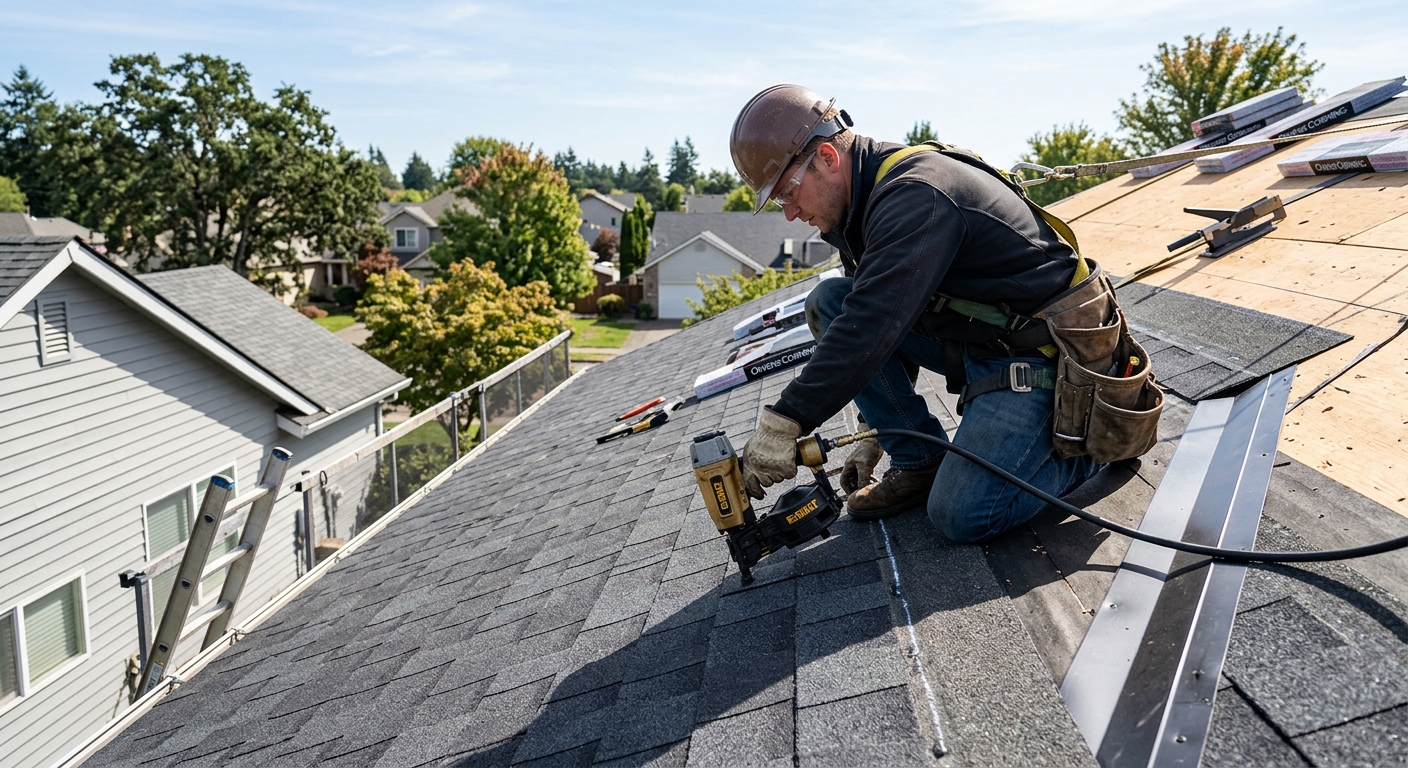
Roofing options and costs in Clearwater
Clearwater homeowners often need to plan roofing work a little earlier than they expect, especially in neighbourhoods with older housing stock and long-serving asphalt roofs. In Clearwater, 50.5% of homes were built before 1981, so a large share of properties are nearing the point where shingles, flashings, and even decking repairs start to overlap on the same project. The town’s 2,388 residents and 800 homeowner households (Statistics Canada, 2021 Census) also point to a small local market, which matters: when there are fewer year-round crews, the best roofers book up fast and pricing can move with seasonal demand. In areas such as Clearwater Town Centre and along the residential streets near Dutch Lake, roofing work is especially common because older detached homes and ongoing repairs often coincide.
Thompson–Okanagan conditions sit between the heavier snow and freeze-thaw demands of Ontario and Alberta and the wet, wind-driven exposure of coastal BC. That means Clearwater roofs still need solid eave protection, decent attic ventilation, and durable flashings, but not every home needs the highest-spec hail package. Labour costs remain elevated across British Columbia, and material prices have climbed since 2020, so even straightforward projects can land in a broader range than many owners expect. The comparison below shows where that range comes from and why a roof that looks “simple” on paper may still move from a basic $9,000–$18,000 asphalt replacement into higher tiers once pitch, access, and tear-off complexity are added.
| Type |
Typical Use |
Lifespan |
Best For |
Price Range |
| Full asphalt shingle replacement (tear-off + new install) |
Most single-detached homes needing a complete refresh |
18–25 years |
Owners wanting the best value on standard pitched roofs |
$9,000–$18,000 |
| Architectural / laminated shingle (premium asphalt) |
Upgraded replacement on visible, higher-end residential roofs |
25–30 years |
Better curb appeal, stronger wind performance, longer service life |
$11,000–$21,000 |
| Impact-resistant shingle (Class 4 — hail & wind zones) |
Homes wanting extra durability in exposed areas |
25–35 years |
Owners prioritizing impact resistance and possible insurance advantages |
$13,000–$24,000 |
| Metal roofing (steel panels or standing seam) |
Long-life replacement for steep or weather-exposed homes |
40–50+ years |
Low maintenance and strong snow-shedding performance |
$20,000–$40,000 |
| Flat / low-slope membrane (TPO or EPDM) |
Additions, porches, garages, and low-slope roofs |
20–30 years |
Reliable waterproofing on low-pitch structures |
$9,000–$28,000 |
| Roof repair + flashing only (no full replacement) |
Localized leaks, chimney work, vent or valley repairs |
Varies by repair scope |
Budget-conscious fixes when the roof still has usable life left |
$500–$3,500 |
Prices are estimates only and vary by project scope, site access and material selection.
What affects the price of roofing in Clearwater
Roofing quotes in Clearwater can easily vary by 30–50% for the same apparent job because the real cost is shaped by details that are not obvious from the street. A straightforward one-layer asphalt tear-off on a low-slope bungalow may stay near the bottom of the $9,000–$18,000 replacement band, while the same square footage on a steep, cut-up roof with two shingle layers, rotten sheathing, and multiple flashings can climb toward the top or beyond it. Across Thompson–Okanagan and British Columbia, labour is a major driver: experienced crews are limited, insurance and workers’ compensation costs are higher than in some other provinces, and busy summer windows compress scheduling. In Ontario and Alberta, snow load and freeze-thaw concerns push contractors toward stronger ice-dam protection and heavier underlayments; Alberta’s hail belt adds demand for impact-rated shingles; and coastal BC’s rain and wind favour metal roofing and premium synthetic underlayment. Clearwater sits in the middle of those pressures, but local homes still need climate-aware details. For example, a pre-1981 home in town may need extra decking repairs, adding several hundred to a few thousand dollars. A basic flashing repair might stay in the $500–$3,500 band, while a low-slope membrane section can jump quickly if drainage or insulation work is involved. Access also matters: a rural property with awkward staging, or a home with a steep roof facing limited driveway space, will typically cost more than a simple detached home with clear ground access.
| Price Factor |
Why It Matters |
Cost Impact |
| Roof pitch and steepness |
Affects safety equipment and install speed |
Steeper roofs need more fall protection and labour time; add roughly 10–25% |
| Number of shingle layers to tear off |
2 layers = extra labour + disposal |
Can add several hundred to $2,000+ depending on roof size |
| Total roof area in squares (1 square = 100 sq ft) |
More surface area means more materials, underlay and labour |
Directly pushes cost from a smaller repair into the mid-range replacement bands |
| Decking condition |
Rotted OSB or plywood must be replaced |
Common on older homes; often adds $500–$3,000+ |
| Chimney, skylight and vent flashing complexity |
More penetrations means more detail work and leak risk |
Each detail can add $150–$500+ |
| Ice-and-water shield coverage required |
Climate-driven protection for eaves, valleys and penetrations |
Higher coverage raises material cost but is worth it in snow and freeze-thaw zones |
| Regional labour rates and length of the install season |
Shorter seasons and tight crew availability push rates up |
Can swing total bids by 15–30% between seasons and contractors |
| Material quality tier |
Standard vs. impact-rated vs. premium |
Often adds 20–40% when upgrading from standard asphalt to better products |
Permits & regulations in British Columbia
In British Columbia, most like-for-like re-roofing jobs do not require a building permit, but there are important exceptions that Clearwater homeowners should not ignore. If you are replacing shingles with shingles on the same roof shape, and you are not changing structure, drainage, or roof line, it is typically a permit-free maintenance job. However, a permit is commonly required if the project includes structural deck repairs that affect framing, converting from a pitched roof to a flat roof, changing truss or rafter structure, or making major alterations that change the roof assembly. Adding a second layer where local code or manufacturer instructions do not allow it is also a red flag; most good contractors will recommend a tear-off instead. For warranty-backed work, ask whether the crew is manufacturer certified for the product they are installing.
Before signing, verify three things in order. First, ask for the contractor’s British Columbia business details and check them online through the relevant provincial business registry or licensing records if applicable. Second, request a current certificate of insurance showing liability coverage; do not accept a verbal promise. Third, request WCB coverage confirmation and a clearance letter so you know workers are covered if there is an injury on your property. In Clearwater, a reputable roofer should provide these documents without hesitation and should be able to explain whether your job needs a permit. If you are unsure, call the local building department before work starts and describe the scope in plain language. That simple phone call can save you from delays, warranty issues, or problems with resale later on.
Choosing the right roofing material for Clearwater's climate
Clearwater’s roof choices should start with climate, not fashion. The town sees enough snow, freeze-thaw cycling, and wind exposure to make eave protection and good attic ventilation essential, but it is not in the same hail-heavy zone as parts of Alberta nor the same persistent rain-and-wind environment as coastal BC. That is why standard architectural shingles are still a strong fit for many homes here: they are durable, affordable, and usually the best balance of price and performance for an average pitched roof. If your home is exposed, sits on a hill, or has already had shingle damage from wind and storm debris, impact-rated shingles can make sense even with a 20–30% premium. On a roof that would cost $14,000 in standard architectural shingles, upgrading might add $3,000–$4,000, which is easier to justify if insurance discounts are available or if replacement would be difficult due to access. Metal roofing becomes financially sensible when the owner plans to stay long term, wants less maintenance, and values snow-shedding performance and resale appeal. Flat membranes belong on low-slope sections only, where they are the right technical solution rather than an upgrade choice. In British Columbia, some insurers may consider discounts for higher-wind-rated or impact-resistant materials, but they are not guaranteed, so confirm with your broker before paying the premium. For older Clearwater homes, especially those built before 1981, material choice should also account for hidden deck repairs and flashing upgrades that can affect total project cost more than the shingle itself.
| Material |
Lifespan |
Snow & Ice Performance |
Wind / Hail |
Maintenance |
Price Band |
| Asphalt 3-tab (entry-level) |
15–20 years |
Basic; needs solid ice-and-water shield at eaves |
Moderate wind resistance; weaker in exposed areas |
Higher upkeep and earlier replacement |
$9,000–$14,000 |
| Asphalt architectural / laminated (standard) |
25–30 years |
Good all-around performance for Clearwater conditions |
Better wind resistance than 3-tab |
Moderate maintenance |
$11,000–$21,000 |
| Impact-resistant shingle (Class 4) |
25–35 years |
Strong where freeze-thaw and storm debris are concerns |
Best shingle option for wind and impact resistance |
Low to moderate maintenance |
$13,000–$24,000 |
| Metal — steel panels (exposed fastener) |
30–40 years |
Excellent snow shedding; good for ice control when detailed properly |
Very good wind performance; hail resistance varies by gauge |
Moderate maintenance; fasteners may need checks |
$20,000–$30,000 |
| Metal — standing seam (concealed fastener) |
40–50+ years |
Excellent in snow and freeze-thaw conditions |
Excellent wind resistance; strong long-term durability |
Low maintenance |
$28,000–$40,000 |
| Flat TPO / EPDM membrane (low-slope only) |
20–30 years |
Good on properly sloped low roofs with correct drainage |
Good when flashed correctly; not for steep slopes |
Moderate maintenance and periodic inspection |
$9,000–$28,000 |
How to choose a roofing contractor in Clearwater
Start by verifying the contractor’s British Columbia business standing and asking for proof of liability insurance and WCB coverage before you accept a quote. A proper roofer should provide a certificate of insurance naming the company, policy dates, and coverage limits, plus a current WCB clearance letter. Check that the business name on those documents matches the name on the estimate and contract. Next, collect 2–3 written quotes that break out labour, materials, tear-off, disposal, underlayment, flashings, and any decking allowance instead of giving you one lump sum. That matters in Clearwater, where older homes and mixed roof conditions can change the price quickly. Read the scope carefully: does the roofer include permit pull if needed, disposal fees, ice-and-water shield, and new flashings around chimneys or skylights? Ask for workmanship warranty length in writing, confirm the manufacturer warranty on the product, and ask whether either warranty is transferable if you sell the house. For payment, do not hand over more than 10–15% upfront, and hold the balance until final inspection and cleanup are complete. Make sure the start date and estimated completion date are written into the contract, especially during the busy summer season when delays happen.
- Verify the contractor’s British Columbia business details before booking.
- Ask for a current liability insurance certificate.
- Request a WCB clearance letter for the company.
- Confirm the exact roof system and product brand in writing.
- Get 2–3 itemised quotes, not verbal estimates.
- Check what is excluded: decking, vents, gutters, painting, permit fees.
- Ask who pulls the permit if one is required.
- Confirm disposal and magnet sweep are included.
- Ask for workmanship warranty length and transferability.
- Ask whether manufacturer certification is valid for the chosen product.
- Keep the deposit modest and tied to contract signing only.
- Get start and completion dates in writing.
Red flags in Clearwater include a roofer who will not show insurance or WCB paperwork, a quote that is much lower than the rest without explanation, pressure to pay cash with no paperwork, refusal to itemise labour and materials, and a contractor who says permits “never matter” even when structural repairs or a roof-type change are involved.
Frequently asked questions — roofing in Clearwater
What are the signs I need a new roof?
In Clearwater, the biggest warning signs are curling or brittle shingles, repeated leaks after rain or snowmelt, granules collecting in gutters, and obvious lifting at the edges after wind events. Because many local homes were built before 1981, it is also common to find worn flashings, soft decking, and patched repairs that are starting to fail at the same time. If a roof is approaching the end of its life and repairs are happening every season, replacement is usually the smarter move than chasing small leaks. A minor repair may sit in the $500–$3,500 range, but if the roof is widespreadly worn, that money is better put toward a full replacement in the $9,000–$18,000 range. A proper inspection should include the attic, not just the surface, because poor ventilation and moisture staining can reveal hidden damage that matters more than a few missing shingles.
Can I roof over my existing shingles?
Sometimes, but in Clearwater it is usually not the best long-term option. Roof-over work can save disposal costs up front, yet it hides deck problems and adds weight to an already aging system. If the existing roof has two layers, soft spots, or poorly fastened shingles, most responsible contractors in British Columbia will recommend a tear-off instead. That matters because many homes here are older, and once the old shingles come off, damaged plywood or OSB is often found underneath. A roof-over might seem cheaper than a full tear-off and replacement in the $9,000–$18,000 band, but it can lead to higher repair costs later if leaks keep working through the hidden layers. Also, some manufacturers limit warranty coverage when installation instructions are not followed, so ask your contractor to explain the implications before agreeing to a second layer.
How do ice dams affect roofs in Clearwater and how do I prevent them?
Ice dams happen when warm air from inside the house melts snow on the upper roof, then that water refreezes at the cold eaves. In Clearwater, winter conditions are cold enough to create this problem on poorly ventilated roofs, especially on older homes with limited attic insulation or uneven heat loss. The result can be water backing up under shingles and staining ceilings, walls, and insulation. Prevention starts with good attic ventilation, proper insulation, and ice-and-water shield at vulnerable areas such as eaves, valleys, and penetrations. Those details can add to the cost, but they are far cheaper than dealing with repeated leak repairs. A targeted flashing or leak fix may fall in the $500–$3,500 band, while a roof replacement that includes proper cold-weather protection may run much higher. For homeowners in British Columbia, the key is not to treat ice dams as an occasional nuisance; they are a design and ventilation issue that should be addressed during the reroof.
What roofing warranty should I expect?
For Clearwater homeowners, a good roofing warranty should include both workmanship and product coverage. Workmanship warranties are offered by the contractor and often run from 5 to 10 years, though some firms offer longer if they are confident in their crew and install method. Product warranties come from the manufacturer and can be longer, but only if the roof is installed to spec. Ask whether the warranty is transferable if you sell the home, because that can support resale value. Also ask what is excluded: poor maintenance, storm damage, or blocked gutters are often outside coverage. On a replacement in the $9,000–$18,000 band, the warranty should be clearly written into the contract. If you are paying more for an upgraded system such as metal, you should expect stronger long-term coverage, but you still need a proper workmanship warranty from the installer. In British Columbia, keep every warranty document with your receipts and product labels.
Is metal roofing worth the extra cost in Clearwater?
For some homes in Clearwater, yes. Metal roofing costs more up front, usually in the $20,000–$40,000 range, but it can pay off if you plan to stay in the house for decades, want a low-maintenance roof, or have a property that sees repeated snow shedding and freeze-thaw stress. Metal also tends to improve curb appeal on detached homes and can be a good fit for rural or exposed sites where shingle wear is faster. On the other hand, if your home is a straightforward bungalow with decent attic ventilation and you do not expect to stay long term, a high-quality architectural shingle may be the better financial choice. In British Columbia, some insurers may offer better terms for higher-performance roofing, but the discount is not guaranteed, so confirm first. The premium is easiest to justify when the roof is complex, access is difficult, or the homeowner wants the longest service life with less maintenance.
What time of year is best to replace a roof in Clearwater?
Late spring through early fall is usually the best window for roofing in Clearwater because temperatures are more stable, daylight is longer, and crews can work more efficiently. That said, the busiest summer period can also mean fewer openings and higher demand, so booking early matters. Spring and fall can be excellent shoulder seasons if the contractor has room in the schedule and the weather forecast is favourable. Winter work is possible in British Columbia, but cold snaps, snow, and short daylight hours can slow progress and increase risk. If you are planning a project in the $9,000–$18,000 range, get quotes before peak season so you are not forced into a rushed decision. For older Clearwater homes, I usually recommend scheduling the replacement before the first sustained cold spell if the roof is already showing curling shingles, repeated leaks, or worn flashing, because winter moisture can turn a manageable repair into a larger problem.