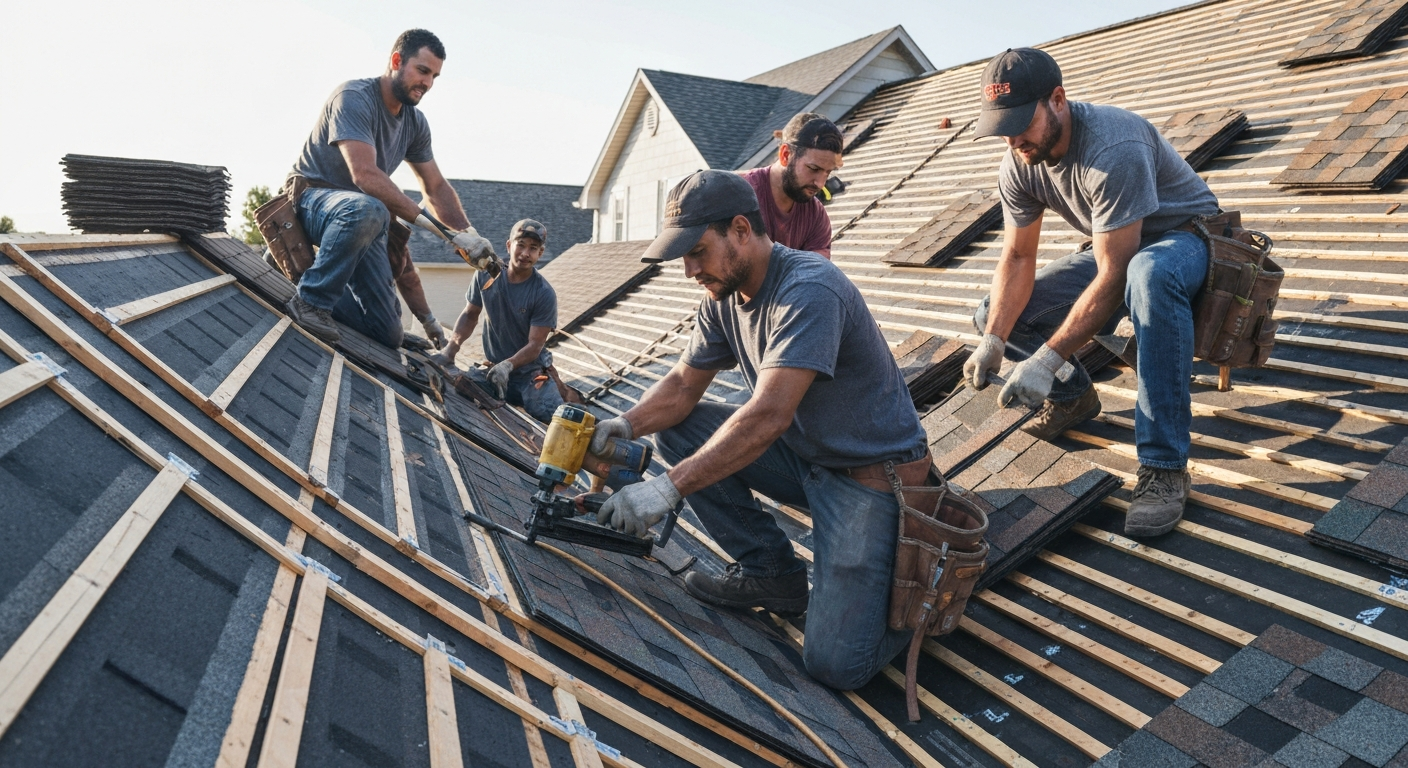
Roofing options and costs in Gibsons
Gibsons roofing projects are shaped by a coastal market where persistent rain, wind-driven storms and year-round installability all affect the final quote. In a town of 4,758 people, with 1,715 homeowner households and 55.6% of dwellings being single-detached houses, roof work is a common part of maintaining detached homes that often need larger footprints, more flashings and more careful waterproofing than newer suburban builds (Statistics Canada, 2021 Census). The local housing stock also matters: 37.3% of homes were built before 1981, so it is normal to encounter older shingles, worn underlay, or even two-layer tear-offs that add labour and disposal costs. In practice, that means a roof that looks “average” from the street can still need extra deck repairs once the old covering comes off.
Across Lower Mainland–Southwest BC, labour and access are a big part of pricing. Coastal projects are usually more predictable than in snow-heavy provinces, but contractors still price for wet-weather scheduling, steep roofs, and tight site access. In Gibsons, homes around the Lower Gibsons waterfront, the Village, and hillside streets can be more time-consuming because staging materials and waste bins is harder on narrow lots or sloped driveways. That is why one homeowner may see a straightforward asphalt replacement near the lower end of the local range, while another gets a quote that climbs quickly once flashing, decking and access are added. Metal roofing is increasingly popular here because it handles heavy rain and gusty wind well, but the upfront cost is much higher. Flat and low-slope systems are also common on additions and multi-unit buildings, where waterproofing details matter more than the visible finish. The comparison below shows how those trade-offs usually line up in Gibsons.
| Type |
Typical Use |
Lifespan |
Best For |
Price Range |
| Full asphalt shingle replacement (tear-off + new install) |
Most detached homes needing a complete reset of aging shingles and underlayment |
18–25 years |
Homeowners wanting the lowest upfront cost with familiar materials |
$8,000 – $18,000 |
| Architectural / laminated shingle (premium asphalt) |
Improved curb appeal and better wind resistance on sloped roofs |
25–30 years |
Owners planning to stay put and wanting a better finish than basic asphalt |
$10,000 – $20,500 |
| Impact-resistant shingle (Class 4 — hail & wind zones) |
Premium residential roofing where storm performance is a priority |
25–35 years |
Homes exposed to stronger gusts or owners seeking insurance-friendly upgrades |
$12,000 – $24,000 |
| Metal roofing (steel panels or standing seam) |
Long-life option for steep slopes, coastal exposure and low maintenance |
40–50+ years |
Homeowners prioritizing durability, storm resistance and resale value |
$20,000 – $45,000 |
| Flat / low-slope membrane (TPO or EPDM) |
Additions, carports, porches, multi-family and commercial low-slope roofs |
20–30 years |
Buildings with minimal pitch that need reliable drainage and airtight seams |
$9,000 – $25,000 |
| Roof repair + flashing only (no full replacement) |
Leaks, chimney flashings, vents, valleys, minor storm damage |
2–10 years depending on the issue |
Homeowners trying to extend the life of a serviceable roof |
$500 – $8,000 |
Prices are estimates only and vary by project scope, site access and material selection.
What affects the price of roofing in Gibsons
Roofing quotes for the same house can easily vary by 30–50% across Lower Mainland–Southwest BC, and that spread is not just contractor markup. Pitch, access, tear-off layers, decking repairs, flashing complexity and material tier all change how long the crew is on site and how much risk they carry. In coastal BC, rain and wind push contractors toward better underlayment, improved edge metal and more careful sealing around penetrations, which can move a job from the lower end of the asphalt range into the middle quickly. By contrast, Ontario and Alberta often build in extra ice-dam protection, heavier underlayment and more ventilation work because snow load and freeze-thaw cycles are harsher; Alberta’s hail belt also drives demand for impact-rated shingles. Colder regions tend to have shorter install seasons, so peak summer labour can become more expensive, while Gibsons benefits from year-round installability but still faces wet-weather scheduling and coastal labour pressure. On a typical Gibsons home, a simple reroof may stay near $8,000 – $18,000, while a metal upgrade can move into $20,000 – $45,000 territory once premium flashing and labour are included. Older housing stock also matters: with 37.3% of homes built before 1981, hidden decking repairs are not unusual and can add several hundred dollars to several thousand dollars to the final invoice. A steep roof in Lower Gibsons, a two-layer tear-off on an older detached house, or a chimney-heavy layout on a hillside property can all push the quote noticeably higher than a simple bungalow reroof.
| Price Factor |
Why It Matters |
Cost Impact |
| Roof pitch and steepness |
Affects safety equipment and install speed |
Steep roofs can add 10%–25% |
| Number of shingle layers to tear off |
2 layers = extra labour + disposal |
Can add $1,000 – $3,500 |
| Total roof area in squares (1 square = 100 sq ft) |
Larger roofs need more material, labour and waste removal |
Big homes often move from the low end to the high end of the price band |
| Decking condition |
Rotted OSB or plywood must be replaced |
Often adds $80 – $160 per sheet installed |
| Chimney, skylight and vent flashing complexity |
More penetrations mean more detailing and leak risk |
Can add $300 – $2,000+ |
| Ice-and-water shield coverage required |
Climate-driven waterproofing protection at eaves, valleys and penetrations |
Can add $200 – $1,200 depending on coverage |
| Regional labour rates and length of the install season |
Coastal access and demand affect crew pricing |
Can shift totals by 15%–30% |
| Material quality tier |
Standard vs. impact-rated vs. premium changes product cost and warranty |
May add $1,500 – $8,000+ |
Permits & regulations in British Columbia
In British Columbia, most like-for-like roof replacements do not require a building permit, but there are important exceptions. If you are adding a second layer where local code or the existing roof condition does not allow it, changing the roof structure, repairing or replacing significant deck sections, altering framing, or converting a pitched roof to a flat/low-slope system, a permit is much more likely to be required. Permits may also be needed when the work affects drainage, structural loads or fire separation. For a straightforward asphalt tear-off and re-roof on a detached home in Gibsons, the project typically proceeds without a building permit, but that does not remove the contractor’s responsibility for safe installation and code-compliant flashing.
Before signing, ask for three things: proof of liability insurance, proof of WCB coverage, and manufacturer certification if the job is meant to carry a full product warranty. To verify a contractor in British Columbia, first look them up in the relevant online business or trade registry and confirm the company name matches the quote and contract. Next, ask for a current certificate of insurance showing coverage limits, effective dates and the insured legal name. Then request a WCB clearance letter or account status confirmation showing the firm is in good standing. If the contractor uses a certified installer program for a product warranty, ask for the certificate number and check it with the manufacturer. In Gibsons, this step is especially worth doing on older homes where hidden deck repairs can change the scope quickly. If the paperwork is vague, expired or refused, walk away.
Choosing the right roofing material for Gibsons's climate
Gibsons sits in a coastal climate where wind-driven rain, damp winters and moderate snow exposure matter more than deep snow load. That means roofing decisions should start with waterproofing, not just appearance. For many homes, architectural shingles are sufficient when the roof is in good shape, the pitch sheds water well and the owner wants a balance of cost and curb appeal. They usually make sense when you want to stay within the middle of the local asphalt range and avoid jumping into a much higher metal budget. Impact-rated shingles can be worth the 20%–30% premium when the house is especially exposed to wind, when the roof has vulnerable edges or when you want the best chance of reducing storm-related insurance headaches. In British Columbia, insurers may offer discounts or preferred underwriting for certain wind-rated or impact-rated products, but the savings are usually modest and should not be the only reason to upgrade. Metal roofing is the strongest long-term financial case on homes that will be held for decades, especially on exposed Gibsons slopes or waterfront-adjacent properties, because its higher upfront cost can be offset by lower maintenance and longer service life. Flat TPO or EPDM only makes sense on low-slope sections, additions or multifamily buildings where ponding control and seam quality matter most. As an example, paying an extra $4,000 – $8,000 for metal can be justified if it avoids a second reroof in 20 years; on a smaller house that may not be the best cash decision if the owner plans to sell in five years.
| Material |
Lifespan |
Snow & Ice Performance |
Wind / Hail |
Maintenance |
Price Band |
| Asphalt 3-tab (entry-level) |
15–20 years |
Fair on mild coastal roofs; limited margin on wet, shaded eaves |
Moderate wind resistance; lower storm durability |
Higher; tabs age and lift sooner |
$8,000 – $12,500 |
| Asphalt architectural / laminated (standard) |
25–30 years |
Good for Gibsons when paired with proper underlayment and flashing |
Better wind performance than 3-tab |
Moderate; periodic inspection recommended |
$10,000 – $20,500 |
| Impact-resistant shingle (Class 4) |
25–35 years |
Good; improved sealing and stronger edges help in wet weather |
Strong wind performance; better impact resistance |
Moderate; good for storm-prone exposure |
$12,000 – $24,000 |
| Metal — steel panels (exposed fastener) |
30–45 years |
Very good; sheds rain fast and handles coastal moisture well |
Strong wind resistance; limited hail resilience compared with heavier systems |
Low to moderate; fastener checks over time |
$20,000 – $32,000 |
| Metal — standing seam (concealed fastener) |
40–50+ years |
Excellent; one of the best long-term choices for coastal BC |
Excellent wind performance; very strong storm durability |
Low; premium detailing with fewer exposed parts |
$28,000 – $45,000 |
| Flat TPO / EPDM membrane (low-slope only) |
20–30 years |
Good when drainage is designed correctly and seams are installed well |
Good; depends heavily on edge details and fastening pattern |
Moderate; seams, drains and penetrations need checks |
$9,000 – $25,000 |
How to choose a roofing contractor in Gibsons
Start with the basics: confirm the contractor’s British Columbia business registration, ask for a current certificate of liability insurance, and verify WCB coverage before any deposit changes hands. In practice, that means checking the company name online, requesting an emailed insurance certificate from the broker or insurer, and asking for a WCB clearance letter or account confirmation. Then get 2–3 itemised written quotes that separate labour, materials, underlayment, flashings, disposal and deck repairs instead of one lump sum. Read the scope carefully so you know whether permit pulling, bin fees, magnet sweep, ventilation upgrades and cleanup are included. A good quote should state exactly what is excluded, such as rotten decking beyond a certain allowance or skylight replacement. Ask about workmanship warranty length, the product warranty and whether the warranty is transferable if you sell your home. Payment terms should be conservative: 10%–15% upfront is normal, with the balance due only after completion and inspection. Make sure the start date and estimated finish date are in writing, especially during wet stretches when coastal work can shift. In Gibsons, where older homes are common, clarity up front can save you from surprise costs once the shingles come off.
- Confirm the legal business name matches the quote, insurance and invoice.
- Ask for a current liability insurance certificate with coverage limits.
- Request WCB clearance before work starts.
- Get 2–3 written itemised quotes, not verbal estimates.
- Make sure tear-off, disposal and cleanup are included.
- Ask whether permit pulling is included if the scope changes.
- Check whether decking repairs are priced per sheet or by hourly rate.
- Confirm the workmanship warranty length in writing.
- Ask if manufacturer warranties are transferable to a future buyer.
- Keep the deposit to 10%–15% maximum.
- Get the start date, completion estimate and weather-delay policy in writing.
- Ask who supervises the crew and whether the work is subcontracted.
Red flags in Gibsons include a contractor who refuses to itemise flashing or disposal, asks for a large cash deposit, cannot provide a WCB clearance letter, gives only a verbal start date, or pressures you to sign the same day because “material prices are going up.”
Frequently asked questions — roofing in Gibsons
How much does a new roof cost in Gibsons?
A typical new roof in Gibsons depends on size, pitch and material. For most detached homes, a full asphalt tear-off and replacement usually falls in the $8,000 – $18,000 range, while a premium architectural shingle system often lands a bit higher. If you choose metal roofing, the budget moves into the $20,000 – $45,000 range, which is a big step up but can make sense on exposed coastal properties. Older homes in Gibsons, especially those built before 1981, can also need deck repairs or extra flashing once the old roof comes off, which pushes the final number upward. The best way to compare quotes in British Columbia is to make sure each contractor is pricing the same scope, not just a headline number.
How long does a roof replacement take in Gibsons?
Most straightforward roof replacements in Gibsons take about one to three days for an average detached home, but the schedule depends on pitch, weather and how much hidden repair is found after tear-off. A simple asphalt reroof on a dry stretch can move quickly, while a steeper roof, multiple skylights or a two-layer tear-off will add time. If the crew discovers damaged decking, the project can extend another day or more. In British Columbia’s coastal climate, rain can also interrupt the sequence, especially when the team needs a dry window to install underlayment and flashing properly. For larger homes or metal systems, allow more time. A contractor should give you a written start date and a realistic completion estimate, not just a vague promise.
Asphalt shingles vs metal roofing — which is better for Gibsons's climate?
For Gibsons, both can work well, but they solve different problems. Architectural asphalt shingles are the sensible choice for many homeowners because they fit within the local price range, usually $10,000 – $20,500, and they perform well on typical steep-slope homes when installed with proper underlayment and flashing. Metal roofing is better if your home is exposed to wind, you want maximum durability in a wet coastal climate, or you plan to own the house for decades. It costs more up front, often $20,000 – $45,000, but it can outlast two asphalt cycles. In British Columbia, the right answer often comes down to budget, roof geometry and how long you plan to stay in the home.
How long should a roof last in Gibsons?
In Gibsons, lifespan depends heavily on material quality, ventilation and how much weather exposure the roof gets. Basic 3-tab asphalt may last 15–20 years, while architectural shingles commonly last 25–30 years in the Lower Mainland–Southwest climate. Metal roofing is the longest-lasting choice, often 40–50+ years if it is installed correctly and maintained periodically. Coastal rain and wind usually shorten life less dramatically than in freeze-thaw provinces, but poor flashing, clogged gutters, shaded slopes and old decking can still cause early failure. If your home was built before 1981, it is worth inspecting the roof more often because older structures sometimes hide underlayment and ventilation issues that reduce service life. A roof that is only leaking at a flashing point may still have years left; a broadly worn roof nearing replacement likely does not.
Do I need a permit to replace my roof in British Columbia?
Usually, no permit is needed for a simple like-for-like roof replacement in British Columbia, including a straightforward asphalt tear-off and reroof on a detached house in Gibsons. However, permits are more likely when the work changes structure or use: adding a second layer where not allowed, repairing or replacing a significant amount of roof deck, changing a pitched roof to a flat or low-slope system, or altering framing and drainage. If the job includes structural deck repairs, ask the contractor whether the municipality will want a permit before work starts. In practice, the permit question should be settled before you sign, because extra deck work can turn a routine $8,000 – $18,000 project into something more involved. Your contractor should be able to tell you when permit pull is included and when the homeowner must apply.
What are the signs I need a new roof?
In Gibsons, the most common warning signs are curling shingles, missing tabs after wind events, repeated leaks around chimneys or skylights, soft spots in the roof deck and granular loss that leaves gutters full of shingle grit. If the roof is already close to 20 years old, those symptoms usually mean you should budget for replacement rather than another patch. On older British Columbia homes, especially those built before 1981, hidden problems can be more extensive than they first appear. Interior water stains, mould around attic framing, sagging eaves and repeated flashing failures are all strong indicators that repair work may only buy limited time. If you are seeing several of these issues at once, it is wise to get a full inspection and compare the repair estimate against a replacement quote in the $8,000 – $18,000 range.