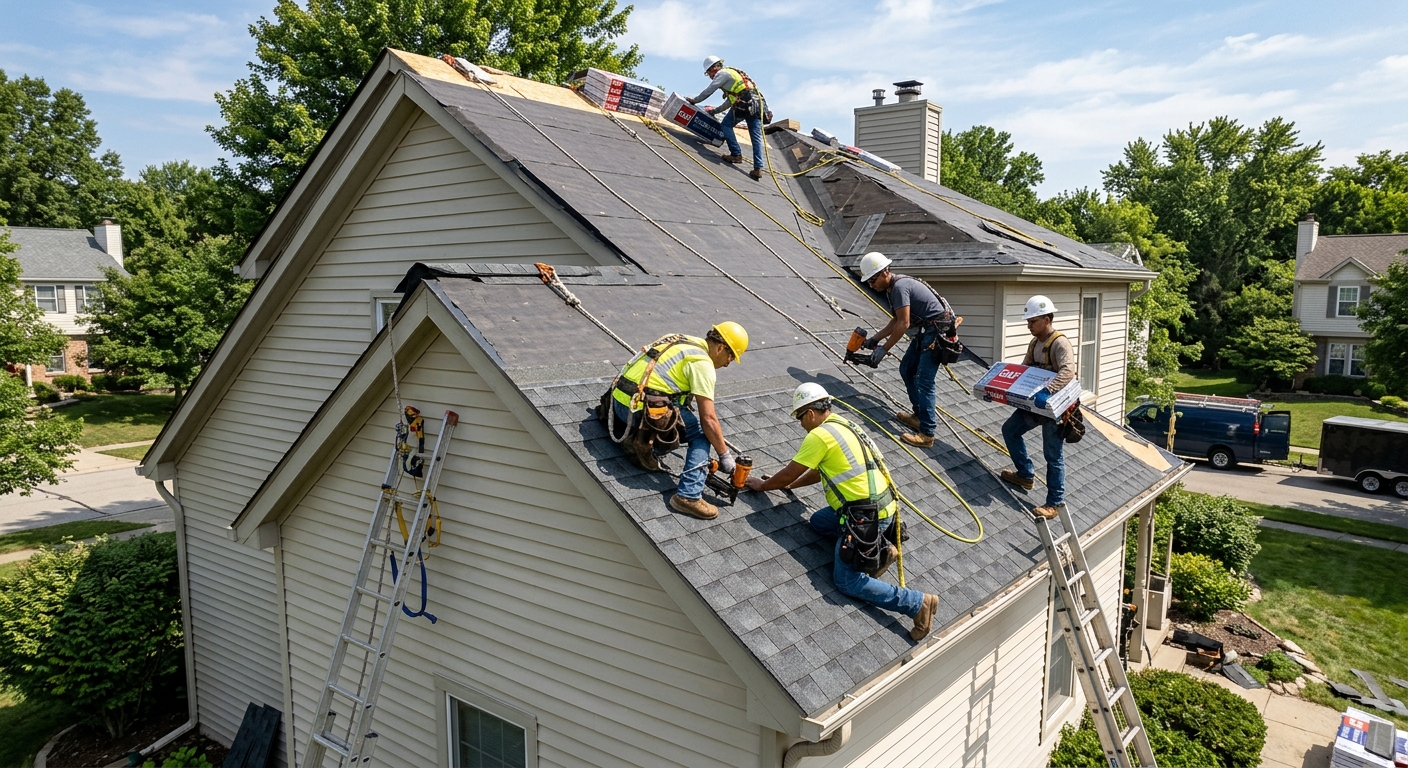
Roofing options and costs in Tofino
Tofino’s roofing market is shaped by a small housing base, coastal weather, and a lot of older stock that is nearing the age where replacement becomes more common. With 2,516 residents and 52.9% of households owning their home, many projects are one-off residential jobs rather than large subdivisions, which means contractor availability can be tighter and scheduling matters. The local housing mix also matters: 25.9% of homes were built before 1981, and that older stock often has worn shingles, tired flashing, and occasional deck repairs hiding under the surface. In a place like North Chesterman, Downtown Tofino, or around Ucluelet-to-Tofino commuter routes, the combination of salt air, driving rain, and wind exposure means even a “simple” re-roof often needs upgraded underlayment and extra detailing around edges, vents, and skylights.
Across Vancouver Island and the Coast, labour and logistics usually cost more than in many other parts of British Columbia because crews must work around weather windows, ferry and travel timing, and coastal access challenges. The result is that asphalt reroofs here commonly land in the mid five-figure range for typical detached homes, while metal and low-slope systems rise quickly once flashing, ventilation, and substrate repairs are added. Coastal rain also pushes contractors toward premium synthetic underlayments and better flashing packages, which can add cost up front but reduce callbacks later. If your roof has multiple dormers, steep sections, or past leak history, expect the quote to move upward fast. The comparison below shows where each system tends to sit in today’s Tofino market and what each is best suited for.
| Type |
Typical Use |
Lifespan |
Best For |
Price Range |
| Full asphalt shingle replacement (tear-off + new install) |
Standard detached homes needing a complete refresh |
15–25 years |
Budget-conscious owners wanting reliable, familiar materials |
$12,000 – $25,000 |
| Architectural / laminated shingle (premium asphalt) |
Most single-family homes with moderate slopes |
25–35 years |
Better wind resistance, thicker profile, improved curb appeal |
$14,500 – $28,000 |
| Impact-resistant shingle (Class 4 — hail & wind zones) |
Homes exposed to severe wind or higher impact risk |
25–40 years |
Stronger warranty profile and better storm resilience |
$16,000 – $32,000 |
| Metal roofing (steel panels or standing seam) |
High-exposure coastal homes and long-life replacements |
40–60+ years |
Wind, heavy rain, lower maintenance, premium resale value |
$22,000 – $45,000 |
| Flat / low-slope membrane (TPO or EPDM) |
Additions, modern builds, garage and porch roofs |
15–30 years |
Low-slope drainage, clean detailing, watertight tie-ins |
$9,000 – $25,000 |
| Roof repair + flashing only (no full replacement) |
Localized leaks, chimney work, vent or skylight detailing |
2–10 years depending on scope |
Targeted repairs when the roof covering is still serviceable |
$500 – $5,000 |
Prices are estimates only and vary by project scope, site access and material selection.
What affects the price of roofing in Tofino
Quotes for the same roof in Tofino can vary by 30–50% because contractors are not pricing just shingles or panels; they are pricing access, weather risk, tear-off difficulty, substrate condition, flashing details, and how much time the crew will realistically lose to rain delays. A straightforward asphalt job on a simple bungalow may fit near the lower end of the $12,000 – $25,000 band, while a steeper home with dormers, two layers of old shingles, and damaged plywood can quickly push well past that. On the coast, a quote that looks high often includes premium synthetic underlayment, upgraded edge metal, and better sealant and flashing details because those are what keep wind-driven rain out.
The regional context matters too. In Ontario and Alberta, heavy snow loads and freeze-thaw cycles often drive extra ice-dam protection, thicker underlayments, and ventilation upgrades. Alberta’s hail belt also increases demand for impact-rated shingles. In coastal BC, the priority is different: constant rain, salt-laden wind, and moss growth favour metal systems and premium synthetic underlayment rather than heavy ice-dam packages. Shorter install seasons in colder regions also compress demand into peak summer windows, pushing labour rates up. In Tofino, the climate is milder, but wet-weather scheduling still affects labour efficiency, and that is why even a “basic” re-roof can land in the mid five figures if the roof is complex. A smaller repair job may sit closer to $500 – $5,000, but once decking repairs or skylight flashing are involved, the total can move quickly. Older homes, especially those from before 1981, are more likely to hide soft sheathing or two-layer tear-offs, both of which add labour and disposal costs.
| Price Factor |
Why It Matters |
Cost Impact |
| Roof pitch and steepness |
Affects safety equipment and install speed |
Steep roofs can add 10–25% because crews work slower and need more fall protection |
| Number of shingle layers to tear off |
2 layers = extra labour + disposal |
Can add $1,500 – $4,000 depending on size and access |
| Total roof area in squares (1 square = 100 sq ft) |
More area means more material, labour and waste |
Each additional square can add roughly $350 – $900 depending on system |
| Decking condition |
Rotted OSB or plywood must be replaced |
Localized repairs can add $300 – $1,500; full sections cost more |
| Chimney, skylight and vent flashing complexity |
More penetrations mean more labour and leak risk |
Often adds $500 – $2,500 on coastal homes |
| Ice-and-water shield coverage required (climate-driven) |
Needed more at vulnerable edges and transitions |
Usually adds $300 – $1,200 depending on coverage |
| Regional labour rates and length of the install season |
Coastal crews price for weather delays and local cost of living |
Can push total pricing 15–20% above lower-cost BC markets |
| Material quality tier (standard vs. impact-rated vs. premium) |
Better products usually last longer and perform better in wind |
Can move a roof from the low end of the band to the upper end by $2,000 – $10,000 |
Permits & regulations in British Columbia
In British Columbia, most like-for-like re-roofing jobs do not require a building permit if you are simply replacing the existing roof covering without changing the structure or roof form. That usually includes a standard tear-off and re-shingle, or replacing old metal with new metal on the same roof shape. Permits are more likely when the work changes the structure or roof system: adding a second layer where code does not allow it, repairing or replacing structural decking or framing, converting a pitched roof to a flat or low-slope design, or altering drainage, framing, or roof height. If your project includes major sheathing replacement, new skylights, or significant framing corrections, ask the district before work starts.
Homeowners in Tofino should also verify that the contractor carries proper liability insurance, current WCB coverage, and manufacturer certification if you want a warranty-backed installation. Start with the British Columbia registry or the contractor’s business licence information online, then ask for a certificate of insurance showing active commercial general liability coverage. For WCB, request a clearance letter directly from WorkSafeBC or a current account clearance document from the contractor. Do not accept verbal assurances. A professional roofer should be able to provide all three quickly and in writing. If a contractor hesitates, that is a warning sign. For coastal homes where leaks can spread into ceilings and wall cavities fast, you want paperwork that proves the company is legitimate, insurable, and authorized to install the products they are selling.
Choosing the right roofing material for Tofino's climate
Tofino’s climate is not about extreme snow loads; it is about wet, windy marine exposure, salt air, moss growth, and regular storm-driven rain. That changes the material conversation. Entry-level 3-tab asphalt shingles can work on low-complexity roofs, but they are usually the weakest long-term choice in a coastal setting because they have less wind resistance and a shorter service life. Architectural shingles are the practical standard for many homes in Tofino: they cost more than basic shingles, but they handle wind better, look sharper on resale, and generally make sense when the roof is simple and the homeowner wants a balanced life-cycle cost. For many detached homes, that middle tier is the sweet spot.
Impact-resistant shingles are worth considering when the home is especially exposed, the roof is steep, or the owner wants stronger storm performance. The premium is often 20–30% over standard laminated shingles, so if a standard roof is quoted at $16,000 – $22,000, a comparable Class 4 upgrade may land around $19,500 – $28,000. That extra spend can be justified if the roof faces hard wind, has repeated shingle loss, or the homeowner expects better insurer acceptance and fewer repairs. Metal roofing makes long-term financial sense on highly exposed sites or when a homeowner plans to stay put for decades; it sheds rain well, resists wind, and usually needs less maintenance, though the upfront cost is much higher. Flat TPO or EPDM is the right answer only for low-slope areas where shingles are a poor fit. Provincial incentives and insurance discounts can exist for certain high-wind or impact-resistant products, but they vary by insurer and product listing, so it is worth asking before you buy. In Tofino, spending an extra $4,000 – $8,000 on better material is often cheaper than paying for repeated leak repairs and early replacement later.
| Material |
Lifespan |
Snow & Ice Performance |
Wind / Hail |
Maintenance |
Price Band |
| Asphalt 3-tab (entry-level) |
15–20 years |
Acceptable on simple roofs, but not ideal for wet coastal edges |
Fair; weakest of the main options in strong wind |
Moderate to high; more likely to age unevenly |
$12,000 – $18,000 |
| Asphalt architectural / laminated (standard) |
25–35 years |
Good drainage and better sealing than 3-tab |
Good; better wind resistance and stronger appearance |
Moderate; occasional moss control and inspections |
$14,500 – $28,000 |
| Impact-resistant shingle (Class 4) |
25–40 years |
Good, with improved adhesion and durability in wet weather |
Very good; strongest shingle choice for storm exposure |
Moderate; similar care to standard shingles |
$16,000 – $32,000 |
| Metal — steel panels (exposed fastener) |
30–45 years |
Excellent water shedding, but fastener maintenance matters |
Very good; strong against wind, decent against impact |
Low to moderate; seal checks and fastener inspections |
$22,000 – $35,000 |
| Metal — standing seam (concealed fastener) |
40–60+ years |
Excellent; well suited to coastal rain and drainage |
Excellent; premium wind resistance and long-life value |
Low; periodic inspection and debris clearing |
$28,000 – $45,000 |
| Flat TPO / EPDM membrane (low-slope only) |
15–30 years |
Very good when drainage is properly designed |
Good, but detailing and seams must be done correctly |
Moderate; needs regular checking of seams and drains |
$9,000 – $25,000 |
How to choose a roofing contractor in Tofino
Start by verifying that the contractor is licensed or properly registered in British Columbia for the work they are doing, then ask for a certificate of liability insurance and current WCB coverage before you sign anything. A legitimate roofer should provide the insurance certificate directly from their broker and a current WorkSafeBC clearance letter if they have workers on site. Next, get at least two or three itemized written quotes that separate labour, materials, underlayment, flashing, disposal, and any decking repairs. A lump sum hides differences that matter. Read the scope carefully: ask what is excluded, whether permit pulling is included, whether disposal and magnet sweep are included, and whether rot repairs are priced per sheet or time-and-materials. You also want the warranty details in writing: workmanship warranty length, product warranty length, and whether the warranty transfers to a buyer if you sell the home. For payment, keep deposits modest; never pay more than 10–15% upfront, and hold back the balance until the job is complete and inspected. Make sure the start date and completion estimate are written into the contract, especially in Tofino where weather delays can affect scheduling.
- Ask for the company’s legal business name and BC registration details.
- Verify liability insurance is current and matches the roofing scope.
- Request a WorkSafeBC clearance letter before crews start.
- Confirm the estimate includes tear-off, haul-away, and cleanup.
- Check whether decking replacement is priced separately.
- Ask who is pulling permits if one is required.
- Confirm the exact shingle or membrane brand and product line.
- Ask for ventilation and flashing details in the scope.
- Get workmanship warranty length in writing.
- Ask whether the manufacturer warranty is transferable.
- Keep the deposit small and tied to material ordering only.
- Get the projected start date and completion window in writing.
Red flags in Tofino include a contractor who will not itemize flashing or disposal, refuses to show insurance or WCB paperwork, pressures you to sign during a “weather window,” asks for most of the money upfront, or gives a quote that is far below the local market without explaining what is missing. Another warning sign is a roofer who minimizes coastal detailing or dismisses moss, wind, and drainage as minor concerns.
Frequently asked questions — roofing in Tofino
What are the signs I need a new roof?
In Tofino, the clearest signs are recurring leaks, curling or missing shingles, exposed fasteners, dark staining on ceilings, and moss that keeps coming back even after cleaning. Coastal wind and driving rain can turn small issues into bigger ones fast, so if you see repeated repairs on the same area, it may be time to stop patching and replace the system. A roof that is past 20 years old, especially on older homes built before 1981, deserves a close inspection for soft decking and failed flashing. If your quote for repairs is creeping toward the lower end of a full replacement — around $12,000 – $25,000 for asphalt — replacement may be the better long-term move. A contractor should also check the attic for daylight, rusted nails, and poor ventilation, because coastal moisture often shows up there before it becomes visible outside. If you are seeing interior staining after heavy rain, do not wait for summer.
Can I roof over my existing shingles?
Sometimes, but in British Columbia it is usually not the best choice on a coastal home. Roofing over existing shingles can save on tear-off labour in the short term, but it hides the deck condition and adds weight, which is not ideal if the roof is already aged or has moisture damage. Many Tofino homes have older roofs where the underlayment, flashing, and sheathing need attention, so a full tear-off is often the smarter approach. If the roof already has two layers or the deck is questionable, reroofing over it can cause problems later and may not be acceptable depending on the exact code and contractor practice. For a project near the $12,000 – $25,000 asphalt range, a proper tear-off can be worth the extra cost because it lets the roofer inspect the structure, upgrade flashing, and install a better moisture barrier. Always ask the contractor whether they inspected the deck and what warranty applies if they do not remove the old covering.
How do ice dams affect roofs in Tofino and how do I prevent them?
Ice dams are less common in Tofino than in colder inland parts of British Columbia, but they can still happen during cold snaps, especially on poorly ventilated roofs or where warm air escapes into the attic. The bigger coastal issue is usually trapped moisture, not deep freeze-thaw cycles like you would see in Ontario or Alberta. That said, any blocked drainage, poor attic insulation, or air leakage around bath fans and penetrations can create cold roof edges and localized icing. Prevention starts with good attic ventilation, proper insulation, sealed penetrations, and quality underlayment at vulnerable areas. On a new roof, a contractor may include enhanced edge protection and better flashing, which can add a few hundred to a couple thousand dollars depending on complexity. If you are comparing quotes in Tofino, ask how much ice-and-water shield is included and whether the roofer expects any hidden ventilation corrections. Even on a mild coast, moisture control matters because it affects wood deck life and interior comfort.
What roofing warranty should I expect?
You should expect two separate warranties: a workmanship warranty from the contractor and a product warranty from the manufacturer. In Tofino, a solid workmanship warranty is often 5 to 10 years, while some companies offer longer terms if they are certified by the product maker. Product warranties vary widely and often depend on installation method, fastening pattern, ventilation, and whether approved accessories were used. Ask if the warranty is transferable if you sell the home, because that can help resale value. Also ask what voids it: poor attic ventilation, unapproved fasteners, or missing underlayment can all be issues. For a roof in the $14,500 – $28,000 architectural shingle range, a good warranty package matters because coastal weather can expose workmanship issues quickly. Read the exclusions carefully. A long paper warranty is not useful if the contractor will not stand behind flashing, roof penetrations, or leak calls after the first major storm. Keep copies of invoices, product labels, and any inspection notes.
Is metal roofing worth the extra cost in Tofino?
Often, yes, if you are planning to stay in the home long term or your roof is highly exposed to wind and rain. Metal roofing usually costs more up front than asphalt — commonly $22,000 – $45,000 in this market — but it can deliver better drainage, stronger wind performance, and lower maintenance over time. On a coastal site in Tofino, those advantages matter because salt-laden wind and persistent wet weather are hard on conventional shingles. Standing seam metal is the premium option and usually offers the best long-term value, especially for resale and durability. Exposed-fastener steel panels are cheaper and still useful, but the fasteners need more attention over time. If you plan to sell within a few years, the extra cost may not fully pay back unless the roof is a major selling point. For a buyer who wants fewer repairs and a sharper coastal appearance, metal is often worth the premium. Ask whether the quote includes snow guards, edge metal, and proper fastening for wind exposure.
What time of year is best to replace a roof in Tofino?
Late spring through early fall is usually the best window in Tofino because the weather is more stable and crews can work more efficiently. That does not mean winter work is impossible, but coastal rain, wind, and short daylight hours can slow the job and make scheduling less predictable. In some years, the busiest period is June through September, so good contractors book ahead. If you are trying to keep costs under control, getting quotes in shoulder season can help, but do not choose a date just to chase a small discount if the weather window is poor. A standard asphalt reroof in the $12,000 – $25,000 range can be completed more cleanly when the deck stays dry and flashing details are not rushed. If your roof is leaking now, prioritize the repair regardless of season. In British Columbia’s coastal climate, a properly staged job matters more than the calendar. Ask the contractor how they handle rain protection, temporary dry-in, and weather delays before you book.