Roofing options and costs in Hope
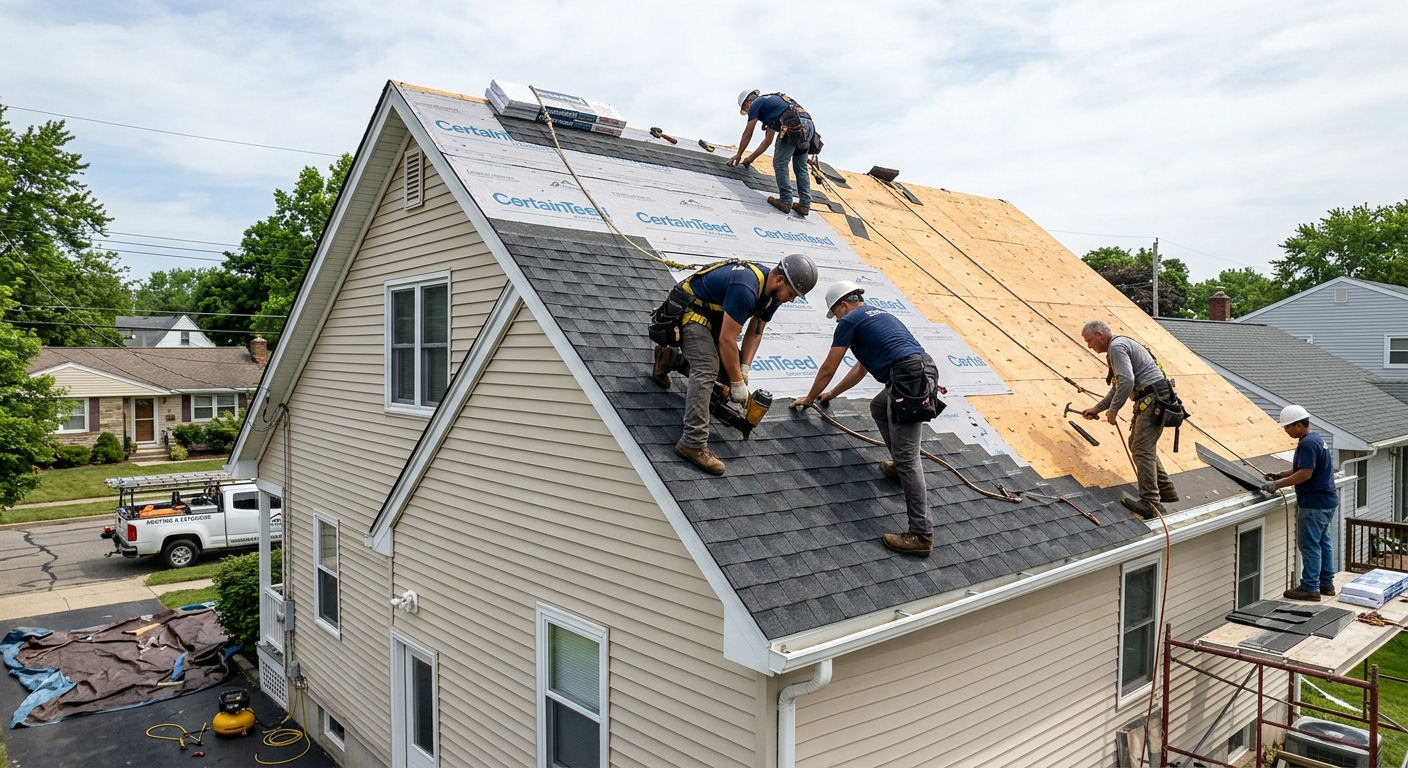
Hope, British Columbia has a lot of roofs that are nearing the point where replacement becomes the smarter spend, not just the visible repair. In a town of 6,686 people, with 79.3% of households owning and 48.0% of homes built before 1981, you see a meaningful mix of older detached houses and repeat repair candidates, especially where original shingles have already been patched once or twice (Statistics Canada, 2021 Census). In neighbourhoods such as Silver Creek, roof work is especially common because older houses, sloped lots and exposed weather can all shorten shingle life. In the Lower Mainland–Southwest, pricing is shaped less by deep snow and more by long rain seasons, storm gusts and the need for careful waterproofing, so good underlayment, flashings and edge detailing matter as much as the visible roof covering. Labour is steadier year-round than in colder provinces, but urban access, scaffolding needs and skilled-trade demand still keep quotes from being “cheap.”
That is why two homeowners in Hope can get very different numbers for what looks like the same roof. The table below shows the most common roofing choices, what they are typically used for and the price bands you should expect in this market.
| Type |
Typical Use |
Lifespan |
Best For |
Price Range |
| Full asphalt shingle replacement (tear-off + new install) |
Most detached homes with aging shingles and standard pitched roofs |
20–25 years |
Budget-conscious homeowners wanting a straightforward like-for-like re-roof |
$8,000–$18,000 |
| Architectural / laminated shingle (premium asphalt) |
Upgraded pitched roofs where curb appeal and thicker profile matter |
25–30 years |
Homes where better wind resistance and resale appeal justify a higher spend |
$9,500–$20,000 |
| Impact-resistant shingle (Class 4 — hail & wind zones) |
Properties exposed to stronger wind events or where insurance savings may apply |
25–30 years |
Homeowners wanting tougher shingles without moving to metal |
$11,000–$22,000 |
| Metal roofing (steel panels or standing seam) |
High-exposure homes, long-term holds, cabins and premium upgrades |
40–50+ years |
Best weather resistance and lowest long-term maintenance |
$20,000–$45,000 |
| Flat / low-slope membrane (TPO or EPDM) |
Flat roofs, additions, garages, multi-family and commercial low-slope areas |
20–30 years |
Waterproofing performance where shingles are not suitable |
$9,000–$25,000 |
| Roof repair + flashing only (no full replacement) |
Leak repair, valley work, chimney flashing, vent resealing and spot fixes |
Varies by repair scope |
Roofs that are generally sound but have localized failure points |
$500–$8,000 |
Prices are estimates only and vary by project scope, site access and material selection.
What affects the price of roofing in Hope
In Hope, quote differences of 30% to 50% for what seems like the same roof are normal, especially once labour, access and scope are properly counted. A simple roof on a single-storey home near downtown can land near the lower end of the $8,000–$18,000 asphalt range, while a steeper older roof with two layers to remove, damaged decking and custom flashing can climb well above that. Across the Lower Mainland–Southwest and wider British Columbia, pricing is not driven by the same factors as Ontario or Alberta. Snow load and freeze-thaw cycles in those provinces often force heavier underlayments, extra ice-dam protection and more venting work, while Alberta’s hail belt increases demand for impact-rated shingles. In coastal BC, the bigger issue is rain, wind uplift and keeping water out around penetrations, valleys and edges, so many contractors recommend premium synthetic underlayment or metal in exposed locations. Colder regions also compress work into shorter install seasons, which raises peak labour costs; Hope has a longer workable season, but skilled crews still price for access, steepness and weather delays. Older housing stock also matters: if a home built before 1981 needs deck repairs, you can add several thousand dollars quickly. For example, replacing a small amount of rotten plywood may add $800–$2,500, while complex flashing on a chimney or skylight can push a repair job from the low hundreds into the $2,000–$8,000 range.
| Price Factor |
Why It Matters |
Cost Impact |
| Roof pitch and steepness |
A steeper roof needs more fall protection, slower install speeds and more labour time |
Can add 10%–25% to labour |
| Number of shingle layers to tear off |
Two layers mean extra stripping, hauling and disposal charges |
Often adds $1,000–$3,500 |
| Total roof area in squares (1 square = 100 sq ft) |
Larger roofs need more material, labour hours and waste allowance |
Can move a roof from $8,000–$12,000 to $15,000–$25,000+ |
| Decking condition — rotted OSB or plywood must be replaced |
Hidden damage is common on older homes and adds material plus carpentry time |
Usually $800–$4,000 extra |
| Chimney, skylight and vent flashing complexity |
Each penetration needs custom sealing to prevent leaks in a rainy climate |
Can add $300–$1,500 per feature |
| Ice-and-water shield coverage required (climate-driven) |
More vulnerable edges and valleys need membrane protection against wind-driven rain |
Often adds $250–$1,200 |
| Regional labour rates and length of the install season |
Skilled crews, access constraints and weather windows affect contractor pricing |
Can change total price by 15%–30% |
| Material quality tier (standard vs. impact-rated vs. premium) |
Higher-grade products cost more but can improve durability and resale value |
Standard to premium can shift a job by $1,500–$8,000 |
Permits & regulations in British Columbia
In British Columbia, most like-for-like re-roofing does not require a building permit, so replacing worn shingles with new shingles on an otherwise sound pitched roof is usually straightforward. A permit is more likely to be needed if you are adding a second layer where local code or the manufacturer does not allow it, doing structural deck repairs that change the roof assembly, or converting a pitched roof to a flat or low-slope system. If the work changes structural loads, alters drainage, or involves major framing repairs, assume permit review is needed before work starts. Contractors should carry liability insurance, WCB coverage for their workers, and manufacturer certification when they are promising warranty-backed installs. Verify all three before signing anything.
For a homeowner in Hope, the check is practical: first, look up the contractor’s business name and licence status through the appropriate British Columbia online registry or business listing, then ask for a current certificate of insurance showing dates, coverage limits and the named insured. Second, request a WCB clearance letter directly from the contractor or confirm it through WorkSafeBC, because a valid clearance shows the account is in good standing. Third, if the roof system is supposed to carry a manufacturer warranty, ask for proof of the installer’s certification with that product line. If any of those documents are missing, expired or vague, move on. A legitimate roofer in British Columbia should be able to provide them quickly and without excuses.
Choosing the right roofing material for Hope's climate
Hope’s roofing choice should be driven by wind, rain and wet-season durability first, then by budget and resale goals. In this part of British Columbia, freeze-thaw is not as punishing as in Alberta or Ontario, but it still matters on shaded roof planes and north-facing slopes where moisture lingers. Standard architectural shingles are usually enough for a typical detached house if the roof has good slope, solid decking and proper ventilation; they are the best value for many homeowners because they sit in the middle of the market without a large maintenance burden. A full replacement in the $8,000–$18,000 range is often the sensible choice when the roof is simply worn out, while paying the extra 20%–30% for impact-resistant shingles can make sense on exposed lots, higher ridges or homes that have had recurring wind damage. In some cases, the upgrade from a $10,500 standard asphalt job to a $13,500 impact-rated package is justified by longer service life and possible insurance advantages, although discounts vary by insurer and are not guaranteed in British Columbia. Metal roofing is the long-game option: the upfront cost is much higher, but the 40-year-plus lifespan, excellent wind resistance and lower maintenance can pay off on a home you plan to keep. Flat TPO or EPDM only makes sense where the roof is actually low-slope; on those roofs, the waterproofing quality matters more than appearance. In Hope’s wet climate, a cheaper roof that fails early is rarely a bargain.
| Material |
Lifespan |
Snow & Ice Performance |
Wind / Hail |
Maintenance |
Price Band |
| Asphalt 3-tab (entry-level) |
15–20 years |
Average; depends heavily on underlayment and attic ventilation |
Fair in light wind, weaker at uplift |
Higher; more prone to curling and granule loss |
$8,000–$12,000 |
| Asphalt architectural / laminated (standard) |
20–30 years |
Good for Hope when installed with proper edge protection |
Better wind resistance than 3-tab |
Moderate; periodic inspection recommended |
$9,500–$20,000 |
| Impact-resistant shingle (Class 4) |
25–30 years |
Good; tougher surface helps in wet, cold shoulder seasons |
Very good for wind and minor hail exposure |
Moderate; best for high-exposure locations |
$11,000–$22,000 |
| Metal — steel panels (exposed fastener) |
30–40 years |
Very good; sheds snow well and resists water penetration |
Excellent wind performance; hail may cosmetic-dent |
Low to moderate; fastener checks needed |
$20,000–$32,000 |
| Metal — standing seam (concealed fastener) |
40–50+ years |
Excellent; strong water-shedding profile |
Excellent wind resistance and long-term durability |
Low; premium detailing and fewer exposed fasteners |
$28,000–$45,000 |
| Flat TPO / EPDM membrane (low-slope only) |
20–30 years |
Excellent when drainage is correct |
Good, but detailing at edges and penetrations is critical |
Moderate; seams and flashings need periodic checks |
$9,000–$25,000 |
How to choose a roofing contractor in Hope
Start with verification, not price. In British Columbia, ask each roofer for proof of business registration or licence status, a current certificate of liability insurance, and a WCB clearance letter. You can check business credentials through an online registry or corporate search, confirm insurance by reading the actual certificate, and verify WCB coverage by requesting a clearance letter that shows the account is active. Then get at least 2 to 3 itemised written quotes so you can compare labour, materials, underlayment, flashing, disposal and any deck repairs separately. A bid that only shows one lump sum is hard to evaluate and easy to pad later. Read the scope line by line: is permit pulling included, is tear-off disposal included, are skylight flashings new or reused, and does the quote specify the shingle or membrane brand? Ask about workmanship warranty length, the product warranty, and whether either one transfers to a future buyer. That matters in Hope, where many homes are owner-occupied and resale value matters. Payment terms should be reasonable: never hand over more than 10%–15% upfront, and hold back payment until the roof is complete and inspected. Put the start date and completion estimate in writing, because weather, access and supply delays can otherwise stretch a job.
- Confirm the contractor’s British Columbia business registration or licence status.
- Ask for a current liability insurance certificate with coverage limits.
- Request a WCB clearance letter before any deposit changes hands.
- Get 2 to 3 itemised quotes with labour, materials and disposal broken out.
- Verify the exact shingle, membrane or metal product being priced.
- Ask whether permit applications are included if the scope requires one.
- Check what is excluded: plywood replacement, flashing upgrades, vents, or painting.
- Look for a workmanship warranty in writing, not just a verbal promise.
- Confirm whether the manufacturer warranty is registered and transferable.
- Keep the deposit within 10%–15% of the total contract value.
- Require a written start window and completion estimate.
- Make sure disposal, cleanup and magnet sweeping are included.
Red flags in Hope include a roofer who refuses to show insurance, a quote that is far below the local $8,000–$18,000 replacement band without explanation, pressure to pay cash only, vague promises about “free extras” instead of a written scope, and any contractor who will not name the exact material system or warranty terms.
Frequently asked questions — roofing in Hope
How do I compare roofing quotes fairly?
To compare quotes fairly in Hope, British Columbia, make sure each bidder is pricing the same scope, not just the same roof shape. The useful comparison is labour, materials, tear-off, disposal, flashings, underlayment and deck repairs line by line. A quote at $9,500 may look better than one at $12,500, but only if both include the same number of shingle layers removed, the same flashing replacements and the same permit handling. Ask each contractor to identify the exact product line, warranty term and any exclusions. In Hope, weather exposure and older housing stock can make “apples to apples” comparisons tricky, especially on homes built before 1981.
Should I repair or replace my roof in Hope?
It depends on the age of the roof, the amount of leakage and whether the damage is isolated or widespread. In Hope, a small flashing or vent issue may only need a repair in the $500–$2,500 range, especially if the shingles are still in decent shape. But if the roof is near the end of its life, has multiple soft spots, curling shingles, or repeated leaks after wind-driven rain, replacement is usually the better investment. Older homes in British Columbia often hide deck damage once the covering comes off, so a repair that looks cheap today can become a patch on top of a bigger problem. If two or more areas are failing, replacement usually makes more financial sense.
What is ice and water shield and do I need it in British Columbia?
Ice and water shield is a self-adhered waterproof membrane installed at roof edges, valleys and around penetrations to help stop leaks if wind-driven rain gets under the shingles. In Hope and other parts of British Columbia, it is less about deep snow than about rain, wind and vulnerable detailing. Most pitched roofs should have it in valleys, at eaves and around chimneys or skylights. You may not need the heavy coverage used in colder provinces, but skimping on membrane is a false economy when a repair can quickly cost $1,500–$4,000 after a leak. Your contractor should explain where the membrane is going and why.
How do I spot a low-quality roofing bid in Hope?
A low-quality bid in Hope usually has a vague scope, a suspiciously low total, and no mention of underlayment, flashing or disposal. If a roofer is quoting far below the normal $8,000–$18,000 asphalt replacement range without telling you what is missing, be careful. Other warning signs include no WCB clearance letter, no liability insurance certificate, no start date, and no workmanship warranty in writing. In British Columbia, a serious contractor should be able to tell you exactly how many layers will be removed, whether rotten plywood is included, and whether permit duties are part of the job. If they cannot, the bid is not detailed enough to trust.
What roofing upgrades add the most resale value in Hope?
In Hope, the best resale-value upgrades are usually clean, durable and easy to explain to buyers: architectural shingles, upgraded flashings, proper ventilation and, on exposed homes, metal roofing. If your roof is already at the end of its life, spending $9,500–$20,000 on laminated shingles can be more defensible than choosing the absolute cheapest option, because buyers notice a roof that looks newer and better protected. Metal can add even more confidence for long-term buyers, but the upfront cost is much higher, so it only makes sense when the property value and ownership horizon support it. Transferable warranties can also help, especially in British Columbia where buyers value lower maintenance risk.
Can a roofing contractor work year-round in Hope?
Yes, roofing contractors can usually work year-round in Hope because the Lower Mainland–Southwest climate is milder than much of Canada. That is a big advantage compared with Ontario or Alberta, where snow and freeze-thaw can shorten the season. In British Columbia, the main scheduling issues are rain, wind and safe drying conditions for sealants and membranes, not long winter shutdowns. That said, winter installs may still need extra caution, and some materials perform better than others when it is cold and wet. A roof repair might stay within the $500–$8,000 range regardless of season, but full replacements can move slower during prolonged rain. Always ask how weather delays are handled in the contract.