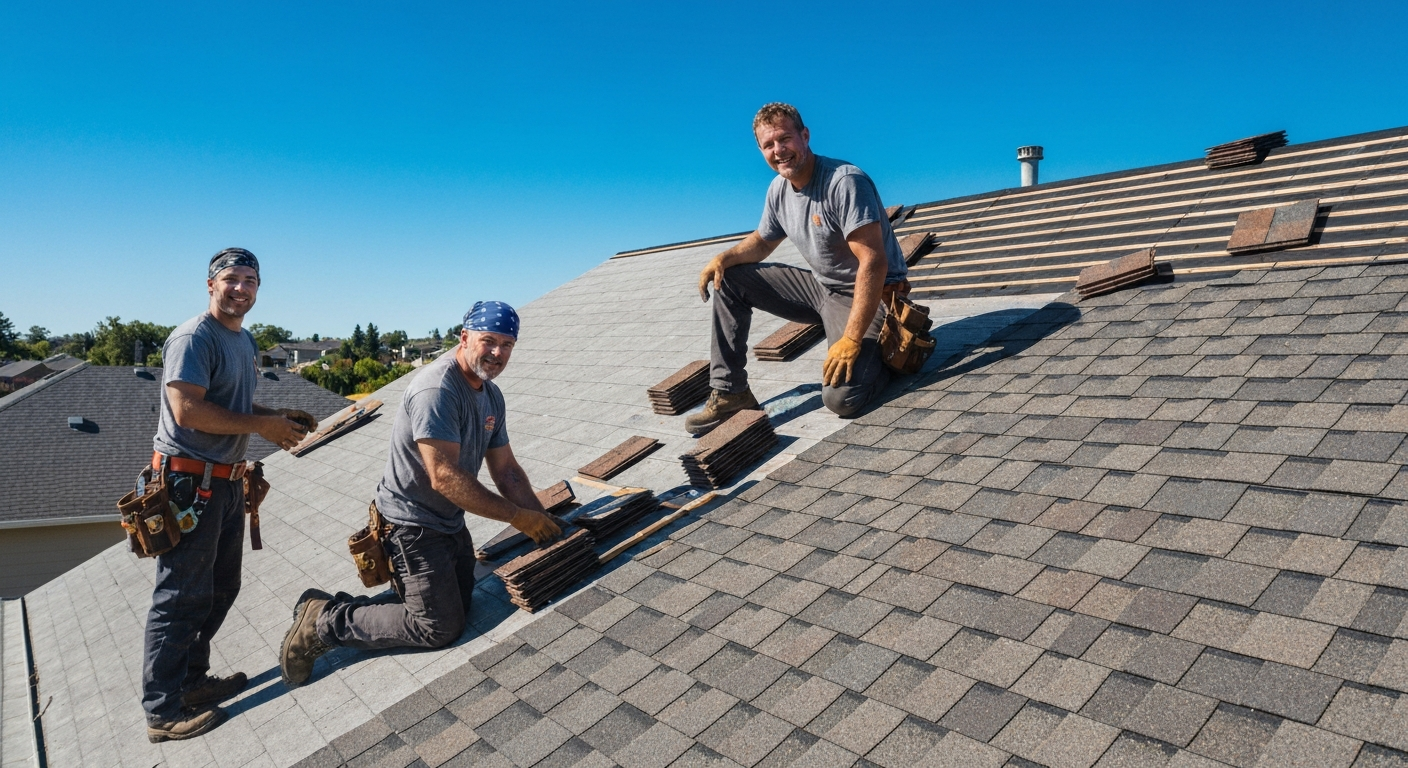
Roofing options and costs in Ladysmith
Ladysmith homeowners often start comparing roof quotes after the first long wet season starts exposing leaks, moss, lifted shingles, or tired flashing. In a town of 8,990 people, with 80.8% of households owning their home and 44.7% of homes built before 1981, there is a meaningful amount of older housing stock nearing the point where patching stops making sense and a proper replacement becomes the better investment. That older inventory also means more two-layer tear-offs, more soft decking surprises, and more labour tied up in careful prep before the new roof even goes on. On the Vancouver Island and Coast, roofing pricing is shaped less by extreme snow loads and more by persistent rain, salt-laden wind, and moss growth. That pushes contractors toward premium underlayments, better flashing, and, in many cases, metal systems that shed water quickly and hold up well in exposed areas. Labour in this market also runs higher than much of BC, especially around the Nanaimo corridor, because experienced crews are in steady demand and weather windows can be short. In Ladysmith, neighbourhoods with older homes near the downtown core and ocean-influenced exposures, such as around Oyster Bay and the heritage streets above the harbour, often see more frequent roof replacement discussions because wind-driven rain and shade accelerate wear. If you are comparing estimates, it helps to line up the material category, the tear-off scope, and the flashing details side by side so you can see where one contractor is pricing more protection than another. The table below gives a practical starting point for the most common options in this market.
| Type |
Typical Use |
Lifespan |
Best For |
Price Range |
| Full asphalt shingle replacement (tear-off + new install) |
Most detached homes needing a complete reset, including old layers and underlayment |
15–25 years |
Standard pitched roofs where budget matters and the deck is in fair condition |
$12,000–$25,000 |
| Architectural / laminated shingle (premium asphalt) |
Upsized shingle profile with better wind performance and a heavier look |
20–30 years |
Homeowners wanting better curb appeal and improved durability |
$14,000–$29,000 |
| Impact-resistant shingle (Class 4 — hail & wind zones) |
Higher-end asphalt for tougher weather exposure and insurance-sensitive buyers |
25–35 years |
Exposed sites, higher wind demand, and owners seeking added resilience |
$16,000–$32,000 |
| Metal roofing (steel panels or standing seam) |
Long-life replacement for homes prioritizing drainage and wind resistance |
40–60+ years |
Rainy, windy lots and homeowners planning to stay long term |
$22,000–$45,000 |
| Flat / low-slope membrane (TPO or EPDM) |
Low-slope additions, porches, garages, and full flat-roof assemblies |
15–30 years |
Flat roofs needing watertight seams and proper drainage detailing |
$9,000–$25,000 |
| Roof repair + flashing only (no full replacement) |
Targeted leak repair, chimney work, vent boots, valleys, and edge metal |
2–10 years depending on roof condition |
Localized leaks and roofs that still have usable service life |
$500–$5,000 |
Prices are estimates only and vary by project scope, site access and material selection.
What affects the price of roofing in Ladysmith
It is very common for two quotes on the same roof in Ladysmith to differ by 30–50%, and that gap usually comes down to what is included rather than simple markup. Across Vancouver Island and the Coast, pricing is influenced by steep roofs, limited dry-weather windows, and the extra attention needed for rain management and flashing detail. A straightforward asphalt job can land near the lower end of the $12,000–$25,000 band, while a more complex home with valleys, dormers, and multiple penetrations can push closer to the top. If the roof has aging decking, a second layer to remove, or chimney work, the estimate can move quickly toward the $5,000–$25,000 range depending on whether you need repair or full replacement. In Ontario and Alberta, snow load and freeze-thaw cycles often add ice-dam protection, heavier underlayments, and more ventilation work; Alberta’s hail belt also increases demand for impact-rated shingles. On coastal BC roofs, the bigger cost drivers are persistent rain, salt air, and wind uplift, so contractors often specify premium synthetic underlayments, better starter strips, and upgraded flashing to reduce callbacks. In Ladysmith, a home built before 1981 may hide soft plywood or board decking, and replacing that decking can add several hundred to several thousand dollars depending on how much is affected. Another example: a simple bungalow in a sheltered part of town may stay near the lower end of the market, while a windy, treed lot with a steep roof in an exposed area can require more safety setup, more labour hours, and more material waste. Labour rates on the Island also stay higher than in many BC markets because experienced roofers are busy and weather interruptions make scheduling less predictable. The table below breaks down the main price levers.
| Price Factor |
Why It Matters |
Cost Impact |
| Roof pitch and steepness |
A steeper roof slows install speed and requires more fall protection |
Can add 5–20% to labour |
| Number of shingle layers to tear off |
2 layers = extra labour + disposal |
Often adds $1,000–$4,000 |
| Total roof area in squares (1 square = 100 sq ft) |
More area means more materials, labour, and waste |
Usually the biggest driver of total price |
| Decking condition |
Rotted OSB or plywood must be replaced |
Can add $500–$5,000 or more |
| Chimney, skylight and vent flashing complexity |
Each penetration needs careful waterproofing |
Often adds $300–$1,500 |
| Ice-and-water shield coverage required (climate-driven) |
Extra membrane at eaves, valleys and vulnerable areas improves leak protection |
Can add a few hundred to over $2,000 |
| Regional labour rates and length of the install season |
Busy Island crews and weather delays affect scheduling and pricing |
May shift totals by 10–20% |
| Material quality tier (standard vs. impact-rated vs. premium) |
Better products cost more but may last longer and perform better in wind |
Can move a job from $12,000–$25,000 to $22,000–$45,000 |
Permits & regulations in British Columbia
In British Columbia, most like-for-like re-roofing does not require a building permit, which means replacing worn shingles with a similar roofing system on an existing pitched roof is usually straightforward. That said, a permit is commonly required if you are changing the roof structure, adding a second layer where the code does not allow it, repairing or replacing significant amounts of roof decking, converting from a pitched roof to a flat or low-slope assembly, or altering drainage and structural elements. If the job includes new framing, major structural repairs, or changing the roofline, assume the municipality may want to review it. For Ladysmith homeowners, the safest approach is to confirm the scope before work starts, especially on older homes where hidden deck damage is more likely.
Before signing, verify three things: contractor liability insurance, WCB coverage, and manufacturer certification if you want a warranty-backed install. Start by asking for a current certificate of insurance and confirm the policy dates and coverage amount. Next, ask for the WCB clearance letter and check that the account is active and in good standing. Then look up the contractor in British Columbia’s relevant business or trade registry and confirm the company name matches the quote, the invoice, and the insurance certificate exactly. Do not rely on a logo on a truck or a website footer. If the contractor says the manufacturer warranty depends on certified installer status, ask for proof in writing. A legitimate roofer in Ladysmith should have no problem supplying all three documents before deposit money changes hands.
Choosing the right roofing material for Ladysmith's climate
Ladysmith’s roofing choices should be driven by a wet, windy marine climate rather than by the heavy snow assumptions that guide many Ontario or Alberta quotes. Here, freeze-thaw still matters, but the bigger issue is persistent moisture, moss growth, and wind-driven rain that can find weak flashing fast. For many homes, especially those with average pitch and no major exposure, an architectural shingle is usually the best value: it looks better than 3-tab, performs better in wind, and often fits comfortably inside a $14,000–$29,000 reroof budget. If your home sits in a more exposed area, you have frequent wind uplift, or you want a tougher product for resale confidence, impact-resistant shingles can be worth the 20–30% premium. For example, spending an extra $3,000 on upgraded shingles may make sense if it adds years of service and reduces the chance of premature replacement after a rough storm cycle. Metal roofing often makes long-term financial sense on older coastal homes where drainage, moss resistance, and wind performance matter more than short-term savings, especially if you plan to stay put for decades. Standing seam usually costs more than exposed-fastener steel, but it also lowers maintenance and can improve resale appeal. Flat or low-slope roofs need a membrane system such as TPO or EPDM, because shingles are not the right answer there. In British Columbia, some insurers and manufacturers may offer better terms for high-wind-rated or impact-rated systems, but the details vary by policy and product, so it is worth asking before you sign. In Ladysmith, the right choice is usually the one that balances upfront cost, maintenance burden, and how long you actually plan to own the home.
| Material |
Lifespan |
Snow & Ice Performance |
Wind / Hail |
Maintenance |
Price Band |
| Asphalt 3-tab (entry-level) |
15–20 years |
Fair, but more prone to wear in wet coastal conditions |
Moderate wind resistance; weakest of the options listed |
Higher moss monitoring and earlier replacement cycle |
$12,000–$20,000 |
| Asphalt architectural / laminated (standard) |
20–30 years |
Good for typical Ladysmith winters when paired with proper underlay |
Better wind performance than 3-tab; moderate hail resistance |
Moderate upkeep, good balance of cost and appearance |
$14,000–$29,000 |
| Impact-resistant shingle (Class 4) |
25–35 years |
Good with proper ice-and-water details |
Strong wind and improved impact resistance |
Lower chance of storm damage, modest upkeep |
$16,000–$32,000 |
| Metal — steel panels (exposed fastener) |
30–45 years |
Excellent shedding of rain and snow |
Very good wind performance; fair hail tolerance depending on gauge |
Periodic fastener checks and seal inspections |
$22,000–$38,000 |
| Metal — standing seam (concealed fastener) |
40–60+ years |
Excellent drainage and low ice buildup risk |
Excellent wind performance; strong long-term durability |
Low maintenance, best for long ownership horizons |
$28,000–$45,000 |
| Flat TPO / EPDM membrane (low-slope only) |
15–30 years |
Good when drainage is correct and seams are detailed properly |
Good when mechanically attached or properly adhered |
Needs regular drain and seam checks |
$9,000–$25,000 |
How to choose a roofing contractor in Ladysmith
Start by confirming the contractor’s British Columbia business registration and asking for a current liability insurance certificate and WCB clearance letter before you book the job. In practice, that means the company name on the quote should match the insurance documents and the paperwork should show active coverage for the dates your roof will be installed. Then collect 2 to 3 itemised written quotes that separate labour, materials, underlayment, flashing, disposal, ventilation, and decking repairs instead of giving you one lump sum. Read the scope carefully so you know whether permit pulling is included, whether tear-off and disposal are included, and what is excluded if rotted plywood is found. Ask how long the workmanship warranty lasts, whether the product warranty is manufacturer-backed, and whether either warranty is transferable if you sell the home. Payment should be staged, with no more than 10–15% upfront, and a holdback until the job is complete and you have inspected the finished roof. Get the start date and estimated completion date in writing, because weather delays are common on Vancouver Island. A good quote should also specify ice-and-water shield areas, flashing details, and the exact shingle or membrane product being installed.
- Check the contractor’s legal business name against the quote and insurance certificate.
- Ask for a current certificate of liability insurance before any deposit.
- Request the WCB clearance letter and verify the account is active.
- Get 2–3 itemised quotes, not just a single lump-sum price.
- Confirm whether permit applications are included.
- Confirm disposal, cleanup, and magnet sweep are included.
- Ask what happens if hidden decking damage is found.
- Ask for the exact brand, model, and colour of roofing material.
- Get workmanship warranty length in writing.
- Ask if the manufacturer warranty is transferable.
- Keep the upfront payment to 10–15% maximum.
- Get a written start window and completion estimate.
Red flags in Ladysmith include a roofer who refuses to provide WCB paperwork, a quote that is vague about flashing or underlayment, pressure to pay a large cash deposit, claims of “leftover materials” at a too-good-to-be-true price, and anyone unwilling to name the exact product they plan to install.
Frequently asked questions — roofing in Ladysmith
Do I need a permit to replace my roof in British Columbia?
In most cases, a straightforward like-for-like reroof in Ladysmith does not require a building permit, especially if you are replacing worn shingles with a similar system and not changing the roof structure. That said, British Columbia municipalities often want a permit when the work goes beyond simple replacement: adding a second roof layer where it is not allowed, replacing significant decking, changing from a pitched roof to a flat or low-slope assembly, or altering structural framing and drainage. If you are budgeting, a standard asphalt replacement may fall in the $12,000–$25,000 range, while more complex membrane or structural work can run higher. The safest move is to confirm your specific scope before work begins, particularly on older Ladysmith homes where hidden deck repairs are more common.
What are the signs I need a new roof?
Common signs include curling or missing shingles, repeated leaks around chimneys or vents, widespread moss that keeps coming back, soft spots in the roof deck, and shingles that are losing granules into the gutters. In Ladysmith and across British Columbia’s coastal climate, persistent wet weather often exposes roofing problems faster than a single storm. Homes built before 1981 also have a higher chance of needing extra repair work once the old roof comes off. If your roof is already near the end of its service life and you are seeing multiple symptoms, replacement is often wiser than repeated patching. A repair might still make sense if the issue is isolated, with costs around $500–$5,000, but if the roof is aging broadly, a full reroof is usually the better long-term spend. A proper inspection should also check flashing, ventilation, and the condition of the deck beneath the shingles.
Can I roof over my existing shingles?
Sometimes, but it is usually not the best choice in Ladysmith. Roofing over existing shingles can save money upfront, but it also hides deck problems, adds weight, and can shorten the life of the new roof if the surface beneath is uneven or damaged. On the coast, where wind and rain are constant concerns, most experienced contractors prefer a full tear-off so they can inspect the deck, improve underlayment, and redo flashing properly. If you have already got two layers, tear-off is usually the safer route. A basic reroof may fit within the $12,000–$25,000 band, while extra tear-off labour and disposal can move the price upward. Ask the contractor whether the existing roof system and local code allow an overlay; in many cases, the right answer is no, especially when older roofing has hidden moisture damage.
How do ice dams affect roofs in Ladysmith and how do I prevent them?
Ice dams are less severe in Ladysmith than in colder Prairie or Ontario markets, but they can still happen during cold snaps, especially on shaded roofs with poor ventilation or warm attic leakage. When melted snow refreezes at the eaves, water can back up under shingles and leak into the home. Prevention starts with air sealing the attic, improving insulation, maintaining proper ventilation, and installing ice-and-water shield at vulnerable areas such as eaves, valleys, and penetrations. On the coast, the bigger issue is often not deep freeze but prolonged moisture combined with occasional cold nights, which can worsen small defects. If you are replacing the roof, expect proper climate-specific detailing to be reflected in the quote. That may keep a standard asphalt job within the $12,000–$25,000 range, but extra membrane coverage and flashings can raise the total. A good roofer in British Columbia should explain how their assembly handles wet, cool winters, not just summer sun.
What roofing warranty should I expect?
You should expect two warranties: a workmanship warranty from the contractor and a manufacturer warranty on the product. In British Columbia, a respectable workmanship warranty is often several years long, and some contractors offer longer coverage if the full system is installed to manufacturer specifications. Manufacturer warranties vary by product line, and premium systems can offer stronger coverage if the installer is certified. Ask whether the warranty is transferable, because that matters if you sell your Ladysmith home. Also ask what conditions void coverage, such as poor attic ventilation, unapproved repairs, or lack of maintenance. If you are paying for a premium system in the $22,000–$45,000 range, you should get the paperwork in writing before the work starts. A warranty is only useful if the product, installer, and installation method all match the manufacturer’s requirements.
Is metal roofing worth the extra cost in Ladysmith?
For many Ladysmith homes, yes — but only if the longer service life and lower maintenance fit your budget and ownership timeline. Metal roofing handles coastal rain, moss, and wind very well, and it can make sense on exposed lots or on homes where you do not want to reroof again in 20 years. The upfront difference is real: a quality asphalt reroof may run $12,000–$25,000, while metal often starts around $22,000–$45,000. If you plan to stay long term, that extra spend can be justified by durability, resale appeal, and reduced upkeep. If you may sell soon, architectural shingles may give you a better short-term return. In British Columbia, some insurers may also view wind-resistant materials favourably, so it is worth asking about any premium or discount impact before you decide.